Category: Getting Started

  • Is Homeschooling Right For Us?

    Is Homeschooling Right For Us?

    Why do so many parents continue to homeschool when it captures all their time?  And how did they know what to do when they first started? 

    Most of us started homeschooling on a “trial” basis, but before too long, the advantages won us over!  We began to see what it was like to educate without “school.”  To learn.  To know one another.  And to thrive. 

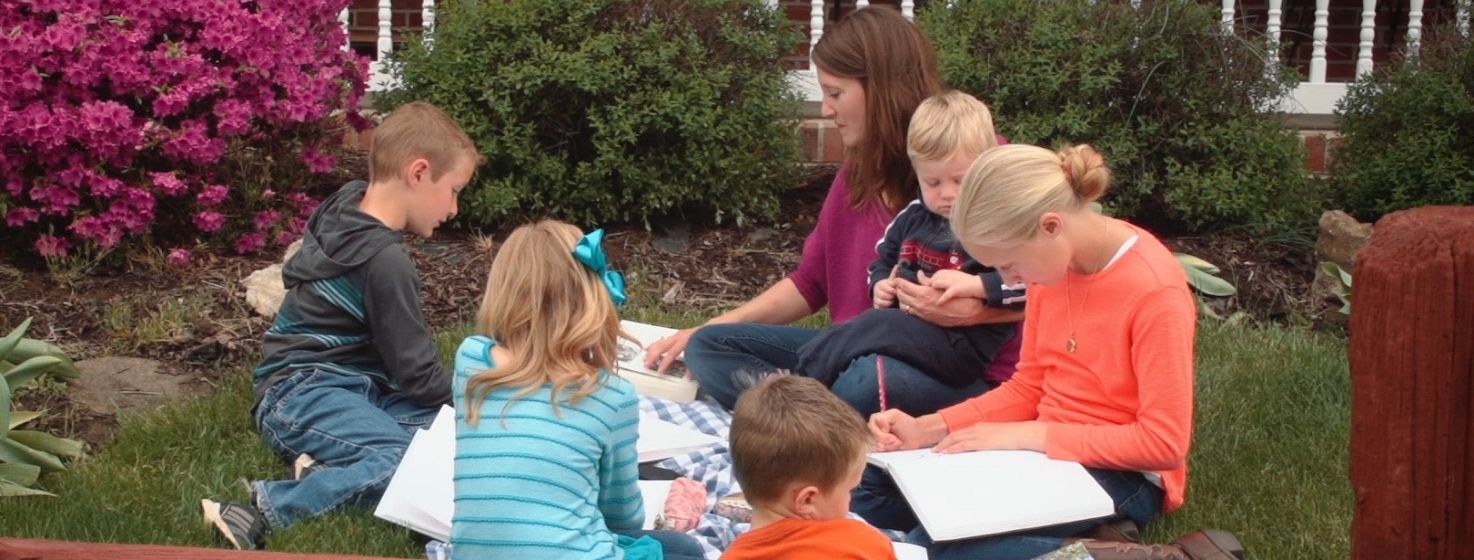
    We left the bullying and age-segregation behind in favor of better influences, values, and family traditions. Rather than limiting our choices, homeschooling expanded them! Homeschoolers can enjoy the same types of social activities, school subjects, and even classroom learning that other students have – but only because we choose to, not because we have to. 

    While the biggest strength of homeschooling might be the tailoring of education to each child’s needs, the ability to put all things – including education and worldview – under God’s Lordship is definitely the most important aspect that won most of us over.  For those of us who believe that He created everything, that “the fear of the Lord is the beginning of knowledge,” and that “eternity” extends beyond this world, homeschooling made us realize that those things should be recognized first and foremost when preparing our children for the “real world.”  We came to embrace the reality that the real world is the one where He is recognized.

    But when we first started, we had a lot of learning to do, and choices to make.  While the WV law was the entry point, curriculum styles soon took precedence as we chose exactly how we would teach reading, language, math, science and social studies – the five subjects we pledge to teach our children in WV.  If you, too, are thinking about plunging into the waters of home education and are looking for more places to check out curriculum options/styles, we suggest:

    You can also see a homeschool curriculum catalog at christianbook.com or rainbowresources.com.  Regardless of whether you actually order there, they are good places to see the variety of resources available.

    But if you are unfamiliar with the WV homeschooling law, you’ll want to go here first

    Homeschooling opens up a whole, new beautiful world.  Relax, learn, and enjoy!

  • Homeschooling: Getting Started Part 1

    Homeschooling: Getting Started Part 1

    Choosing to homeschool is a major decision.  Although homeschooling has been around for many years, it is still not as familiar as “going to school”.  Families contemplating homeschooling can experience apprehension. Questions arise from doubts within and  individuals without. This article is designed to answer some of those questions and give parents the confidence and encouragement they need to train their children at home.

    What about socialization?

    The word socialization has its roots in the word social.  Socialization is commonly understood to be the ability to relate to others of varying ages and interests in an amiable manner.  

    When children are placed in a public school setting, they relate to only a fraction of the population – their peer age group. Exposure to other age groups is quite limited and thus socialization is narrow.  We have all seen examples of children who cannot answer a simple question from an adult or do not know how to enjoy and play with someone younger. Children who are schooled at home, however, are not bound by rooms and peer age groups.  Homeschoolers tend to be able to experience life outside the confines of age and place where their awareness of others and others’ needs is awakened.

    The mail carrier, who would normally go unnoticed, becomes a friend to look forward to seeing each day.  Likewise, the clerk at the store becomes someone to greet with courtesy.  Not only does research show homeschoolers are often more appropriately socialized than their public school counterparts, but people who know homeschool families can generally attest these children interact very well with others.

    Will my child learn everything he/she needs to know?

    Today, there is a  multitude of curriculum choices available for homeschooling families.  This, coupled with the parents’ desire and commitment to provide a quality education, adds up to a successful formula.  Excellent books and resources, such as Robin Scarlata’s book entitled What Your Child Needs to Know When, the WVDE website lists the state’s grade level standard, and a browse through some curriculums can  help establish learning points for each grade level.

    Am I qualified to do this?

    According to WV state law, anyone with a high school diploma or equivalent may legally teach their children at home. Current research indicates that the parent’s level of education has a negligible effect on the education level of a homeschooled student.  God can accomplish wonderful things through dedicated and committed parents who are set on having their child succeed.

    Is it legal?

    Homeschooling has been legal in WV since 1986. CHEWV encourages you to know and understand the WV State law.  For your convenience, visit the WV Homeschool Law page on our website for the full text of the law.

    How do I do begin?

    If you are investigating homeschooling for the first time or not sure how to begin, CHEWV has developed the following steps to get started.  These steps are not necessarily meant to be sequential, although some steps may best be accomplished before others.

    1. Investigate the Legality
    • Know the requirements of the WV Homeschool Law
    • Submit a one-time Notice of Intent (NOI) including all children of compulsory age (age 6 as of July 1).  If another child is added later, another NOI will need to be submitted for that child only.
    • An annual assessment must be completed annually for every grade level.   Assessment reports are only submitted to the county in  grades 3, 5, 8, and 11.  The deadline for an assessment report to the county school board  is  June 30.  Assessments for all other grades are to be completed annually and kept in your records for at least 3 years.
    *It is recommended that all notices and reports be sent via registered/certified mail to alleviate any question about when documentation arrived.
    2. Prepare Your Child to Learn

    How does your child learn?  Just as we all possess individual personalities, we also have different learning styles.

    There are 3 basic learning styles.

      1. Auditory – by hearing
      2. Visual – by seeing
      3. Kinesthetic – by doing

    While each person may have a bent or preference, that does not mean all learning should be focused toward this bent.  Learning should be built upon all three methods, so each style or ability is developed fully within the child.

    It is helpful to know your child’s learning style in choosing what kind of curriculum to use in homeschooling.  For example, if you have a kinesthetic learner, he will become frustrated with a curriculum that consists primarily of workbooks (visual).

    Many have found the three following basic tips are helpful in making your day more enjoyable and successful:

      • Teach Obedience – A child needs to understand that he/she must carry out Mom’s instructions. Many child training books and good blogs are available if help is needed.
      • Develop Listening Skills – Teach your child to be attentive and listen completely to all instructions given before acting upon them.
      • Develop an Excitement for Learning – Be enthusiastic, not apprehensive about learning together.  Ask questions; pique interest; read extensively
    3.  Set Priorities and Goals

    Goals give you a road map, so you know where you are headed and don’t get side-tracked. Homeschooling brings an added responsibility in your life.  Prioritizing your day’s activities and events and developing a schedule will help in fulfilling your goals.  

    What goals do you want to accomplish by the end of the year?

          • Subjects to cover
          • Character issues to address
          • Mastery of subjects to achieve

    Keep your goals simple and tangible, so you can see your accomplishment each time you reach a milestone.  On my first day, my goal was simply to move through each subject and make it to the end of the day!  I am now nearing the time when my goals are more long term.  When I begin a year now, I try to keep my goals and priorities pointed toward the end of high school and what will need to be accomplished by then.

    Our ultimate goal is to raise children who will love the Lord their God with all their heart, soul, and mind and love their neighbors.  We strive to train up children who will be able to stand – with us and without us.

    Continue Getting Started: Part II

  • Sage Advice About Homeschooling

    Sage Advice About Homeschooling

    Are you a new homeschool mom who would love to get advice from experienced moms?  Want to know what they have learned along the way?  We asked some of them, and here are their answers:

    We have been homeschooling almost four years and the biggest thing I have learned is that no two children are alike. They all learn at different paces. My oldest is 12 and was reading shortly after turning 6. She was in public school so they rushed them along. My 9-year-old just started reading last year. She just couldn’t grasp reading or math, but she has a disability. I am working with my 5 and 4-year-olds now. I was told it is okay for them to take longer. It doesn’t mean I am failing them. They just all learn differently.

    – Pamela

    Relationship. When I first read this request, my first thought was, “I could write a book.” But I remembered the one thing I try to remember everyday: homeschooling affords the opportunity like no other educational system for relationship. Relationship with Our Heavenly Father, relationship with our children, and relationship extending outside of our home and family circles. This has been both the most challenging aspect of homeschooling and the greatest blessing. Being home with each other day in and day out poses challenges – and great opportunities to meet those challenges. Early on we focused on obedience (myself included) and true discipleship, continuing to come in line together, looking toward Christ. One of our biggest regrets of parenting and discipleship early on was that we assumed a hierarchy with dad at the head of the line, then mom, and then the children – like a train. As we have matured we truly see that we are all in a line with only One before us, and our role as parents is more of a “come alongside me” than a “line up behind me” process. As a mom of five, sending the first one off to college this fall, having homeschooled from the beginning, my advice is: regardless of style or choice of curriculum, keep your focus on nurturing healthy relationships (think great commandments) and enjoy the adventure. Let love and kindness rule. Remember that His mercy to you was new this morning and yours should be new for your children, husband and friends. His love never fails, nor should ours, because He provides what we need when we seek and ask for forgiveness and for wisdom and for instruction.

      –  Faith

    I would advise to just be prayerful and expect God to guide throughout the school year. Have fun, especially in the younger years. Use those fun-observed days like National Pasta Day to use pasta as math manipulatives, use cooked spaghetti as paint “brushes”, find a video or book on how pasta is made, sing “On Top of Spaghetti”… be creative!  (A website gives the observed days for the month.) Finally, read to your child – every single day!

    – Brenda

    Homeschool is not school at home! Everything does not need to be completed at a desk. With child #3, we called reading “cuddle time” and it took place on the couch. Guess which child LOVES reading!!

    – Tracy

    Pray.
    Embrace everyone’s differences; love each others’ faults.
    Laugh more. Enjoy being together; life is short.
    Time flies, so enjoy all the time with your kids as much as possible. Giggle more at mistakes so they learn it’s all good.
    Teach them to love who they are and care less about what other people think as long as you’re walking with God.
    Embrace what he has given you, but always try to be a better person. Strive to be all you can be. Treat others how you want to be treated. Think before you speak. Always speak Encouragement into others’ lives, build them up, tell them the small things you see that makes them great, be who God wants you to be.
    Always put God first.
    Enjoy life – you only have one chance make it count.
    Strive to let people see God in you – in how you live and treat others. Thank God for online programs because your kids outgrow what you know really fast..lol.
    Be polite, keep and teach manners because they go a long way, especially with the older generations.  “Yes, ma’am, no ma’am.”
    AND ABOVE ALL LOVE, LOVE YOU, LOVE OTHERS, LOVE GOD.
    Phil 4:13

    – Dolly

    I learned to not be like the other super homeschool moms. You know the moms who always make a plan and follow the plan, whose children love every subject, they never miss a day off school. The mom who plans amazing activities and really cool art projects, who plans a field trip through the woods and pretends they are Daniel Boone exploring new territory. I learned to be me, to be the homeschooling mom I wanted to be. I always strive to be a better teacher the following year, but I will always be ME. ALL homeschool parents are amazing in their own way.

    – Michelle

    Going the long route was totally worth it. So many are afraid of the high school years, yet those were invaluable to sealing my relationship with my children. Two of my four sons have graduated and are adults. I just love that they both call me often, tell me they love me, and appreciate all the years I gave them. I just know our relationship will be lifelong and nothing can beat that! Being with them for so many hours and shuffling them to so many events and hosting teen things was hard, but now I see that it made a difference. I no longer fear the high school years for my next two. God was funny in that he decided to space my kids out where I do high school for 16 years! Yep, my kids are four years apart. When I graduate one, I begin another and so on….four times! lol. I am now on number three in 10th grade. I always gear the high school years to their interests more than anything. One son was all about joining the Marines, so we focused a great deal on environmental sciences, survival information, self-sustaining environments, and physical education for his electives. My second son was college-bound and into IT, so we hit college classes early and got many basics out of the way. My third son is likely going into the science fields, so again we are prepping for early enrollment and hitting math and sciences hard. My fourth son is all about using his hand skills, will watch trade skill shows constantly, HGTV, and is always building and creating….we totally see a trade skill school in his future, and I intend to work alongside him for Habitat for Humanity when he is old enough. So when yours get to those years, hone in on their interests and explore!!!!!

    – Dona

    Don’t let first time jitters/anxiety rule you! When you see how much more you can do in the time the public school runs, it will feel freeing!

    – Missy

    I’ve learned to relax because my children are always learning and I’m not failing them (just graduated my oldest last year). I’ve learned that it’s ok to change something in the middle of the year if it isn’t working. I’ve learned that sometimes you have to go off the plan and do something fun to reset the day. I’ve learned that I get so much more out of homeschooling than I’m probably giving. ❤️

    – Lori

    I have learned that each family is on their own journey. I have learned not to compare ourselves with others. There is a real reason God calls us to homeschool. It took me several years to truly find out what God was trying to do and show me. My reasons for homeschooling have actually changed since the beginning which was ten years ago.

    – Tammy

    Homeschooling is not just a feminine or mom thing. It’s a parent thing. My husband is an equal partner on this homeschool adventure…

    – Jorene

    This will be year 7 for our family😁Hard to believe! With each year has come new lessons. I have enjoyed learning how each of my children learn and building their curriculum and learning styles around them. This is something public school just cannot physically accomplish. I have learned that, just like me, they need down days, and that is okay. We have learned that character outweighs any knowledge learned in a book and we work on that everyday❤️ We have learned to focus our attention on raising human beings that love God, love others, and can contribute and change this world❤️❤️❤️

    – Shannon

    I have learned that if you are called to be a parent, God will also equip you to do the job. Too many parents succumb to the idea that they are unable to teach their children, but that is just not true! It is not easy to homeschool, but you can do it! Line yourself up with CHEWV and HSLDA. Find other homeschool Moms that can encourage you and whom you can encourage. Most importantly: seek God’s counsel daily! He knows and loves our kids more than we do and He knows what He has created them to be!

    – Brenda

    Are you new and want to read more?  We highly recommend this outside post for some very wise veteran mom advice.
    If you want to explore the different learning styles as mentioned by several of the moms, you can read more about that here. 
    Are you starting out with kindergarteners or younger?  Then you might enjoy the articles from this page. For high school help, start here.
    God promises that if we seek first His kingdom, all other things will be added to us as well.  Enjoy the adventure!
  • Homeschooling:  Getting Started Part 2

    Homeschooling: Getting Started Part 2

    A family’s decision to homeschool for whatever reasons takes much thought and consideration.  As noted in Part 1, the first step  is to investigate the requirements of the WV Homeschool Law. Then, as you lay some groundwork with regard to learning styles and training strategies, begin to set goals and priorities designed to meet your family’s needs.

    STEP 4 – Read a Few Good Books

    You can benefit tremendously by reading a few good books or blogs authored by other veteran home educators. These cover subjects such as encouragement in making the homeschooling decision, child training and strengthening relationships with your child, record keeping, what your child is expected to know at each grade level, and practical how-to books.

    STEP 5 – Choose Your Curriculum

    What is easy to begin with?

    For the first year, some may find a package curriculum may be the best choice. Usually obtained from one company or source, this type of curriculum provides all the subjects for each grade, together with printed teaching guidelines, and prepared assignments. As confidence is gained, it is easy to add and replace curriculum by individual subject as you find things you like.  cathyduffyreviews.com is an excellent resource to use when exploring your different curriculum options.  She gives pros/cons of almost every available curriculum to help you make choices which fit your family.

    How do I want my child to learn?

    Learning is broadly achieved through two different channels: rote or memory and independent or guided exploration. While some curricula offer exposure to both approaches, there are those which specialize in just one. Carefully reading descriptions and/or reviews will help determine how the curriculum teaches.

    What does my child need to learn?

    There are several resources available to answer this question. . 1) Specialized books such as Robin Scarlata’s “What to Teach your Child When” series or What Every Child in __ Grade Needs to Know series by E.D. Hirsch, Jr.   2) Scope and Sequence materials from curriculum publishers. If you choose to purchase a package curriculum, the publisher has already done the work for you.   3) the WVDE has a core standards for each grade listed on their website.

    Where do I get curriculum?

    There are a variety of resources available for purchasing curriculum. An Internet search is a quick and easy way to find catalogs from the companies which interest you. Wholesale house distributors such as Christian Book Distributors offer a wide variety of curricula. Curriculum can also be obtained at the library. If you have decided what subjects/areas you want to cover for the year, it is an easy matter to use resources at the library. This would especially work well with science and history.

    For more help see How Do I Choose Curriculum.

    STEP 6 – Schedule and Plan

    We offer some basic questions to help you develop your plan of action.

    What books/how many chapters/lessons do you plan to cover per month?
    When do you need special items such as library books, field trips, videos, etc., for projects and experiments?
    How many or what days will you teach?
    Examples: 9 month school year @ 180 days
                   4 days a week, 1 free for errands/housework
                   3 months school, 1 month off year-round

    STEP 7 – Gather Supplies & Create a Home Learning Environment

    Everything from pens and pencils to papers to maps to books!  Organize in one area using cabinets, boxes, containers, shelves.

    STEP 8 – Record-keeping

    While not as essential in the earlier grades, some kind of structured record keeping becomes crucial in the high school years (see High School Recording Keeping), If you plan to use the portfolio option as your annual assessment then keeping the student’s work to show progress is essential.   Maintaining clear, consistent records will help you evaluate what you’ve accomplished, where you’ve been, and what options to pursue. Records such as the following can prove helpful:

    • Grades, or some system to assure mastery/progress of a subject/task/skill
    • Books read
    • Subjects/topics studied
    • Extra-curricular activities/church responsibilities/community service, with awards or written assessments from leaders/instructors/facilitators
    • Pictures or video of field trips, events, or projects

    STEP 9 – Choose your method of annual assessment

    Under West Virginia law, an annual assessment must be administered and submitted to your county school board by June 30th for grades 3, 5, 8, and 11 only.

    The assessment can be accomplished through one of four different means.

    1.  Standardized Testing

    2.  Participate in the public school testing program

    3.  Portfolio

    4.    A form of evaluation agreed upon by the parent and county superintendent.

    Following is a brief description of the standardized testing and portfolio options.

    1. Standardized Testing
    Standardized tests may be obtained through a state group such as CHEWV or through a party authorized by the test publisher. They must be administered by properly qualified individuals either at locally-formed test centers,  private tester, or online. Costs include the price of the test, scoring and postage, plus any additional payment to a private tester or in the case of a testing center, a facility fee. Every test administrator must meet the qualifications established by the publisher of the test.

    2. Participate in the Public School Testing Program
    The public school testing program in West Virginia is currently a mastery-based test developed specifically for the state, rather than a nationally normed achievement test that gives national percentile rankings. This test is also given in only three grades over the course of a student’s school experience, which is problematic for homeschooling families who need to take an annual assessment. Therefore, CHEWV does not recommend this assessment option.

    3. Portfolio Option
    To have a clear record of your student’s progress portfolios should ideally be compiled throughout the school year. Samples of the student’s work in the subject areas of math, English, reading, science, and social studies are selected in order to clearly demonstrate the child’s progress during the course of the year. From the outset, the portfolio reviewer, who must be a certified teacher, should be consulted as to:
    a. What he or she would like to see included in the portfolio
    b. The cost to review the portfolio
    c. The time needed to review the portfolio
    d. Any preferred format

    4. A Form of Evaluation agreed upon by the parent and county superintendent
    This option would certainly require advance contact with the county superintendent, preferably at the beginning of the school year. Any agreed form of evaluation should be in writing, like a contract, so no misunderstandings can occur at the end of the year.  Some counties have begun providing a list of acceptable tests.  It is recommended to keep such a list in your files in case an issue arises about the choice of your test.

    STEP 10 – Seek out support and encouragement

    Finding like-minded people with whom to share questions, challenges, and progress can make all the difference in our willingness and even ability to stay the homeschooling course. Beyond the affirmation of a spouse and/or extended family, networking with other home educators at the local, state, and national level offers unique opportunities for friendship, fellowship, and information exchange.

    Local Support Group
    1. Regular contact with parents and families in your area
    2. Personal sharing of experiences and creative ideas
    3. Exposure to a greater variety of curriculum and other resources
    4. Group activities, learning opportunities, positive social interaction

    State Home Educators Organization
    1. Essential to be kept informed of state legislative actions
    2. Broader networking opportunities with focus on current issues
    3. Events provided with practical helps and speakers
    4. Power in numbers

    Home School Legal Defense Association (HSLDA)
    1. Inexpensive legal help concerning homeschool issues
    2. Ministry to others who require legal help
    3. Expertise of trained professionals who are diligent to guard our freedoms

    (Note: After a contact has been made by a public school entity, it may be too late to join HSLDA.)

    Teaching your children at home can seem like an overwhelming endeavor, but there are plenty of resources and support networks available to help you in embarking on this new adventure.  We pray God greatly blesses your decision to educate your student at home.

  • Mom, Do You Know Their Unique Style?

    Mom, Do You Know Their Unique Style?

    “The wise in heart shall be called prudent: and the sweetness of the lips increases learning.”  Proverbs 16:21

    As we get into the routine of schoolwork with our children, whether for the first time or after a summer break, we may want to keep in mind that children do not learn instantly. Many times in our homeschooling efforts a child just doesn’t “get it” the first few times, so we patiently try again. And again. And again. Sometimes we begin to think we must be a bad teacher, or the wrong teacher, or that our child must not be paying attention; after all, we’ve explained it ten times using various tones of voice. We may even conclude that one of us is intellectually challenged. However, we needn’t despair; the problem may be a conflict of learning styles.

    We all have preferred methods of receiving, even perceiving, new information.
Some of us, the watchers, are visual learners; we like to see the words, photos, illustrations, colors, diagrams, and graphs on a page before the information will cement itself in our minds. We may not even hear directions if we’re busy watching!

    Some of us, the talkers, are auditory learners; we prefer to listen to a voice speaking or singing new information before it becomes ours. We may not even see others doing something because we’re so busy hearing!

    Still others of us, the doers, are kinesthetic learners; we would rather go through the motions. In other words, we actually have to do something new before we know it well enough to repeat it. We may be completely clueless to new ideas unless they have some action to them!

    To add depth to the learning style issue, most of us use not just one distinct learning style, but a combination, with one style being dominant at certain times or ages. For example, all babies and very young children learn by a hands-on approach—touching, mouthing, crawling, climbing, emptying tissue boxes, cabinets, and drawers; whereas toddlers and preschoolers learn easier and faster if we use a multi-sensory method that involves the student seeing, speaking, hearing and doing over and over again. (Think of all the little hand-rhymes preschoolers love.) By sometime near first grade, visual skills are gaining ground; and by 5th or 6th grade, auditory skills are getting stronger. As children grow older and gain experience and maturity, some begin to prefer another learning style, while others retain the kinesthetic approach.

    If we know our child’s learning preference, we can teach them more productively, but we can also teach them how to learn best. In other words, if they know their preferred mode of learning, then when they are older and have more difficult classes, they can turn that knowledge to their advantage by using those methods that increase their learning capacity. For instance, electronic devices make recording easy for those with auditory preference. Or if they are assigned a teacher with a style counter to their favorite learning mode, they have a better chance of compensating.

    So, how do we discover our children’s preferred style?

    Your child may be kinesthetic if he

    • remembers what was done rather that what was told, read, or talked about
    • seems to learn everything by experience, trial, and error
    • tries things out and always seems to be touching things, even if they’re off limits
    • needs lots of physical contact with parents, children, and teachers, and if he does
n’t get the positive hugs, pats & so on, will nudge, push & pinch
    • 
is so active that shoelaces become untied and shirttails pulled out seconds after being neatly dressed for the day

    Kinesthetic learners, the “doers”, certainly require the most creativity on our part. These students are the ones in perpetual motion while we’re teaching them. They have us convinced they haven’t heard one thing because they seem like they’re ignoring us in their quest for movement. Workbooks have little value to this child unless we allow them the liberty of movement; bouncing slightly while sitting on a giant ball, or tapping their pencil to the rhythm of their kicking feet. They will easily forget multiplication tables – except if they learn them while jumping rope or on a mini trampoline. If we want to read aloud to this child we must permit LEGO construction, battlefield play with military men, or zooming vehicles; and for the older ones, maybe scissor work, constructing a model, coloring a book of detailed illustrations, or maybe even riding a stationary bike. These kids enjoy performing every science experiment in the book – and then devise more of their own! For spelling, air writing may work, or writing on a very large sheet of paper, or on a black or white board. In math, pint & quart jars can be used to measure water and a tape-measure to measure walls. A string or clothesline can be hung with clipped-on numbers to demonstrate order. Card games and board games are very helpful. Globes and large wall map activities for geography; Play-doh for making letters, magnetic letters, puzzles, and sign language are all helpful for the kinesthetic child.

    Keep in mind though: extra encouragement and training in the areas of sitting quietly, perseverance and self-control may be needed for the kinesthetic child. And again, nearly every child under 5ish years old is highly kinesthetic. Many grow out of it, some don’t.

    Your child may be auditory if she

    • is able to follow directions after listening to you once, and rarely needs things repeated
    • likes listening to music, radio, singing, and read aloud books
    • remembers a telephone number, zip code, or name by repeating it a few times
    • can maintain her focus just by listening in a class lecture or presentation, without having to be actively involved
    • solves problems by talking

    Auditory learners require talking — lots of talking! They need to hear us talking, they need to hear themselves talking, and computer programs need to talk, too. Auditory kids enjoy read alouds. These students like educational songs, audio books, and movies with lots of dialog. They will memorize songs, rhymes, and movie lines effortlessly – use this to (their) advantage! These learners are easy to teach with a bit more time planned for discussion. If we want this student to complete a workbook or read a science text silently, be prepared for a puzzled expression or a look of confusion, as the information just won’t compute without a little whispering.  To help boost their visual skills, play card games, board games, ‘I Spy’, or describe objects from a ‘memory tray’.

    Keep in mind though: extra training to notice details and not interrupt may be needed for the auditory child. Again, nearly every child 5ish-7ish is highly auditory, especially girls. Some grow out of it; some don’t.

    Your child may be visual if he

    • uses picture clues to give meaning when reading a book
    • will do chores better when given a list of things to do on paper
    • remembers faces & forgets names
    • notices details such as a new picture or object in the room, like mom’s new haircut or another change before anyone else
    • learns fastest and understands best if you show him and then allow him to see how things are put together or how they work
    • 
watches others when in a social group instead of jumping into action

    Visual learners enjoy books, videos, workbooks, computer programs – anything having information which can be seen. These students are usually the easiest to teach since little effort is required on our part for them to soak up new concepts presented visually. They can easily be distracted if we try to teach them primarily by auditory methods; therefore, if we want this student to listen to new information by lecture, sermon, or audio recording, we must limit unrelated noise and allow note taking or drawing to facilitate learning. These are usually the students who demand silence while listening/learning. Illustrated timelines, colored sticky notes, and highlighting are all good strategies to use for a visual kid. Large maps to be labeled or stickered are helpful. A ‘story board’ before writing assignments will benefit many. (Story board: fold paper into fourths; draw beginning picture, two middle pictures, and one ending picture to help student visualize.) For assignments or chores; a written list of instructions will probably ensure much quicker results than oral directions.

    Keep in mind though: the visual child may need extra encouragement and training in the areas of listening attentively, holding eye contact during conversation, and social skills. These are the kids who may need TV time severely restricted because they will constantly watch it, if allowed.

    Outside the Preferred Mode

    Don’t be hesitant to try something new; something that seems to go against a child’s preferred mode of learning as, again, their learning mode may change over time. A professor of psychiatry, Dr Larry Silver, (Georgetown U of Medicine) said:

    “Matur[ity] spurts occur once or twice a year. It’s as if a new computer chip enters in.
    And when that chip starts firing,there may be changes in the way a child learns.”

    We may think we can’t possibly add one more item to our “to do” list and that incorporating a multi-sensory approach into our teaching won’t make that much difference anyway. If so, consider Thomas Edison, who was declared by his schoolmaster to be “addled” (confused), and Albert Einstein, who was called mentally slow and then expelled from school.* Could it be that their teachers did not appeal to their learning style? It can be very easy to underestimate a student’s intelligence when the teaching mode does not fit the student.

    With multi-sensory teaching, and sweet words from our lips, we can make learning more enjoyable and effective.

    “The wise in heart shall be called prudent: and the sweetness of the lips increaseth learning.” Proverbs 16:21

    Note: This may be an overly simplistic explanation, since personality also plays an important part in our learning styles. The three main learning modes– kinesthetic, auditory and visual– can occur in any personality type which results in many interesting combinations. For a more detailed account of learning styles see “The Way They Learn” by Cynthia Ulrich Tobias.

    *Thomas Edison; World Book Encyclopedia: Albert Einstein; The Ultimate Geography and Timeline Guide by Maggie Hogan & Cindy Wiggers page 9.

  • Could I Be a Homeschool Mom?

    Could I Be a Homeschool Mom?

    [et_pb_section fb_built=”1″ admin_label=”section” _builder_version=”3.22″ global_colors_info=”{}”][et_pb_row admin_label=”row” _builder_version=”3.25″ background_size=”initial” background_position=”top_left” background_repeat=”repeat” global_colors_info=”{}”][et_pb_column type=”4_4″ _builder_version=”3.25″ custom_padding=”|||” global_colors_info=”{}” custom_padding__hover=”|||”][et_pb_text admin_label=”Text” _builder_version=”3.27.4″ background_size=”initial” background_position=”top_left” background_repeat=”repeat” global_colors_info=”{}”]

    Considering homeschooling? Get ready for a wild ride!
     
    I remember attending public school as a kid. Honestly, I was bored silly. We all had to do the same things. We all ate lunch at the same time, hungry or not. We all flopped down on our mats, closed our eyes tightly, and tried to nap, sleepy or not. We all dabbed white glue on our popcorn and stuck it to our “sheep art thing” we all did. We all learned from the same lesson plans. We were all presented with the same material, and subsequently, we all asked the same basic questions. Then, year after year, we all moved on to the next “level.”
     
    When I would arrive home at night, I pretty much kept to myself. I was loaded up with enough homework to keep me occupied for hours, and my parents and siblings were not high on my “to do” list. They were not my top priority; school had to be. Plenty of times I was so exhausted at the end of the day–yet not finished with all of my assignments–I would let myself just doze until 4 or 5 A.M., and then drag myself out of bed to finish everything before trotting off to school to repeat the cycle. I felt like a sheep. Baaa-aaaah; better hurry, the bell’s about to ring . . . again.
     
    That is not the school life I want to give my own children. I don’t want to have them gone all day only for them to come home and keep their distance from us. Why have kids? So we decided to homeschool. Then they turned five. Now what? I was not trained to be a homeschool mama. Who is? But hey, it’s fun. I like having my kids with me, and they are learning! However, I must say, it’s all the questions that drive me batty.
     
    A question here, a comment there–this is fine; don’t get me wrong. But imagine the never-ending question. The answer that just won’t satisfy. The conversation that has no finale. One of my sons in particular has questions for me that he fires from a vocal cannon, which once loaded, can discharge for hours. When they begin to flow, my eyeballs start twitching. My hands sweat and my hair rises. Hide me. This boy (we have three) has asked us the oddest things (and I paraphrase, below) since the day he could talk. He somehow learned to chatter early, and quite well–definitely before I was ready.
     
    Once, he spotted a spider in the upper left corner of our hallway and set out to explain to any soul who would listen, in his 2-year-old voice (and logic), that the spider was crying. How he came to that conclusion, I’ll never know. The spider wasn’t making a sound! Every time he saw any little eight-legger from that point on, he jumped up and down and exclaimed, “Pider cwying. Pider cwyyyying!” Our homeschooling adventure with him had begun!
     
    I should have known that the wacky questions from my little fireball of energy would follow. Many of you, with your own kiddos, can relate, I’m sure. My son has an imagination that will not stop:
     
    Age 2:
     
    “Mommy, do chickens eat cookies?”
    “Ummm . . . no. I don’t believe they do.”
    “Why not?”
    “Well, they were not made to eat cookies. The opportunity doesn’t often present itself, I guess.”
    “Yes, but do chickens have lips?”
    “Oh, for heaven’s sake. No, they have a beak. Hey, look, we’re almost at the park. Do you have your water bottle?”
    “I want to be a race car when I grow up. Can I?”
    “You can drive a race car, perhaps, but no, really you can’t become one. You are a human being.”
    “But I want to be a race car.”
    “Son, you’re 2 years old. Give your career goals some TIME. Oh, look! There’s the park.”
     
    Conversations with a 9-year-old can be just as offbeat. Like the time this same funny boy came to me extremely concerned that our dog, Liesel, possibly thought that he was just a fellow canine:
     
    He said, “But Mom, how do you know that she knows I’m a person? Maybe she thinks I am another dog. I don’t want her to think I’m like the other dogs around here. I’m really human. Do you think she knows?”
    “Yes, Son, she knows.”
    “But how do you know that she knows? She can’t see herself, so she may not know what she is, or what I am.”
    “Trust me. She knows that she’s a dog and you are a boy. A human boy.”
    “But how do you know that?”
    “I just do. She is quite aware that you are NOT a dog like her.”
    “How can you be sure?”
    “Go clean your room.”
     
    Years later . . .
     
    “Can my hen climb down a tree?”
    “No, that would be impossible.”
    “I put her up there and she’s cackling.”
    “What on earth . . . how high?”
    “Really high.”
    “Which tree?”
    “You know . . . that pine tree out front. And the rooster is at the bottom all nervous.”
    “Well, I’d be, too, if my spouse were trapped in a tree! Go get her down!”
     
    Now that he is older, the questions aren’t so unbaked. Instead, they’re really intense. Lately I hear myself saying, “Go ask Dad. That’s a ‘dad’ question.” I don’t remember being this inquisitive in school. Nor do I recall my friends with imaginations like his. And it’s not just my family. This “ever-curiousness” seems to be somewhat the norm in homeschool families. The kids are hanging out with their parents, so they ask grown-up questions earlier. They are afforded individual attention, so their time is better spent learning. They get enough sleep, avoid threats from bullies (usually, anyway), and can relax. They have the freedom to learn without worry of peers, worry of teachers, and worry of what’s to come.
     
    A homeschool house does not have a “sheep mentality.” It’s a living, breathing “think tank” that will challenge you in more ways than you can imagine. And across the board, homeschooled students carry on very well; you know this. And while I was not trained to be a homeschool mama, my kids are being trained to be homeschool mamas and papas. They’ll do it even better than we are!
     
    Keep up the good work, and when you are at times tempted to rip out your hair, or if you are afraid of the upcoming “school years,” remember that your little talker will someday be a brainy adult . . . an independent thinker who will make a positive societal impact. To be sure, you are giving him an opportunity that is unmatched. 

    Copyright, 2009. All rights reserved by author below. Content provided by The Old Schoolhouse® Magazine, LLC.

    Gena Suarez and her husband Paul are the owners/publishers of The Old Schoolhouse® Magazine, LLC. Gena enjoys strong coffee, good books and spending long periods of time in the van with her family. Paul and Gena have five children, ages one and a half to 19, and they hope to have a few more if the Lord allows. Come find her at Facebook, or become a “fan” of TOS Magazine’s Facebook page. http://www.facebook.com/pages/Gray­TN/The­Old­Schoolhouse­ Magazine/42107471203. To reach Gena, publisher@thehomeschoolmagazine.com.

    [/et_pb_text][/et_pb_column][/et_pb_row][/et_pb_section]