Tag: Sports

  • Sports: Maybe It’s Time to Think…

    Sports: Maybe It’s Time to Think…

    …Out of the Box

    by Melody Sheppard

    So far, West Virginia homeschoolers have been barred from participating in any activity governed by the WV Secondary School Authority Commission (WVSSAC).    This not only includes high school sports, but also some band functions and clubs.  Although elementary-aged homeschoolers can usually participate in a vast selection of community sports leagues, once a student enters high school the playing field narrows.

    As a result, many homeschoolers are turning to individualized sports and finding solid opportunities to achieve their sports goals.  Individualized sports allow for flexibility, family participation, and even scholarships.   

    For many, the goals for participating in sports are pretty simple and a team situation is not required to meet them.

    • Develop a lifelong skill
    • Boost confidence
    • Learn mastery through practice
    • Learn sportsmanship
    • Challenge one’s self
    • Build self-discipline
    • Develop friendships/camaraderie
    • Have fun!

    Just as homeschooling allows a child complete freedom to develop skills and maturity at his/her own pace, so does an individualized sport!  Confidence is built and a sense of responsibility is gained, because it is up to the student how many practice hours are devoted.  Outcomes cannot be blamed on a coach or teammate.  The student determines the level of expertise he/she would like to attain – without pressure from a team. 

    Individualized sports can also turn into lifelong interests. Developing a love for a sport that may be enjoyed and pursued through successive seasons of life is healthy both mentally and physically.  Lifelong friendships, not unusual among those who share similar interests and talents, enrich not only learning but social skills.  Often participants span a wide age range, adding to the benefits of socialization.  The many advantages of individual sports can far outweigh the appeal of team sports.

    Listed below are individual sports to explore for your student and even the entire family.  Many have clubs, competitions, and milestones to encourage skill and training. 

    • Archery clubs, NASP
    • Biking – distance, mountain
    • Boating/Kayaking
    • Bowling
    • Cooking – (cooks move!) competition
    • Dancing
    • Equestrian – trail, show, competition
    • Fishing – tournaments
    • Gardening – master garden program
    • Golf
    • Gymnastics
    • Hiking – clubs, achievement ladders
    • Horseshoes/Cornhole
    • Hunting – clubs, milestones
    • Martial Arts
    • Motocross
    • Ornithology – clubs, lectures, bird counts, walks & tours – from local to international, competition
    • Racing – soap box, small cars
    • Racquetball
    • Running – 5Ks, marathons
    • Shooting Sports – Air, pistol, small bore, high power
    • Skating – Ice, Roller
    • Skiing/Snowboarding
    • Swimming
    • Tennis
    • Tractor Pull
    • Weightlifting
    • Woodworking

    Some participatory groups also provide a variety of sports/physical activities.  Examples include Civil Air Patrol, 4H, American Heritage Girls, Boy Scouts, and Girl Scouts.

  • Top-Notch Athletic Activity…

    Top-Notch Athletic Activity…

    …On a Shoestring

    Moms, Dads, Get Moving!

    By Brian D. Ray, Ph.D.

    President
    National Home Education Research Institute
    Salem, Oregon

    www.nheri.org

    For Free homeschool Research News with Dr. Ray, take 17 seconds to sign-up here: https://www.nheri.org/connect/


    So you want to have some intense sports activity for your children, but you don’t know where to go or what to do? In some states, interscholastic sports activities are open to homeschool students, but in other states, like West Virginia, they are not. What might a parent do to provide physically challenging, mentally awakening, and spiritually healthy sports activities for their children, including teens (and even younger children)?

    About 40 years ago, I bumped into a group of young folks playing a game that I’d never seen before. They were running fast, jumping high, having a blast, smiling, frowning, and going all out. Their enthusiasm really caught my attention. They played on a big field, a little bigger than a football or soccer field, and they threw – accurately, with force, with precision, only 5 yards but sometimes 70 yards—a Frisbee. It was Ultimate. Not Ultimate Frisbee – Ultimate!

    It is not “Frisbee Football.” It is not Disc Golf. It is its own sport with its own rules. It is also fast-paced, athletic, and non-contact.

    My wife and I took it up and had a blast. We played co-ed. We played men only. We played women only. We ran hard, made a lot of interesting friends, got in better shape, and worked as hard or harder than we had in just about any other sport we had ever played. I had played sports all my life (football, baseball, basketball, soccer, and 4 years of university rowing/crew) but didn’t learn until adulthood that Ultimate is an amazing, challenging, and fun sport. My wife and I watched and played with some of the best athletes we had ever encountered. We learned of rules based on the “honor system.” We met all kinds of people. It was a blast.

    Many years later, we were homeschooling our own children in Oregon. Had there been a law allowing our children to participate in “interscholastic activities” (i.e., playing with public and private schools), we would not have been interested. However, the question arose: What might we find for our children that pressed their bodies to something near an extreme physically, was fun, was inexpensive, and might engage a bunch of other homeschoolers and/or their friends? The answer: Ultimate!

    It was perfect for moneyless homeschoolers. How many sports can run on four orange cones (or pylons), a soccer/football field, a ten-dollar 175-gram disc, and 7 flags (3-foot strips of bright orange cloth)?  That is about $22 in addition to the “free” tax-funded city park’s field or your church’s/friend’s actually-free-to-you field.

    You also need two or three parents or teens who are enthusiastic and can offer organizational skills and dependability. Someone needs to read the Ultimate rules and learn and teach the basics to the group.  Parents, teens, and even elementary kids (7-year-olds who are taught and practice can often play Ultimate with teens and adults) will need to know the rules, where to meet, how to get in shape, and other basics.

    Our group in Salem, Oregon has been at it for roughly 17 years. We are now seeing those who started with us coming back with their children. It’s amazing. 

    Following is what I tell our players as we start up each year in the spring, the first Tuesday after Daylight Savings Time takes effect. (Yes, we often begin in western Oregon in the rain, mud, and 45-degree weather.)

    The Basics

    We begin play at 5:30pm on Tuesdays. I have found that Tuesday or Thursday evenings work best for Christian families – not conflicting with Wednesday-night church meetings nor with Saturday family/farm activities. It is very helpful when several players arrive at 5:15pm to help us hold/reserve the field – by spreading out and tossing the disc that they bring.  It is usually first come, first serve, on city or public play fields.

    We focus on homeschool families, but depending on the circumstances, we might invite others to participate.  However, players should ideally be physically prepared. I always push and run them hard. They must run back to the goal line in between scores. If a player can’t because he is too tired, he must get off the field and call for a substitute (sub). Rest/water breaks between games are only 2 to 3 minutes. It is run, run, run during the game. No lollygagging. No socializing.

    It is a lot simpler than the rest of this article might make it look. You could simply read Ultimate in 10 Simple Rules to get going and have a great time. If, however, you want to learn from our 20 years of experience, read on!

    Physical Prep

    I share ideas on how to physically prepare and stay in condition: 

    • Do calisthenics every day, if you have not been doing so all winter. 
    • Do some aerobic exercise, if you have not been doing so all winter. 
    • Stretch your muscles every day. 
    • Do some mild sprints every other day for a few days, then do some harder ones every other day until your first day on the Ultimate field. 
    • Continue to do calisthenics and aerobic exercise and some sprints at least two days every week while playing Ultimate on Tuesdays.

    Our Ultimate Principles

    My main objectives for establishing a regular get-together for playing Ultimate circa 2001 were the following, in no particular order:

    1. Fun and good times of fellowship with Christians (generally; some non-Christians play)

    2. Intense and competitive athletic exercise, especially for the oldest “children” living in our homes (e.g., teens and “young” adults)

    3. Teaching and learning to play a team sport

    4. Teaching and learning biblical sportsmanship

    5. Teaching and learning leadership on a sport’s field

    6. A sporting event open to interaction with non-Christians

    7. Sporting activity with solid involvement of some parents and responsible young adults

    The principles of our gathering and the Ultimate game we play:

    1. Our focus is on good biblical sportsmanship.

    2. Another focus is being gracious and kind.

    3. We keep the rules relatively simple. (See Ultimate in 10 Simple Rules [url].)

    4. The oldest have preference to be on the field. We go by “Ultimate age.” (See below.)

    5. We do not have referees (generally speaking). The “older” men are generally the key leaders and peacemakers. And we look to the young adults to pay attention, serve, and lead by example in this capacity.

    6. Players politely bring to the attention of the gathering’s leader if something is not in line with the rules and they have never heard an explanation of why. 

    7. We keep the game moving quickly. No pausing, waiting around with the disc lying on the ground, and so forth.

    House Rules

    Besides sharing the principles above, I also share these house rules:

    1. After a foul, very quickly allow the defense to get in order and have the marker (defense) to check or hand the disc to the thrower (offense).
    2. After a throw out of bounds or a turnover, run up to the line, plant your foot and play; we do not touch the ground with the disc before we throw. 
    3. After a score, jog to your team’s goal line, all the way. If you do not, the person in charge may replace you with another sidelined player.
    4. If you are too tired to play hard, keep moving, jog back to your goal line after a score, or be cheerful, you must call for a substitute. If you do not think you can make it through a 5-point game after having just played in a game, it is better to rest one game out so that we do not have confusion organizing substitutes.
    5. Brief breaks (e.g., 2 to 4 minutes between games), but no water breaks during games (unless it’s blistering hot, such as over 90 degrees).
    6. If there are too many players for one field, we encourage the oldest of the non-players or a parent to start a second game “on the side.” (Regulation is 7 players on a team; we go up to 8, maximum; more than this is far too crowed on a regulation-size field and is very counter-productive.)
    7. If you have any questions or concerns about our “rules” and the goals of the Ultimate gathering that I have described, please talk to me.
    8. I would like those who have never played with us before to carefully read Rule #10. It is in the spirit of the golden rule, “So whatever you wish that others would do to you, do also to them, for this is the Law and the Prophets” (Matthew 7:12).  In this Ultimate group, we play real hard while we play very respectfully. 
    9. Show respect for all players, regardless of skill or sex.  Men/young men are expected to lead in this regard.
    10. All players are to be humble and look to the older, well-respected, experienced players for direction and instruction on this Ultimate field.  Younger players do not wander around telling others how to play and acting as if their knowledge of the sport and winning are more important than playing hard and enjoying and building up one another.
    11. Coaching in any depth and discussing strategies are kept to the sidelines or during the breaks between games. Team captain, you have 20 seconds or less on the line to say something to your team before the pull (the beginning throw of the disc to start the next play after a score). The team captain may call a time out every now and then during a game to talk with his team for 30 to 45 seconds.
    12. We play sudden death. The first team to score 5 points wins. No ties, no playoffs, no winning by 2 points.

    We like to run hard, play hard, jump hard and high, play well, laugh hard, and encourage hard.

    The Honor System

    Besides the Ultimate in 10 Simple Rules, where you can read and learn the in-depth rules, we always play on the “honor system.” That is, the person who might have committed or did commit a foul must call it on himself. The person who was or thinks he was fouled may not call a foul on the other person. If a person thinks he is being fouled or thinks a player is rude or fouling. he may go talk with his captain, but he may not call a foul. It is wonderful how this “honor system” works on the spirit, conscience and humility/pride of all players.

    Ultimate Age

    The oldest players to show up each week have priority over the youngest in terms of playing and being on the field. Plus, we reward those who faithfully attend all games, week after week, and penalize those who just show up whenever they feel like it (e.g., vicissitudes of personality, literally fair-weather players, and so forth). Therefore, we created “Ultimate Age”:  if you attended 3 of the last 3 weeks, add one year to your actual age; if you played most weeks last year, add another year to your actual age. For example, if you are 12 and attended 3 of the last 3 weeks and played the majority of weeks last year, then you are 14 years old.  We line up, from the leader’s perspective, oldest on his left and youngest on his right along a line on the field. Then the two captains pick teams. If there are not enough fields or the teams are too crowded, the youngest, by “Ultimate age,” do not get to play.

    And ultimately…

    We have seen significant changes in biblical and godly sportsmanship. We have seen people who really never did any sporting activities come alive. We have had a lot of fun and gotten in great physical condition. Give it a try!


    Editor’s note:  We were exposed to Ultimate while attending national homeschool leadership conferences – where Brian was asked to coach Ultimate with the young people.  Our own teens came away excited about this new game – despite their well-earned exhaustion after.  It comes highly recommended by WV homeschoolers who have had a taste of it!
  • Finding the Sport Solution –

    Finding the Sport Solution –

    Ice Hockey Cooperative Teams

    When Bryce and Dawn Timberlake of Jefferson County started homeschooling their six children twenty years ago, they wanted sports to play a big role in their children’s development.  However, because the WVSSAC precluded their children from playing public school sports, they had to seek out alternatives.    

    Hockey became the answer.  Originally, they enrolled their ten-year-old son in what was then a newly-established inline hockey league at the Martinsburg-Berkeley County Parks and Recreation. While kids as young as five all the way up to high schoolers can play in that league, most of the older inline players move on to ice hockey.  All four Timberlake boys moved on to play travel ice hockey –  at the closest rinks which were in Maryland.  Many of the boys’ travel hockey teammates also played for their local Maryland high school teams, but none of the homeschoolers had that option.  Eventually the Maryland Student Hockey League (MSHL) adopted public-school rules prohibiting homeschool and private school students from participating in high school hockey teams. 

    Instead of giving up, Bryce decided to start a ice hockey team three years ago in the West Virginia Eastern Panhandle – which did not have any high school hockey teams.  The WV Vipers have been playing ever since!  The varsity team consists of homeschool, private, and public-school students from Berkeley and Jefferson counties, as well as players – including homeschoolers – from surrounding Pennsylvania, Maryland, and Virginia.  Last year, the team added two middle school teams, one of which won the state championship in Charleston. 

    WV Vipers is a cooperative team, which means that it is made up of players from different schools.  Currently, West Virginia boasts four other co-op ice hockey teams in addition to the WV Vipers – in Charleston, Morgantown, Wheeling Park, and Wheeling Central.  The state has only one pure high school hockey team – Linsly High School in Wheeling.  These six teams are scheduled to play three weekend tournaments for the 2019-2020 hockey season.  In addition, the Vipers will scrimmage with local high school hockey teams in Virginia.

    Last year, WV Vipers became the first West Virginia high school hockey team to compete in the USA Hockey High School Tournament, held in Cleveland, Ohio.  In 2020, the Vipers will again represent our state at the High School Nationals in Dallas, Texas.

    Ice rink availability could limit options to start similar teams.  There are currently only four in our state – two in Wheeling, one in Morgantown, and one in Charleston.  However, Dalton Haas, a senior vice president for USA Hockey in West Virginia, foresees the establishment of a new ice rink in the Martinsburg area and another in Charleston, plus the rink in Morgantown being redeveloped with the help of West Virginia University. 

    Timberlake’s advice to the West Virginia homeschool community is, “Do not wait for the public schools to invite our homeschool students to participate in their athletic programs.  If you want to start a league in this state, just do it!”

  • Sports: Choosing NOT to Play

    Sports: Choosing NOT to Play

    by James Summers

    Coming of age in a public school system, my cohorts and I breathed sports.  Even if some didn’t make the team, they still wanted to be on the team: our complex hierarchy of social status relied, in no small part, on sports.  Making the team or winning a game created a thrill inside. It meant I was “more” than someone else – more skilled, more athletic, more tenacious; stronger, faster, smarter.  I didn’t know which of these it was, so in my youthful pride, I claimed them all.

    We judged the worth of other schools by their win-loss records.  Worse, we universally judged the character of the people in entire geographical regions based on the performance of their school’s athletic team.  All the people who lived in a certain adjacent county were weak losers, and those from another county were just a bunch of dirty rotten cheaters.  We really did see ourselves as superior to them.  Yes, these were childish views, but they were views I held as a relatively mature, intelligent, raised-in-church 16 year old. I should have known better, but these ideas were deeply rooted in our sports culture.

    Fast forward to when our first child was born.  By the time he was four, it was evident that he had an unusually good throwing arm.  A friend who was a former college QB even noticed and commented on his throwing ability.  Wow!  Pretty impressive, I thought.

    In my mind, I began to lay out our future, but God directed our steps in another direction (see Proverbs 16:9).  Most significantly, He led us toward homeschooling.  This was perhaps the most significant and counter-cultural step that my wife and I had ever made in our Christian life.  Though we started out homeschooling on a “year by year” basis, by the end of our first year we knew there would be no turning back for us.

    Sacrifice? Yes.  Rewards?  Greater.

    Public school sports would not be an option.  But what about organized leagues that aren’t associated with schools? 

    We chose not to play.

    For us, the key reason we passed (pardon the pun) was the “sports-centric” lifestyle that seems to be so common in these leagues.  We made a deliberate choice that our lives and schedules wouldn’t be driven six days a week by an overzealous coach. We didn’t want our children to get the mistaken impression that these games really mattered. We believed, and still do believe, that God has other priorities for us.  It’s not that we don’t play or recreate. Instead, we believe that these secondary activities shouldn’t rule our lives.

    Our boys have learned teamwork, first in our family, the primary training ground for learning the importance of sacrificing for the “team.”  Teamwork has been reenforced at church where “many hands make light work” and unity of purpose for another’s glory is most highly esteemed.  They’ve learned “no pain, no gain” in the berry patch.  They’ve had the thrill of victory when landing a trophy-sized fish and experienced the agony of defeat in more ways than I could list.  We tend to believe that there are no life lessons learned on a sports team that can’t be learned just as well, or better, in other venues.        

    We’ve made our choices, and we don’t fault or criticize those who have made different choices.  We certainly don’t want to tell others how to parent their own children. 

    But we do want to be an encouragement to those parents who may be hesitant about their children getting involved in organized sports.  I want to tell you in all capital letters:  IT’S OKAY TO HAVE OTHER PRIORITIES.  And we want to encourage parents who may be thinking of stopping homeschooling, or adopting a “public school at home” approach so that their children can participate in public school sports, to pray and diligently seek God’s direction. 

    As I write this, our oldest is packing his totes to move into his college dorm.  The years have flown by – too quickly it seems.  And I am thankful that we have “run with perseverance the race marked out for us…”

    Sacrifices? Yes.   Rewards?  Greater.

    But you knew this already, didn’t you?

  • Athletes and Homeschooling

    Athletes and Homeschooling

    Simone Biles, the homeschooled gymnast who won the world over in the recent Olympics, may be the “poster child” for homeschool athletics; Simone and her family pursued homeschooling because of its flexible schedule. Homeschoolers can and do utilize daytime opportunities unavailable to traditionally-schooled students, but they can also more easily pursue their sport without sacrificing their academic pursuits.

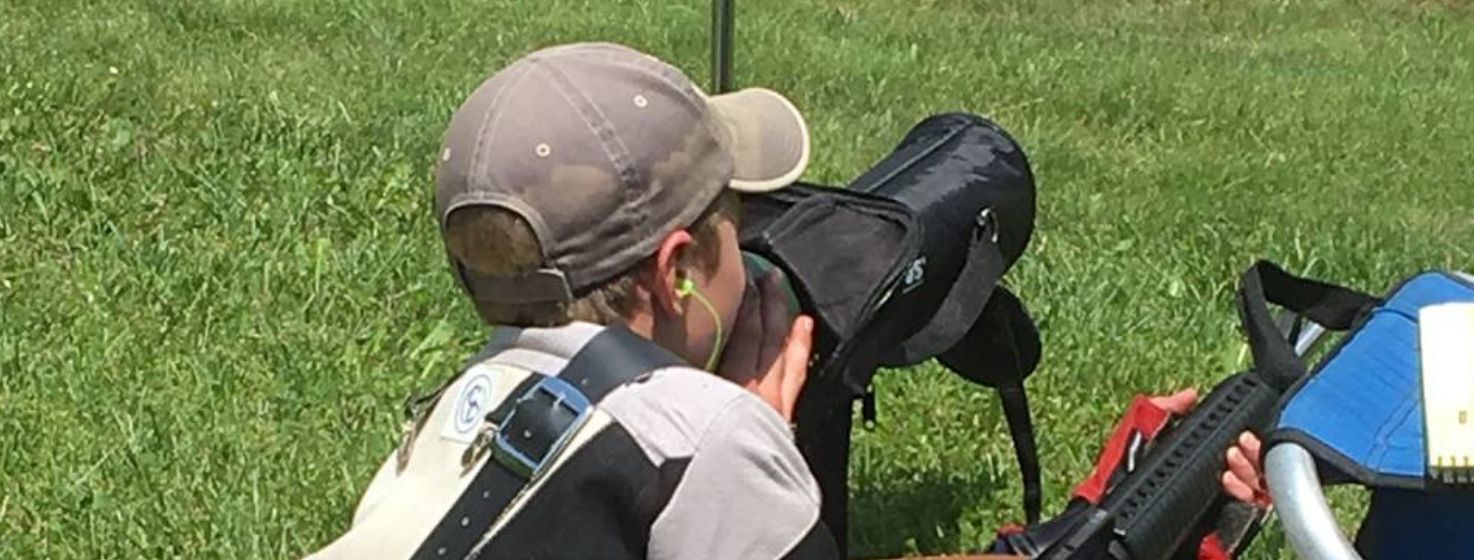
    Homeschooled students in West Virginia are finding their places in a number of sports. Lauren Cox of Morgantown is following her own dream in shooting sports. Mentored by gold medal air rifle shooter Ginny Thrasher and Nicco Campriani from WVU, she herself has participated in the National Junior Olympics in the Olympic Training Center in Colorado Springs in 2015 and 16. “I have found my passion, am working to pursue it, and encourage others to do the same. I have friends who swim competitively and others on a regional soccer team. Several homeschool friends are part of my junior rifle team,” encourages Lauren.

    Sam Sheppard, who is a high power shooter on the WV state junior team, concurs. “My team presently has five homeschoolers on our team of ten representing WV in state and national competitions. Those shooters who excel are recruited by colleges and the armed services for their teams.” Sam’s sports also include karate, where he’s earned a black belt. “Those who apply themselves to the sport of martial arts have many opportunities to compete on state, national and international levels and go on to try out for Junior Olympics and Olympics.”

    Lauren’s sister Rachel Cox competes in barrel racing. She has placed in several events over the past year on her instructor’s horses. She now has her own horse and has placed first in her division. Their dad, Aaron, was active in traditional sports through school. “My sports of basketball and football aren’t available to my kids in the same way they were to me. I’m proud to see my daughters participate in sports that interest them and work toward their goals. They have become team players and competitive, which will serve them later in life. While we did not choose homeschooling because of the flexibility to practice, travel, and attend competitions, it is a benefit.”

    Isaac Massie, homeschool high schooler in Charleston, has been interested in basketball since he was old enough to say “ball.” He first played in his church Upward league which his father helped coach, and later had many opportunities to join local teams in the Nitro and Poca Youth Basketball leagues, as well as several travel teams. More recently he has played for Cross Lanes Christian School and then Covenant School in Huntington, where his dad will be this year’s assistant coach. “The Covenant families and players have welcomed homeschoolers with open arms. We immediately felt like we were part of their family, and these fellow players and coaches have become such good friends and influences,” explains Isaac’s mom.

    Elijah and Joshua McDonald also started playing basketball in the nationwide Upward church-based program. Their dad, Mike, explains, “Upward is Christian-based and has a healthy emphasis on learning both good basketball principles as well as good character.” But since the local Upward program ended at 5th grade, they began searching for other opportunities. A two-year stint playing in the public school recreational league during the summer months was the boys’ first exposure to a secular sports environment. Mike says, “It was definitely good to do Upward first – which set a good foundation.” Following that experience, the McDonalds reached out to local Christian schools, but were limited by the WVSSAC rules which prevent homeschool participation. They found their niche across the Ohio border. Ohio Valley Christian School (55 miles away) allowed homeschoolers to play, and soon Elijah and Joshua both made the team. OVCC plays against public and Christian school teams, and won the Ohio Christian School Sports Association championships last year. With over 30 schools participating in the OCSSA, public schools in WV took notice. Elijah, a senior this year, has been contacted by WV public school coaches who want him to play for them. Elijah hopes to garner the same attention from college coaches.

    As “out of the box” thinkers, homeschoolers find numerous opportunities in both academics and athletics. They discover ways to succeed in the areas that interest them, even when the opportunities don’t seem obvious. And sometimes the character and leadership developed in the process are just as valuable as playing their sport.

    ~~~

    Interesting tidbit: According to Mark Kantrowitz and FinAid.org, approximately 1% to 2% of undergraduate students in Bachelor’s degree programs receive athletic scholarships, equaling a total of about $1 billion a year. While that monetary amount is growing at a rate of 4.5% year over year, the percentage of those that actually receive athletic scholarships has not risen higher than 1.8% since 1995-1996.