Category: Legislative

  • A Report on SB 319

    A Report on SB 319

    God Works All Things Together For Our Good

    by John Carey, CHEWV’s Legislative Liaison

    SB 319, the Homeschool Promise Bill, has made it all the way to the Senate floor!  Your calls have been effective and more calls are now needed.  It is on First Reading today (Wednesday, February 14), Second Reading on Thursday – which is the amendment stage, and then up for final Senate passage on Friday.

    On Monday, the Senate Finance Committee took SB 319 up for consideration. The meeting was contentious as Democratic legislators called the removal of the GED requirement as “Dumbing Down” the requirements to obtain the Promise Scholarship.  This made absolutely no sense since the GED has nothing to do with qualifying for college entrance but rather is designed for those who drop out of high school!  Ultimately, the Promise bill was laid over for consideration on Tuesday at 3PM.

    On Tuesday, the first bill on the agenda was a gambling bill. The meeting, which was again very contentious, wore on for 90 minutes.  At 4:30 the committee members were worn out, and it looked like everyone was ready to go home for the day. SB 319 had not made it up for discussion. However, Senator Blair, the Finance Chair, asked who had come that day for the Promise Scholarship bill.  Fortunately, CHEWV members Paul and Donna Ludwinski and their 18-year-old son Aron had driven up from Welch. The Chair came to the back of the committee room to speak with them and asked if they could return the next day. Because they could not, he decided to run the bill. Without the Ludwinski family in attendance, the bill would not have been run that day.

    Senator Rucker, the lead sponsor of SB 319, then entered the committee room to speak. Senator Rucker, as a homeschool mom, was able to testify from personal experience. Her testimony in support of the bill created a visible change in the way legislators spoke of the bill; she was able to put a face on the issue.

    Senator Gaunch also spoke of his personal experience as a homeschool Grandfather. Not only did he share how homeschooling had helped his grandchildren, but he emphasized that to speak of homeschooling in a disparaging way, as was done in the Monday meeting, was not justified. Following the senator’s compelling and heartfelt testimony, Senator Boley spoke of her grandchildren and how one of them had to take the GED before he could go to college.

    It was at this point that Senator Sypolt spoke, in detail, of how this bill was an affirmation of what was already in state law. He referred to the 2015 law that precludes discrimination by the state of West Virginia against the homeschool diploma. Sypolt argued that requiring homeschoolers to take the GED was a violation of state law; SB 319 is simply an affirmation of current state law.

    Senator Palumbo went on to propose an amendment to remove the GPA requirement for all students equally – public, private and homeschooled – because it is the ACT/SAT score, not GPA, that is the final measure for the Promise. He was absolutely right!  Whereas about 45% of public school students receive a 3.0 GPA, only about half of those earn a sufficiently high score on the ACT to qualify for the Promise.

    Yes, God worked it out!  And He used all of us to do it.  It’s my pleasure to represent CHEWV at the Capitol and to head the lobbying effort.  But the Ludwinski family was present to help at the suggestion of Mike Donnelly, WV’s attorney with the HSLDA. HSLDA also provided the legal understanding so that supportive senators could articulate solid and compelling arguments. Both CHEWV and HSLDA asked all of you to help, and you did. Your phone calls and emails were felt yesterday. You may not have been in the room, but legislators knew that you cared about this issue and they responded accordingly.

    If the bill passes on the Senate floor, its next stop will be House Education. Please pray and act as we seek to make this change in the law together.  It is God who works all things for our good, but He clearly uses His people to accomplish His good pleasure. Please keep praying and be ready to act as SB 319 moves through the legislative process.

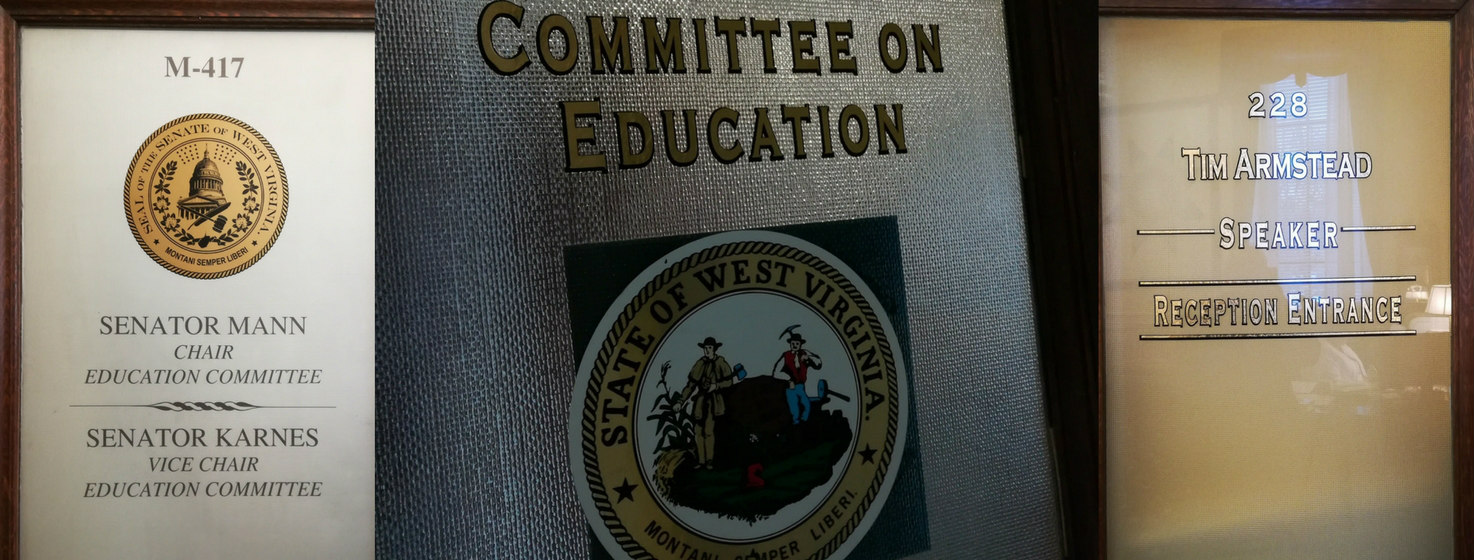
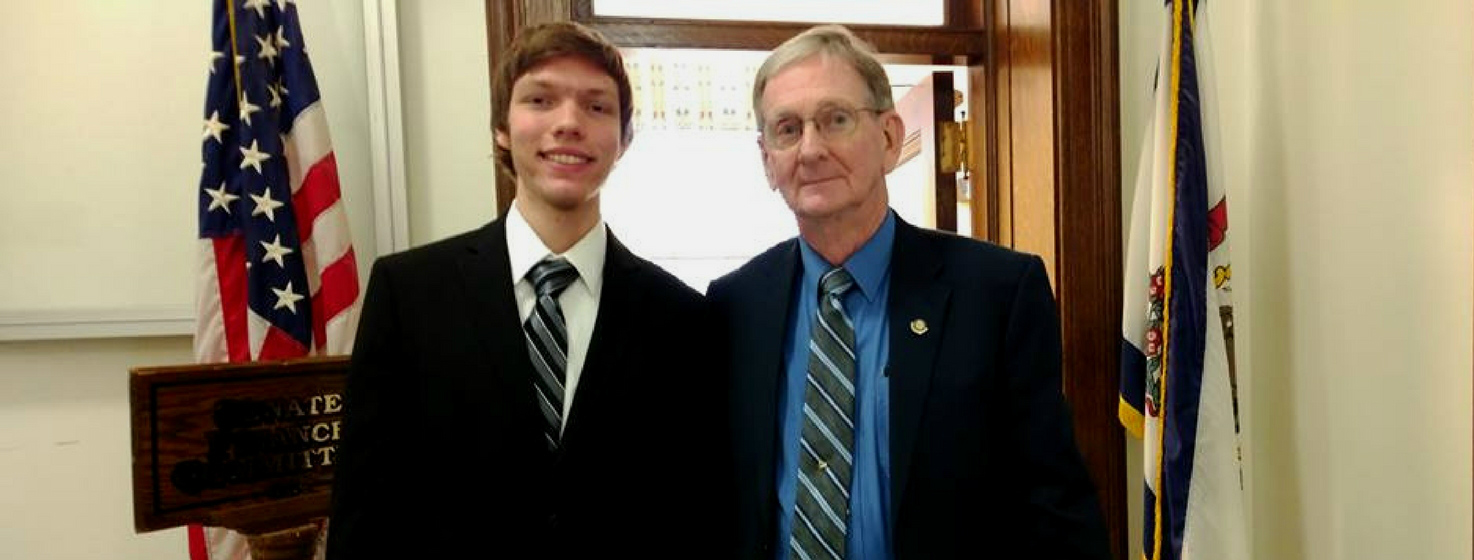
    Pictured in header:  Homeschool student Aron Ludwinski with Senator Chandler Swope of Mercer County.

  • Tebow Bill: Fumble & Punt

    Tebow Bill: Fumble & Punt

    On the second day of the 2018 Session, the Senate version of the Tebow Bill (SB130) passed unanimously in the WV Senate Education Committee.  Added amendments simply clarified the original purpose.  An amendment from Senator Beach, which would have converted the bill into a pilot study, was defeated. In response, Senator Trump spoke passionately in support of the bill saying it corrected an “injustice” against homeschooled students. After passing in the Senate Education Committee, the bill was sent to the Senate Finance Committee where it still resides.

    Mr. Carey, CHEWV’s Legislative Liaison, then learned Senate leadership did not plan to advance the Senate Tebow Bill (SB130) until the House version of the Tebow Bill (HB4007) advanced in the House Education Committee.  This was an informal agreement between the two Houses.

    On January 24th, HB4007 was considered in the House Education Committee where several amendments were offered. Two were added, one which required a homeschool student to score in the 5th stanine or above for the right to play sports.  A third proposed amendment, which failed, would have destroyed the bill by leaving it up to each county board to determine the eligibility rules and requirements governing sports participation. To everyone’s surprise, when the bill came to a final vote it was defeated with 16 Nays to 9 Yeas.  A bill, which was largely identical to the bill which had passed last year with flying colors through both Houses and made it to the Governor’s desk where it was vetoed, was defeated overwhelmingly this year by both Democrats and Republicans in the House Education Committee. 

    Now the Senate must decide whether to advance their version of the Tebow Bill (SB130).  Will they choose to do so with such a slap-down in the House Education Committee?  Today it is hard to know.  What about the Promise Bill (SB319) and the Driver’s License Bill (SB364)? How can we trust that these bills won’t suffer a similar fate at the hands of legislators in House Education?

    Looking to God for help, we must first and foremost pray for His wisdom, guidance and favor. He is our Shield and Defender, just as in past battles CHEWV has faced.  Overwhelming numbers of homeschooling parents must also communicate with legislators.

    This twofold approach is the sure path to the victories we seek. Nothing can be taken for granted this year at the State Capitol.  We will have to be ready to speak up for the legislation which matters to us most. To that end, CHEWV will soon provide talking points and contact information so that, together, we can take a stand in support of our freedoms.

  • Opened Doors – A WV Legislative Report

    Opened Doors – A WV Legislative Report

    …from Michael P. Donnelly, Esq.

    Staff Attorney
    Director of Global Outreach
    HSLDA

    Despite inclement weather and flight delays, I was delighted to meet this week with some of the highest-ranking legislators in West Virginia to discuss improved opportunities for homeschooling families.  On the heels of Homeschool Day at the Capital, I was joined by CHEWV Legislative Liason, John Carey, as we met with the Senate President, Speaker of the House, Chairmen of both the House and Senate Education Committees, and the Governor’s office. 

    John and I communicated our interest in two pieces of legislation that we expect to be introduced shortly: a bill that would make it easier for homeschooled students to get a driver’s license, and a bill to remove the anachronistic GED requirement for the Promise Scholarship.  We felt the overall response was positive and are optimistic that the legislation will get the needed attention to become law.  With the Governor’s new party affiliation, there is renewed hope that he, too, will be more favorable toward homeschool legislation and less likely to veto it.  Former Senator Mike Hall, a past supporter of homeschool legislation, is the Governor’s new Chief of Staff.

    We had opportunity to discuss SB 528, a bill that caused a big stir last year, with Senate Education Chair Kenny Mann. Senator Mann made it very clear that he had had no intention of creating problems for homeschooling families last session, but that the legislation had not properly addressed specific situations where abusive parents of public school-enrolled students were considering homeschooling to escape scrutiny.  The Senator agreed that this was a rare occurrence and assured us that he supported the right of parents to homeschool, personally knowing several homeschooling parents with thriving children. 

    Delegate Paul Espinosa, Chairman of the House Education Committee, noted continued support of the Tebow legislation that was passed by the legislature last year but vetoed by the Governor.  Chairman Espinosa said he was optimistic that the Tebow bill would pass the Education Committee as well as the House of Delegates as it did last year. 

    A different version of the Tebow bill, SB 130, has now passed out of the Senate Education committee and has been referred to the Senate Finance Committee.  Last year I was able to present a national perspective on equal access laws, such as Tebow laws, to help the Legislature understand the national adoption of these laws. Although HSLDA is neutral on equal access legislation, we follow these proposals closely to insure that there are no unintended negative consequences from their passage. 

    Senator Patricia Rucker and Senator Robert Karnes (Vice Chair of Education) were instrumental in arranging these meetings with key legislators.  Rucker and Karnes are both home educating parents and have been tremendous supporters of our community. Having individuals of their caliber in elected positions in the legislature is invaluable.  We are pleased that Senator Karnes is again bidding for re-election this year.

    In addition to our meetings, Home School Day at the Capitol was a great success for WV homeschoolers.  A representative of Governor Jim Justice commended the attendees for their educational commitment as demonstrated by a willingness to shoulder the additional burdens and demands of homeschooling.  He acknowledged the positive track record of homeschooling and shared the Governor’s warm welcome with the group.

    Advocating for homeschooling freedom is one of the most important things that we at the Home School Legal Defense Association do.  By working closely with state organizations like CHEWV, HSLDA attorneys review and track hundreds of bills that are related to homeschooling.  HSLDA’s new Legislation Action Center makes our advocacy work even more accessible and efficient, and we invite you to check it out.

    It is a privilege to serve homeschooling parents. When we all join together we can protect our freedom and also help each other.  HSLDA serves individual member families with information, advice and legal services.  Your support is essential to our ability to protect homeschooling. If you are not a member, please join us today! 

  • If a Student Takes His Classes at Home…

    If a Student Takes His Classes at Home…

    …Isn’t He a Homeschooler?

    The 2017 legislative session marked the beginning of a push for online public school options in West Virginia, making it possible to be a public school student from the comfort of one’s own home.  While CHEWV supports the right of ALL parents to choose the best educational option for their children,

    we believe it is important for both parents and government officials to understand the difference between homeschooling and public school at home. 

    “Educational options” are essentially three-fold.  Children can be sent to public government-controlled schools paid for by public funds; parents can pay to send their children to private schools; or parents can take complete and personal control of the education of their children by homeschooling them.

    CHEWV helps protect the latter choice.

    But what about public school at home? Most assume that any child schooled at home is a homeschooler.  But this is not necessarily the case. In his veto statement about the sports access bill in 2017, the governor implied that public school at home was homeschooling.  However, the location of the schooling is not so important as the content and control of the education.  Let’s explore that idea further. 

    When taxes are paid to the government, those taxes become “public funds”  which our representatives then decide how to spend.  When public funds finance a child’s education, the representatives – as well as public policy makers within the government’s educational bureaucracy – also place demands on what will be taught to the student. Control of a child’s education is shifted from the parents to the county; from the county to the state; and, finally, from the state to the federal government.

    These county, state and federal officials have come to believe that they have a responsibility, not just if physical or educational abuse is suspected, but some sort of responsibility for every child all of the time.  Policing parental choice then becomes part of their concern.  Most of them, blind to the failures in their own system, truly feel that they are policing parents for the good of the children. Unfortunately, this holds true even when the parent fully funds the education.

    In other states, homeschoolers have discovered that difficulties multiply when they start accepting tax funds or tax-funded resources for their children. Eventually the parents’ choices are quite limited and God is absent from the curriculum – “separated” from the “state” education. Choice disappears. Government education is all that remains – regardless of where it is done.

    Since 1986, WV parents have been free to educate in the way that they believe is best for their child, as long as they privately fund that education. Recently, WV government schools have offered them “public school at home” – the same schooling, paid for with government funds, that they offer in their brick-and-mortar buildings. But is this homeschooling?

    No. Because WV has a compulsory attendance law that requires that every child attend school, parents must utilize a hard-won exemption in order to homeschool. But traditional public schoolers could switch to public school at home without an exemption because these aren’t homeschool courses – even if homeschoolers may enroll in them.

    The legal recognition of the right to homeschool was a hard-won battle fought so that parents could direct the upbringing of their children. “Home-based” education is part of that, but not the most important part. The worldview of the education and the individualized approach are even more essential to most Christian homeschool parents

    Public school students are educated according to the curriculum and rules of the public school. While an individual school or county board might allow flexibility, they can also take that flexibility away. In other states they have done so – because they have the authority to do so.

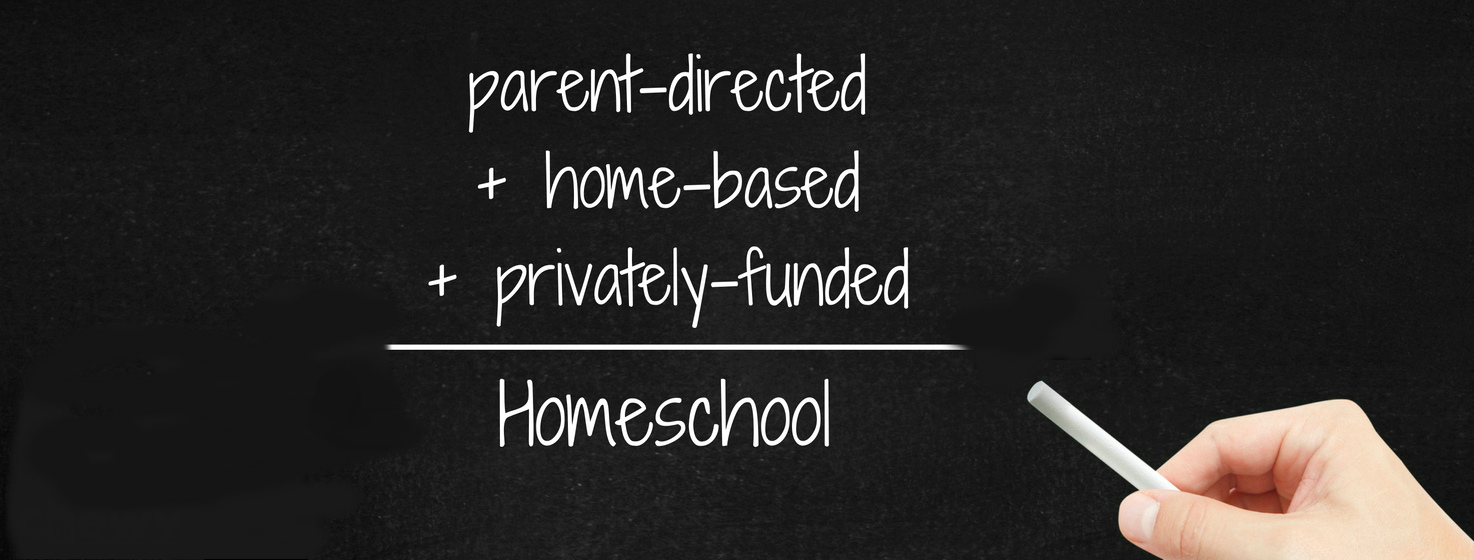
    Of the three tenets of homeschooling, “parent-directed” is the most important. Fundamental to homeschooling is that the parent is in charge.

    Bottom line? Control is the key factor. As a parent, how much of your child’s education do you want to control? Do you want to exercise your right to decide when and what your child is taught about sexuality, or about God’s role in the origins of life and the unfolding of history? Homeschooling allows you, not government, to control the worldview. Homeschooling allows you to fully guide your child’s education.

    However, homeschooling does not allow you not to educate. West Virginia homeschoolers are required by law to teach at least the five subjects of reading, language, mathematics, science, and social studies, and to assess student achievement each year. A parent who is not teaching his or her children those five subjects is not a legal homeschooler in the state of WV.

    Granted, for a kindergarten student, appropriate social studies might be visiting the local fire station and learning about community helpers. Depending on the grade level, this may or may not mean studying a textbook daily in all five subjects. West Virginia’s homeschooling law allows for a variety of appropriate educational approaches, but it does not allow “not schooling” as so many officials assert. A child who is neither sent to school nor educated appropriately at home is not a homeschooler, but a truant.

    While CHEWV believes that all parents should be able to choose any legal educational option for their children, we specifically exist to defend and support the right to homeschool. That right is not the same as doing public school at home. We hope that parents who consider public school at home will also consider that there may be unforeseen consequences. While we will do our best to inform parents about how homeschooling and virtual public school options mesh (e.g. homeschoolers can take up to x virtual classes while remaining legal homeschoolers), we exist to protect your right to take no public school classes at all if you choose. It is imperative that we all understand the difference between a public school student, a homeschooled student, and a truant. We must first understand our options before making an informed choice.

    NOTE:  2022 ushered in yet another choice for parents, the Hope Scholarship. Hope students using an “Individualized Instruction Program” may also school at home.  But they are schooling under the new Exemption m.  WV homeschooling continues to fall under Exemption c.  For more information, check out this article.

  • Preparing for the 2018 Legislative Session

    Preparing for the 2018 Legislative Session

    John Carey, Roger Sherman, and Lesley Oxley met at the Capitol in mid-October to make plans for the upcoming 2018 Legislative Session scheduled to commence on January 10th.  CHEWV’s Legislative Team discussed the following:

    • removal of the requirement that homeschooled students take the GED/TASC test to qualify to apply for the Promise Scholarship;
    • Driver’s License parental confirmation of enrollment and progress;
    • Tim Tebow bill; and
    • homeschoolers’ right to attend vocational school.

    The latter bills were passed in both houses in 2017 but then vetoed by Governor Justice.

    As CHEWV prepares for the upcoming session, we would like to hear from homeschoolers who are directly affected by any of these issues.  Please email comments to John Carey (jcarey.heritage@gmail.com) or private message CHEWV’s Facebook page.

    Also, mark your 2018 calendars for Home School Day at the Capitol on January 16th.  Plan to take part, meet your senators and delegates, and observe politics in action.  Freedom is fragile.  Don’t take it for granted.

  • Senator Smith and Delegate Statler Offer Sage Advice to Homeschoolers

    Senator Smith and Delegate Statler Offer Sage Advice to Homeschoolers

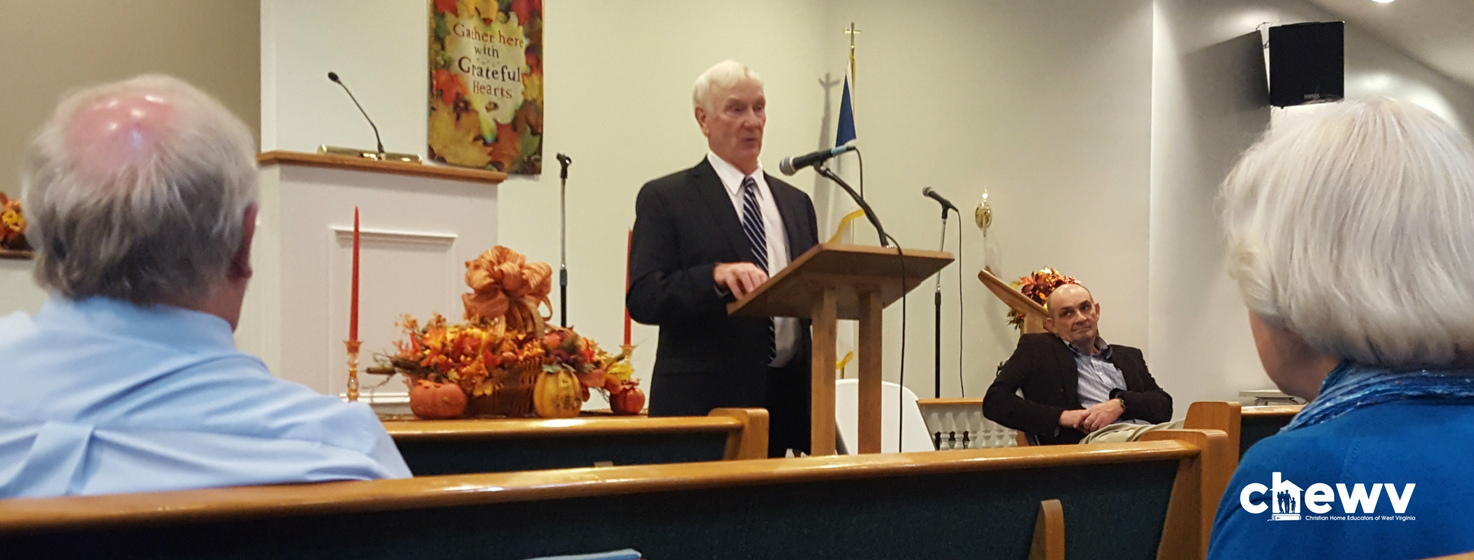
    A disappointingly small crowd of homeschool families came out this past Thursday evening to hear Delegate Joe Statler and Senator Randy Smith, dedicated and energetic WV legislators who have supported the homeschool agenda in Charleston. The Town Hall, hosted by Pastor Jim Cooley and the Morgantown Bible Church, gave both legislators time to share their thoughts about home education and to hear concerns of parents and students. 

    Senator Smith lamented, “The problem with the country is that they don’t get involved.”  Originally from Terra Alta and now living in Davis, Senator Smith has grandchildren who are homeschooled.  He praised CHEWV’s lobbyist, John Carey, when asked how homeschoolers can separate themselves from truants. 

    “Bad laws often get passed because judges are not enforcing current laws,” stated Carey later.  “Judges need to enforce current law and protect children.  When they fail to carry out their judicial responsibility, pressure is put on legislators to take away liberties from law-abiding families.”

    Smith emphasized that legislators are influenced by emails from constituents.  While he discouraged the use of form emails, he stressed the impact of short, personal, heartfelt emails.  Smith noted that communicating before the busyness of the session sets in is strategic.  “Right now, during the fall months, is a good time… We get fewer emails now. But don’t be radical.  Don’t threaten,” he counseled.  “Be cordial, professional, tactful.”

    Delegate Joe Statler, Vice-Chair of the House Education Committee, concurred.  “Never assume we know what the heck we’re doing.  We may not realize the ramification of bills.”  Because hundreds of bills cross legislators’ desks during the session, he encouraged citizens to lobby and help legislators understand what a particular issue or bill could do to them or for them. 

    Statler dislikes the extensive 18-8 education chapter in the WV Law, feeling that it doesn’t allow enough local control.  To a comment about homeschoolers still paying taxes and playing sports, the former Monongalia County School Board member clarified that the tax money is allocated back to the counties according to literal head counts in the public school; this means that homeschool students who are not physically enrolled prevent their parents’ money from coming back to the county of origin. Those funds default instead to general state funds. Consequently, teachers’ unions argue that homeschoolers cost counties needed money.     

    Statler himself is very supportive of homeschooling – along with other school choices – stating that the child’s education must always come first.  He supported the Tim Tebow bill and feels it was vetoed only because it also applied to private schools.  Without that provision, which was added in the Senate, he thinks it can get passed again – and signed.  In fact, he’s looking for that to happen in 2018.

    Roger Sherman, board member with CHEWV and long-time professonal lobbyist in the private sector, commented that most legislators intend to do what’s right, but they often hear from only one side on an issue.  He also pointed out that there is a 40% turnover in Charleston every two years.  “Never forget that four out of ten have never seen us before or heard our past stories.”

    Both legislators referred to the proverbial homeschooler on a four wheeler in the middle of the day – the characterization which has flooded the Capitol for years, intending to malign the diligence of homeschooling families.  Both Smith and Statler say that the antidote is meeting with legislators and letting them get to know real homeschoolers. Carey agrees. “They won’t push the [voting] button and hurt families that they know personally.”   

    “Bring your children with you,” says Smith.  “Their good behavior impresses legislators.”   

  • Homeschool Freedom Town Hall

    Homeschool Freedom Town Hall

    Featuring Senator Randy Smith and Delegate Joe Statler

    The West Virginia Legislature will convene for its 2018 regular session on January 10th.  As in the past, we can expect bills to be proposed and debated that will affect the freedom to homeschool in West Virginia.  A Town Hall for homeschooling families to discuss 2017 and 2018 legislation has been scheduled for Thursday evening, September 28th, at the Morgantown Bible Church, 1407 Brookhaven Road, from 7:00 to 8:15.

    This event is an opportunity for homeschooling families to become aware of the legislative process, attuned to current issues, and involved in both politics and prayer.  These types of events also demonstrate to legislators that homeschoolers are informed, and that we care.

    The evening will feature Senator Randy Smith and Delegate Joe Statler, who will be offering an overview of the 2017 session and discussing issues of interest as we look forward to the 2018 session.  Senator Smith represents Barbour, Hardy, Preston, Taylor and Tucker counties, as well as parts of Grant, Mineral and Monongalia counties.  Delegate Statler represents District 51, which includes a large amount of Monongalia County.  Both legislators are friendly to homeschooling concerns.  In addition, John Carey, CHEWV’s Legislative Liaison, will contribute to the discussion.

    Morgantown Bible Church is sponsoring the Town Hall on behalf of homeschooling families and in cooperation with CHEWV.  The discussion will be moderated by Pastor Jim Cooley.   

    At this meeting, we want to hear firsthand from you whether you find our homeschooling laws, particularly the recent changes, helpful; and whether there are further changes you would like the legislature to consider.

    “Today, homeschooling families in WV enjoy a level of freedom that was hard to imagine only 30 years ago,” says Roger Sherman, founding CHEWV board member and part of the group who fought for the initial right to homeschool in WV.  “Families then were often fearful of having their children taken from them if they let it be known that they were homeschooling.  That freedom was hard-won and is maintained today through the active, prayerful engagement of homeschooling families in the legislative process.  God has blessed those efforts but we must not allow complacency to put our successes at risk.”

  • After the 2017 Legislative Session

    After the 2017 Legislative Session

    Where Does Homeschooling Stand Now?

    by John Carey, CHEWV’s Legislative Liaison

    Prior to the 2017 WV Legislative Session, CHEWV decided it was time to step back and to give the legislature a break from homeschool legislation.  We gratefully acknowledged the progress made in the last two regular sessions: the legislature had supported our efforts to advance no fewer than five homeschool bills through both the House and the Senate.

    Our stepping back unexpectedly led to several homeschool-friendly legislators choosing to step up, actively encouraging their colleagues to support homeschool sports and vocational school legislation.  As the session progressed, however, we witnessed the introduction of disturbing legislation designed to challenge our basic civil rights to educate our children and live out our faith.  Needless to say, the CHEWV lobbying team was the one group at the legislature this session that never did get a break.  What follows is my synopsis of the good, the bad, and the deplorable legislation, followed by a look at homeschooling’s future challenges.

    HB 2196 – The Tim Tebow Bill
    From the start, this bill was severely handicapped.  While Senate Education Chair Mann allowed the Tim Tebow bill to advance through his committee, he refused to speak in support of the bill on the floor of the Senate.  As it turned out, the Chair and the Governor gave their support to the Public School Virtual School Bill instead. By vetoing the Tim Tebow Bill, the Governor saw an opportunity to give homeschoolers who want to participate in sports an incentive to stop homeschooling and join the Public Virtual School instead in order to play. 

    HB 2589 – The Vocational School Bill
    The other homeschool bill the Governor decided to veto this session was a bill to ensure that homeschooled and privately schooled students could take advantage of vocational education courses. While most counties allow homeschool students to take these classes, at least one, Raleigh County, does not make room for homeschool students. When seeking admission, the county consistently states that there is not enough room. This bill would have required that they, and all counties, make room for qualifying homeschool and private school students.

    SB 630 – The Virtual School Bill
    The Accessibility and Equity in Public Education Enhancement Act, signed into law by the governor and technically unrelated to homeschooling, may still negatively affect us.  According to the Charleston Gazette-Mail, this bill “would allow county school systems to offer full-time K-12 virtual education and ‘an online pathway for earning a high school diploma,’ while also receiving the full per-pupil state school aid formula funding for each student who participates.”  Kanawha County Schools Superintendent Ron Duerring, who testified in support of the bill, said it would allow participating students, “including homeschooled students,” to participate in sports and other public school activities.  This statement is not accurate, however, because homeschoolers in WV are those who are being educated according to the homeschooling exemptions to compulsory attendance, such as 18-8-1(c)(2), and as such have the freedom to choose their own curriculum, something that will not be allowed if they enroll in the public school virtual school program. This issue will be discussed in greater detail in future articles.

    SB 186 – Change in Compulsory Age

    In a cultural climate that usually pushes compulsory school age younger and younger, this year’s legislature made a surprising move.  SB 186, which makes compulsory age older by two months, was passed by the legislature and signed by Governor Justice. 

    Starting in the 2019-20 school year, children who turn six prior to July 1st will be of compulsory school age.  Students who turn 6 between July 1st and September 1st will not be of compulsory age as they are now.  

    However, children who are enrolled in a publicly supported kindergarten program automatically become of compulsory age regardless of age.

    How does this affect homeschooling? Currently, a notice of intent is required the year that the student reaches compulsory school age, which is six years old prior to September 1st at the latest.  But in 2019, this will only be required for students who turn six prior to July 1st (unless they’ve ever been enrolled in a publicly supported kindergarten program).  

    SB 186 recognizes that many students are not ready to begin formal schooling at young ages.  Because the bill primarily affects preschool and kindergarten public school students, it allows for a bit more maturity before children enter those programs.  It also makes the cut-off age prior to the commencement of the school year.  

    Now for Deplorable Legislation

    SB 528 and HB 2702 – “establishing process to provide student is ineligible for home instruction exemption”*

    HSLDA described SB 528 as “an excessive and unnecessary intrusion into families.
    ….It treats parents who want to homeschool as suspected child abusers who must be investigated.”

    HSLDA continued, “West Virginia Senate Education Chair Kenneth Mann (R-Monroe, 10), has teamed up with Democratic senators Michael Romano and Ron Stollings to propose an alarming law that would effectively prohibit homeschooling and order CPS investigations if parents wanted to homeschool children who had accrued 10 absences without acceptable excuse.”

    Senator Mann and Delegate Westfall, who sponsored HB 2702, an identical bill introduced in the House, publicly expressed their conviction that some parents use homeschooling as a means to avoid prosecution for truancy.  Senator Mann later withdrew his support for SB 528.  While Delegate Westfall also removed his support for this offensive provision in HB 2702, he said in committee that he isn’t finished trying to “address this issue.”  This is no surprise, since Delegate Westfall has in recent years been a leading advocate for increased regulation of homeschooling.

    SB 435 and HB 2650 – The Youth Mental Health Protection Act
    The purpose of SB 435 and HB 2650 is to prevent a parent from providing professional counseling for a child struggling with homosexuality unless that counseling encourages the child to identify as a homosexual. 

    The gay lobby convinced many legislators to sign on to this legislation by telling them that they are simply trying to prevent children who identify as having same sex attraction from being abused in a counseling situation. After meeting with legislators and explaining how these bills would actually prevent a parent from getting the help they know their child needs in such a situation, many began removing their support from these bills, including Senator Boso, Senator Swope, and Senator Trump.

    Thankfully, these bills were opposed by legislators who understand the all-important issues of religious liberty and parental rights, and who worked behind the scenes to prevent them from being placed on a committee agenda and advanced. This was quite an accomplishment since SB 435 was strongly supported by Senate President Mitch Carmichael.

    One of our legislative flyers expressed, “Our primary concern with HB 435 is the attack it represents on parental rights.”

    “The rights of parents to the care, custody and nurture of their children is of such character that it cannot be denied without violating those fundamental principles of liberty and justice which lie at the base of all our civil and political institutions.”

    It’s Time to Look Behind the Curtain

    CHEWV was intimately involved in the shaping of both the Tim Tebow and the Vocational Education bills because once a bill that affects homeschooling begins to advance, we must ensure that it does not turn into legislation that harms homeschooling families. We met with stakeholders, crafted amendments with the help of staff, and testified before committees. We also aggressively opposed the Gay Conversion Therapy bills. We were careful to express our opposition based on our primary concern: the impact these bills would have on parental rights and religious liberty.

    All in all, this was a hideous session as it relates to our basic civil right to homeschool. At one time during the session, nearly 40% of the House and over 40% of the Senate sponsored legislation that attacked either homeschooling, parental rights or religious liberty directly. We worked hard to prevent these bills from advancing. In the end, not one advanced without being amended to remove the offending provision.

    Where Do We Go From Here?

    As we look to the future, it has become clear that we cannot wait until next session to meet legislators and make them aware of our concerns.  Generally speaking, legislators did not support anti-parental rights and anti-religious liberty bills in such large numbers because they opposed those freedoms; they simply didn’t understand the attack these bills represented. As CHEWV continued meeting with legislators, we saw them step away from these bills.  Our efforts need to be sustained throughout the year, but we cannot do it alone.  We need an army of respectful and well-informed homeschool families to meet with legislators in their own districts and clear up the confusion that has persisted at the state legislature for the last two years.  We need to set the record straight, and we need to start now.

    Further, we need to become advocates for parent-directed homeschooling, and we need to educate legislators about why parents choose to homeschool and explain the benefits that result from such involvement in their children’s lives. Legislators must not become confused about the difference between a public virtual school and a parent-directed home school. Those families new to homeschooling need to understand the difference as well.

    The homeschool sports issue and the vocational school issue aren’t going to disappear. State legislators will keep pushing them forward.  We must be there to ensure that homeschooling freedom is protected as legislators continue to consider and advance those issues.

    Unfortunately, we will forever have our detractors like the SSAC, the Public School Administrators, and even legislators like Delegate Steve Westfall who subscribe to the notion that parents homeschool not because they care about their kids but because they want to avoid being prosecuted for truancy.

    Finally, it’s crucial to recognize that several factors are at play in the state, simulataneously, in ways that have never existed before. Well-financed groups have entered our state to override parental rights and religious liberty in the name of preventing discrimination. Homeschoolers in West Virginia now outnumber, for the first time, private school students, and some worry about the impact this will have on public schools. Public school officials are reacting by attempting to create their own version of homeschool, even introducing legislation that allows students to work at different grade levels in different subject areas.  We must seize the challenges these changes represent and do what is needed to protect our freedoms.

    Nevertheless, it is encouraging to see the homeschooling progress that has been made over the years and to remember what God says as we look to the future. In Jeremiah we read, “For I know the plans I have for you,” declares the Lord, “plans to prosper you and not to harm you, plans to give you hope and a future.”

    If you’re interested in protecting our freedoms and would like to receive resources to help prepare yourself and others for the 2018 Regular Session, I’d like to hear from you via jcarey@heritagecwv.org.   

    Additional legislation that was related to homeschooling can be reviewed at the Heritage Legislative page.

    *Wording taken from the official WV legislative site.
  • Tips For Lobbying State Legislators

    Tips For Lobbying State Legislators

    It’s Simpler Than You Probably Think

    by John Carey, CHEWV’s Legislative Liaison

    Visiting the State Capitol

    When visiting the State Capitol, make sure to drop by your representatives’ offices and introduce yourself and your family. A simple meeting, in and of itself, has value to support homeschooling even if you are not lobbying for a particular issue.

    If your representatives have time, ask them where they live, how long they have been in office and if they enjoy serving. You may find that you have the same friends as well as other things in common. Come prepared to tell them why you chose to homeschool and why you like it.  Be brief, recognizing they may be busy with little time to talk. 

    I like to mention that when we began homeschooling, we decided year to year if we would continue, until one day my ten-year-old daughter Vicki was excitedly telling her friends about the characters in a book that I had read for the first time in college. I was stunned that she and her friends had already read the book – and could see that she was way ahead of me at the same age.

    Making a Difference Back at Home

    We are fortunate to have a citizen legislature. citizen legislature is a legislative chamber made up primarily of citizens who have a full-time occupation outside of being legislator. Those who represent us in Charleston live and work among us most of the year.  Therefore, we not only have the opportunity to meet with legislators in Charleston during the two-month regular session, but also during the remainder of the year when they are living in or near our home towns.  This is our bigger opportunity to make concerns heard and understood, and to put a face on our issues. 

    There is an increased urgency to get to know legislators this year than in the past because there has been such a high percentage of turnover in recent years. At least 20 percent are new to the job of representing constituents, and just about as many are new to homeschooling.  On an encouraging note, more legislators than ever either homeschool themselves or have grandchildren who are homeschooled.

    Lobbying is simply influencing our legislators.  A citizen legislature provides many opportunities to influence both in Charleston and at home.  Let’s make the most of the opportunities that our West Virginia state government provides by coming to the Home School Day at the Capitol this year.  Here is a link to learn more.

  • Why WV Homeschoolers Make Good Lobbyists

    Why WV Homeschoolers Make Good Lobbyists

    by John Carey, CHEWV’s Legislative Liaison

    With an excellent reputation at the Capitol, members of Christian Home Educators of West Virginia have been consistently rated by past state legislators as very effective lobbyists.  The last two elections, however, have created an influx of new legislators, including a significant number who know little about homeschooling. Home School Day at the Capitol is the ideal opportunity to highlight homeschooling accomplishments to these new legislators.  It’s usually possible to schedule lobbying appointments, and as an assembled group we can express our appreciation for past support from those who come to address us at the afternoon rally. 

    While homeschool students can communicate the value of home education, their parents wield impressive influence as well.

    1.  Home educators are committed to the truth.

    Christian parents who educate their children at home are strikingly independent thinkers who seek to draw their conclusions from well-founded facts and principles.  Their tenacious commitment to truth stands in stark contrast to the moral relativism and political correctness of the culture around them.  They care not only what their children are taught but how they are instructed, and they take seriously the responsibility God has given them to educate their children.  Governed more by what God says than what man thinks, they cannot be persuaded to support legislation through emotional arguments.  They must be convinced by clear, substantial facts before taking action, but once an issue is determined to be important, they persevere until their views are heard by those who represent them in Charleston. 

    2.  Homeschooling parents are skilled and talented educators.

    They are problem solvers who are focused on enabling their children to learn and retain information, not simply “finish the book.”  Through homeschooling, parents develop their own skills by nurturing their students’ abilities.  When these parents choose to engage the legislative process, their honed interpretive skills and instructional knowledge often bring an invaluable information resource to the legislative community. Some parents make phone calls while others are willing to meet representatives personally.  Some help teach other home educators or write articles for local newspapers.  Although our opposition has tried to cast us as “that isolated family up a holler,” they could not be further from the truth.

    3.  Home educators put a face on the issues they support.

    Home educators live in every county and attend hundreds of churches throughout West Virginia.  It is true that, when needed, hundreds of homeschooling parents and their children will fill the State Capitol to express their views in person.  But there are many more who contact their legislators from their home district.  They make it clear that the folks back home care about homeschool legislation and are closely following the actions of their representatives.  They also meet with legislators when they are not in session.  These parents become the face of homeschooling everywhere. 

    The Frame family meets with Delegate Brent Boggs at HSDC.

    In conclusion:

    Yes, home educators have been applauded by state leaders for being effective lobbyists.  First and foremost, Christian parents who homeschool are known to tenaciously support what they believe to be true and morally right.  They are not only people of conviction but talented individuals who become increasingly skilled and competent each year.  Finally, these individuals live in the same districts as those who debate and vote on these issues.  Their proximity enables them to put a face on the legislation, something that agents of the state and paid lobbyists can’t do.  What better opportunity than Home School Day at the Capitol to put these skills to use?


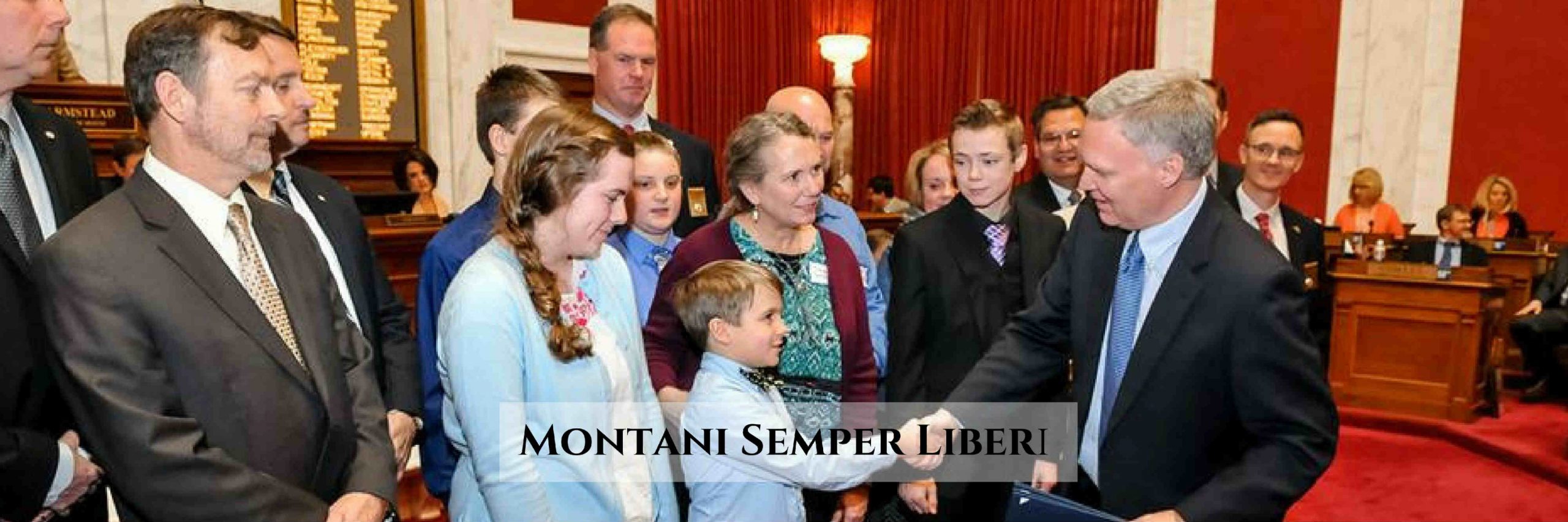
    Header photo:  REACH families greet Speaker Tim Armstead at HSDC.