Tag: Legislative

  • 2020 Legislative Roller Coaster

    While CHEWV has made only limited public statements about the happenings during the 2020 Legislative session, it is not due to lack of legislative activity related to homeschooling!  On the contrary, this session has been somewhat of a roller coaster.  At times, emails were drafted to call our members to action, and we were ready to push the send button.  Why didn’t we?  Because a well-prepared explanation from John Carey or data compiled by CHEWV would abate the concern – at least temporarily.

    Our legislative liaison, John Carey, and many vigilant homeschoolers have been at the capitol from January through March to speak with legislators, address concerns, and monitor worrisome bills introduced in the 2020 legislative session.

    So, what went well?

    Communication. 

    • Early in the session, we learned about HB 4440 (Raylee’s Law).  You can read about this bill HERE.  While the intent of those who sponsored the bill was honorable, the wording of the bill itself was problematic – perhaps even unconstitutional.  As the bill gained traction, CHEWV and HSLDA alerted WV homeschoolers to contact their legislators and explain the faulty reasoning included in the bill.  Basically, homeschool law already provides the legal means for the county to deny homeschooling using due process.  Thanks to the quick response of our homeschoolers, the bill remains in committee where it is dead for this session.
    • CHEWV and John Carey then spent the remainder of the session communicating with legislators to counter opposition from other lobbyists.

    Throughout 2019, various news articles had surfaced across the state hinting that counties were having issues with “homeschooling” related to truancy.  CHEWV proceeded to meet with former State Superintendent Steven Paine about this issue and others; a report of the meeting can be found HERE.  In the meeting, John Carey and CHEWV Board members addressed Paine’s concerns while raising some concerns of their own, including the lack of credible and consistent reporting from county school systems regarding homeschool enrollment. 

    Nevertheless, news articles continued to surface, and county and state officials began sharing concerns with legislators.  Officials continued to point to homeschooling as an “escape” from truancy issues, despite the fact that the homeschool law and truancy law provide legal means for the counties to address this issue.  During the 2020 Legislative Session, CHEWV and Mr. Carey worked countless hours answering questions, researching statistics, providing factual examples, and communicating information to legislators.  Several times it appeared that more regulation would emerge as the only answer to legislators’ concerns, but then hearts and minds would be changed! 

    What to do going forward…

     1.  Be vigilant.  With homeschooling becoming more and more a popular educational option, resistance is bound to occur.  Public schools see homeschoolers as a loss of revenue.  Some legislators continue to cite that one proverbial family who has been riding ATVs during the day for years now.  The public’s impression of homeschooling varies depending on the homeschooling family they know or their perception of what homeschooling should look like.  The harsh truth is that homeschoolers and homeschooling are being scrutinized in WV on all fronts.  Many people still do not understand how a non-professional could provide a good education to their own children, how education can take place in the evening as well as during the day, how a ten-year-old would not know what “grade” they are in, how a second grader may not be reading yet, and a myriad of other practices found amongst homeschoolers.  And those who don’t really understand the nuances of homeschooling often feel that it requires additional oversight. 

    So, how can each one of us help? 

    • Be accountable.  Make sure that your child is getting the quality education a caring parent would want their child to receive. 
    • Be ready to give informative answers about the tailored facets of home education.  

    2.  Be Positive.  Homeschooling provides a wealth of amazing opportunities that go far beyond school books and online classes. Educating at home enables families to tailor each and every subject to fit each and every student’s needs.  Students can pause, practice, explore, research and read about a topic, as opposed to just completing an assignment and checking off a box. Through this unique learning environment, conversations occur which build family relationships. Instead of peer pressure that tears down, home education offers opportunities to build confidence and overall well-being, while happiness occurs naturally as concepts are explored and then mastered.  As you take advantage of these opportunities, ask yourself if you are being a positive example in word and deed.  Yes, homeschooling is work, but by grabbing onto all of the positive aspects of the process, your family becomes a positive influence.

    While we live in a state not yet deemed as homeschool-friendly as other states, we have made progress throughout 34 years of working together.  In the early decades, it was extremely hard to make any improvements.  But in the last 10 years we have been blessed by positive progress.  Even when regulation was higher, homeschoolers were still met with the same arguments we hear today.  There is always “that” family who is not meeting someone’s expectations.  Be vigilant. Be positive.  Defending our freedoms together, we can counter the naysayers and help change hearts and minds!

  • A Response to “Raylee’s Law”

    A Response to “Raylee’s Law”

    Anyone who reads the media reports1 about Raylee JoLynn Browning will be sickened, saddened, and angered. We will all rightly want justice served on her abusers and desire that such a thing never again be repeated.  We do, after all, bear the divine image of the God who arises on behalf of the weak and oppressed and who commands us to do the same (Psalm 12:5, Proverbs 31:8-9, I John 3:18). Nevertheless, such righteous desires should not lead us to wrong action.

    Eight-year-old Raylee died tragically in December of 2018.  Following a yearlong investigation, three custodians/parents were arrested in December 2019 – just over a month ago.

    Media reports((Ibid)) indicate that Raylee was hospitalized for various injuries beginning in 2011 when she was only one year old. Allegedly, she began self-mutilating at age two when one of the accused caregivers entered her life.  From then until her death, she was seen by multiple physicians, school workers, and teachers, many of whom reported abuse symptoms to CPS according to multiple news sources, and all of whom are mandatory reporters.

    Shortly before her death, Raylee was taken out of school – which apparently is why the proposed legislative response to her heartbreaking story takes misguided aim at West Virginia’s homeschool law.

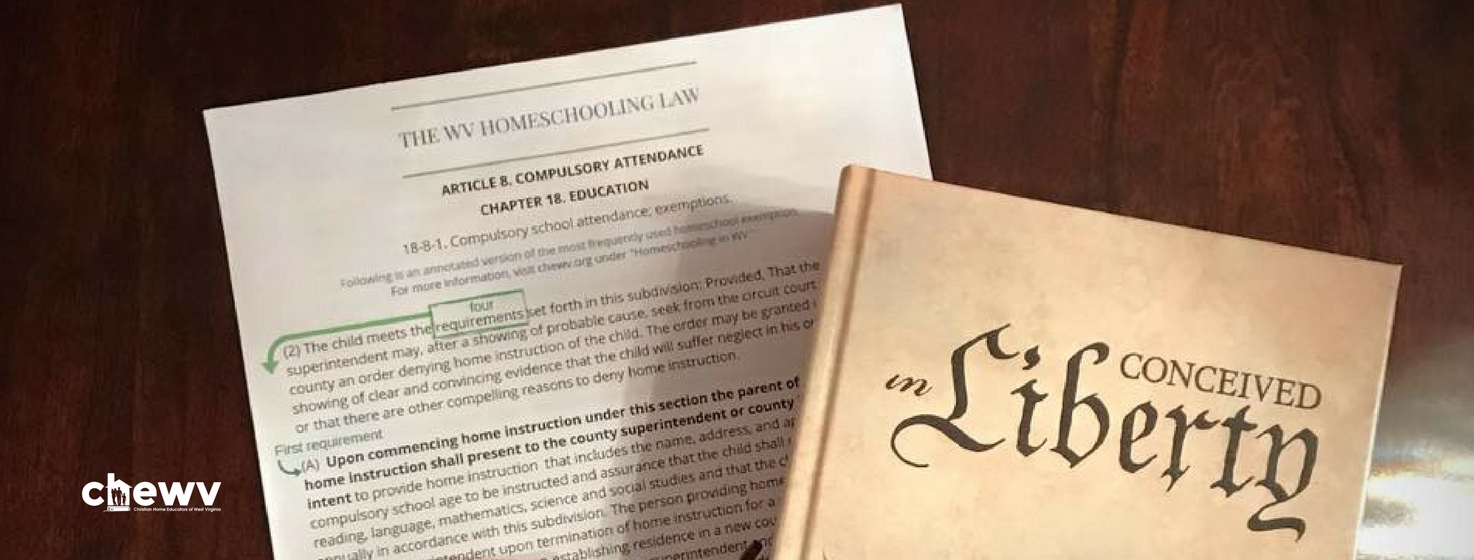
    The current homeschooling law2 clearly states, “The county superintendent may, after a showing of probable cause, seek from the circuit court of the county an order denying home instruction of the child. The order may be granted upon a showing of clear and convincing evidence that the child will suffer neglect in his or her education or that there are other compelling reasons to deny home instruction.”  If ever “clear and convincing evidence to deny home instruction” existed, it seems it would have been in this case.  Before homeschooling could have ever entered the picture, evidence of Raylee’s abuse had already been reported multiple times by public school teachers. But, inexplicably, the county school system apparently never pursued a circuit court order to deny home instruction. We must ask, If not, why not?

    Yet homeschooling isn’t even the crux of the issue. Raylee did not suffer abuse because she was homeschooled, and homeschooling did not conceal her abuse. Her abuse was apparent long before. The tragedy here is that the system that’s supposed to protect at-risk children in WV failed Raylee.  And any legislative response needs to address that failure, not shift the blame elsewhere.

    Before we discuss the legislative response in more detail, let’s first consider our response from a Christian perspective.

    Christians First (Homeschoolers Second)

    Open your mouth for the mute,
        for the rights of all who are destitute.
    Open your mouth, judge righteously,
        defend the rights of the poor and needy.  Prov 31:8-9

    Open your mouth for those who can’t speak.

    Christians should speak up about what happened to Raylee. We should be proactive in determining where the system failed her, and then propose solutions that address the very real problems that surround her tragic case.  And we should do so with an honest heart of compassion.

    We would hope and pray that Christians working within the CPS and school systems would proactively and prayerfully engage with this issue. Police continue to investigate, doing their Scriptural job for the state.

    As citizens and as Christians, this case also reminds us of our responsibility to report to authorities when we suspect that abuse may be occurring. Open your mouth for those who can’t speak. In addition, homeschool organizations that provide organized activities for children should also be aware of the state mandatory reporting requirements3.

    So what about the proposed Raylee’s Law?

    As we consider the proposed legislative solution to Raylee Browning’s case, let’s not automatically assume that HB 4440 is just an attempt by the anti-homeschool crowd to exploit a tragic situation.  Let’s consider that the idea for HB 4440 – “Raylee’s Law” – appears to have been put forward by a concerned teacher who once had Raylee in her classroom and may genuinely want to do something to prevent such a tragic circumstance from occurring again. 

    The stated purpose of HB 4440 is to prohibit homeschooling when a custodial parent or the person instructing the child is being investigated for, or has been convicted of, child abuse or neglect, or has been convicted of domestic violence.

    In reality, however, HB 4440 presents significant problems that undermine foundational principles of freedom.

    • First, this bill takes away educational freedom before conviction or even formal charges, in stark contrast to the constitutional presumption of innocence. In America, an accusation doesn’t (and shouldn’t) result in termination of rights or freedoms. Parents who have only been accused of a crime don’t lose their rights as citizens, and this bill would deny their due process rights for the duration of a CPS investigation – regardless of its merit.
    • In West Virginia, anonymous reports of abuse are taken just as seriously as any other.  We are aware of no penalty for reporting malicious and false accusations – unless it’s done specifically to affect custody4.  Add to that the fact that West Virginia has, by far, the highest rate in the nation of abuse investigations – three times higher than the national average rate and 40% higher than the next closest state5.  This is of particular relevance to HB 4440 since the bill proposes that someone who has a pending investigation for abuse or neglect would not be allowed to homeschool their children. Yet only about 15% of abuse reports investigated by CPS workers in West Virginia are ever substantiated, according to a report from the US DHHS6
    • Third, the concepts of “abuse and neglect” are broadly defined in state law, encompassing everything from intentional physical injury to a “threat” to a child’s “mental health” due to lack of “supervision.”7 While there are provisions in the code that make allowances for  “providing reasonable discipline to a child” and making decisions regarding medical care based upon “religious conviction or reasonable personal belief,” too many parents have learned that accusation of “abuse,” and subsequent CPS investigations, can occur for conduct as innocuous as allowing their children to ride their bicycles without a helmet. 

    While the crafters of this legislation might have Raylee’s horrific physical abuse in mind, the scope of the proposed bill goes much further, including even misdemeanor offenses. As long as the definition of abuse is so broad, a blanket rule against homeschooling based on accusation of abuse is unjust. 

    By contrast, the current law already provides a mechanism to protect homeschooled children and the due process rights of parents. If a parent submits a notice of intent to homeschool, the county  superintendent has the authority and responsibility to ask a judge to deny the right to homeschool when there are “compelling reasons” to do so. The current law is a more efficient and effective means of addressing potential problems with homeschooling parents.  The problem is that counties are not using this remedy.  Nevertheless, the neglect of good law is not an excuse to substitute unjust law. 

    This bill is just not the right response to Raylee’s tragic death!

    The critical question is why the system broke down – starting with why reports of abuse didn’t seem to precipitate an effective investigation, all the way to why the school system did not flag her notice of intent. From available news reports, it seems unclear whether there was a pending or active CPS investigation, but if neither, it would seem that the proposed Raylee’s law would have done nothing for Raylee at all!

    A cursory search reveals that WV CPS struggles with high employee turnover8 and a nearly 20% vacancy rate in positions9, while also tasked to deal with nearly 56,000 reports of abuse annually10 and nearly 7000 children already in state custody11.    

    In Raylee’s case, teachers made reports to CPS about the suspected abuse. If CPS wasn’t able to adequately investigate12 or follow up due to lack of personnel, over-worked case workers, or inadequate laws governing abuse, then those problems need to be addressed. 

    WV’s mandatory reporting law means the teachers not only reported to CPS, but also notified the person “in charge of” the school3. The county school system should have been aware of the suspicions of abuse in this case.  If the county took no action to deny homeschooling, it was not because of a lack of legal authority to pursue denial. If no such action was taken by the county school system due to lack of communication, lack of personnel, lack of county policy, or overloaded court dockets, then those problems also need to be addressed.

    We understand that the legislature is already working on some reforms to the CPS system and we applaud that effort. To honor Raylee, that kind of reform bill should be named “Raylee’s Law.” Anything less seems an affront to her memory.  We could all rally behind legislation that would ensure real cases like Raylee’s are effectively addressed.  We could all support changes that decrease the turnover rate and provide competitive salaries13 to CPS case workers so that there’s adequate staff to investigate reports.  Clearly, investigation into the real breakdown that caused this tragedy is necessary.  Once the true problems are identified, then meaningful reform can happen.

    HB 4440 has been assigned to the House Education Committee14, but has not yet been placed on the committee’s daily agenda.  A twin bill, SB 63715, has since been introduced in the Senate.  CHEWV will continue to monitor both bills closely and keep you informed.  Right now prayer is needed, and friendly visits to legislators would not be remiss.

    1. https://www.winchesterstar.com/opinions/editorial-raylee-a-year-later/article_d43b90b4-46cc-58e7-bcce-0366d6765267.html, https://www.whsv.com/content/news/Dad-2-women-arrested-in-death-of-abused-West-Virginia-girl-566078931.html, https://www.dailymail.co.uk/news/article-7781253/Dad-2-women-arrested-death-abused-West-Virginia-girl.html []
    2. https://new.chewv.org/homeschooling-in-wv/wv-homeschool-law/ []
    3. http://www.wvlegislature.gov/WVCODE/ChapterEntire.cfm?chap=49&art=2&section=803 [] []
    4. http://www.wvlegislature.gov/WVCODE/ChapterEntire.cfm?chap=61&art=6&section=25 []
    5. https://www.acf.hhs.gov/sites/default/files/cb/cm2017.pdf#page=130, p. 31 []
    6. Ibid []
    7. http://www.wvlegislature.gov/wvcode/code.cfm?chap=61&art=8D []
    8. http://wvmetronews.com/2019/11/21/wv-struggles-to-keep-up-with-child-abuse-and-neglect-cases/ []
    9. http://www.wvlegislature.gov/legisdocs/reports/agency/PA/PA_2019_698.pdf, p. 11 []
    10. https://www.acf.hhs.gov/sites/default/files/cb/cm2017.pdf#page=130, p. 30 []
    11. https://www.register-herald.com/news/state_region/lawsuit-w-va-s-child-foster-care-system-is-failing/article_7216f27f-8568-5295-a8d4-d1816977f6a1.html []
    12. http://www.wvlegislature.gov/legisdocs/reports/agency/PA/PA_2019_698.pdf, p. 7 []
    13. http://www.wvlegislature.gov/legisdocs/reports/agency/PA/PA_2019_698.pdf, p. 12 []
    14. https://www.wvlegislature.gov/bill_status/bills_history.cfm?INPUT=4440&year=2020&sessiontype=RS []
    15. https://www.wvlegislature.gov/bill_status/Bills_history.cfm?input=637&year=2020&sessiontype=RS&btype=bill []
  • 2019 Legislative Session Preview

    2019 Legislative Session Preview

    Getting Prepared

    by John Carey, CHEWV’s Legislative Liaison

    The 60 Day Regular Legislative Session begins on January 9th. Here are some links to keep you in the loop as the session progresses, as well as a secret weapon that only a loving parent can employ.  

    Contact Info for Legislators

    It is imperative that homeschool families know who their legislators are and how to contact them. It may come as a surprise, but experience has shown that if a Delegate is contacted by as few as ten constituents, they will reconsider their position on any issue. Since Senators cover a larger district, typically twenty-five contacts are viewed as significant.

    Use this link to access capitol phone numbers and email addresses for all thirty-four state Senators and all one hundred Delegates.  

    Legislative Updates

    Typically, two thousand pieces of legislation are introduced each regular session; CHEWV and HSLDA will be evaluating all two thousand pieces to keep you abreast of any threats to homeschooling. Legislative threats may come in the form of a direct attack on homeschooling or as an attack on religious liberty and parental rights, the two pillars that support the right to homeschool.   

    Use this link to read legislation and observe its progress.

    Seeing Through the Fog

    Legislation may sometimes be written in a way that obscures its true purpose. A key goal of CHEWV and HSLDA is to monitor and to analyze legislation to discern its purpose and effects, whether intentional or unintentional. Knowing the true purpose and potential consequences of a bill will enable you to educate your state legislator and convince them to support your position.

    Here is an example from last session:  https://www.heritagecwv.org/active-legislation/hs-parental-rights/

    The Secret Weapon

    Little breaks down barriers of communication more powerfully than a parent whose primary reason for speaking is that they love their children as their Lord commands. This is the homeschool community’s secret weapon: parents unwilling to compromise in doing what is best, right, and true when it comes to those who have been entrusted to their care.

    In my two decades of lobbying at the State Capitol as CHEWV’s representative, I have seen this secret weapon employed repeatedly by hundreds of individuals. It takes a legislator from the stages of merely hearing what we have to say to the place where they stop, take the time to listen, and finally choose to support our position.

    This secret weapon can only be exercised by those who are dependent on their God through prayer and the reading of His word. This message can only truly be heard by legislators when parents speak firmly yet respectfully to those who will listen. It is one way that those who trust God find themselves working together with Him to accomplish His purposes.

    It is one the teachers’ unions do not possess. In fact, few groups at the State Capitol besides homeschool parents wield this powerful tool to preserve freedom. So as this session progresses, use the resources provided to help you understand the issues and then to communicate with your legislators as the need arises. But most of all, keep first things first and work together with God to bring success – a success energized through prayer and rooted in our love for God and our children.

    Deuteronomy 6:4-9

    “4 Hear, O Israel! The LORD is our God, the LORD is one! 5 You shall love the LORD your God with all your heart and with all your soul and with all your might. 6 These words, which I am commanding you today, shall be on your heart. 7 You shall teach them diligently to your sons and shall talk of them when you sit in your house and when you walk by the way and when you lie down and when you rise up. 8 You shall bind them as a sign on your hand and they shall be as frontals on your forehead. 9 You shall write them on the doorposts of your house and on your gates.”

  • Homeschoolers to Gather at Capitol

    Homeschoolers to Gather at Capitol

    Join homeschoolers from all around the state on Thursday, January 31st, for Home School Day at the Capitol (HSDC).  Meet us first in the upper rotunda under the CHEWV banner, where we’ll gladly check you in and give you helpful information.  We’ll also show you where you can set up your display, should you wish to showcase your own homeschool endeavors. 

    Before coming, you may want to contact your legislators and set up morning meetings to introduce yourselves and leave a card and/or token gift.  (Homemade cookies are always appreciated.) 

    Round out the day by attending the late morning session, the midday rally, and a tour of either the Capitol or the governor’s mansion.  If you’ve taken these tours in previous years, historical exhibits at the WV Cultural Museum next door are open to the public, and the nearby Clay Center offers inexpensive tickets to the Avampato Discovery Museum, Caperton Planetarium and Theater, and Juliet Art Museum.

    Check out the details here and be sure to register (free)!  We look forward to seeing everyone!

  • Victory! Bills Signed!

    This week Governor Justice signed two important homeschool bills: Senate Bill 319 and Senate Bill 364.

    Promise Scholarship

    The passage of SB 319 means homeschooled students will no longer have to take the TASC in order to qualify for the Promise Scholarship!

    The effective date of this legislation is July 1, which means that students seeking Promise Scholarship funding for the fall of 2018 will have to take the TASC in order to qualify.

    The West Virginia Department of Education has told HSLDA that they are issuing waivers on a case-by-case basis for students who are under 17 to be able to take the TASC for Promise eligibility.  Next year, according to staff at the Higher Education Policy Commission, for those applying for spring eligibility only, the TASC will no longer be required.

    Driver’s License

    Thanks to the provisions of SB 364, effective May 31 parents may issue the statement for driver eligibility certificates for their homeschooled students. HSLDA will have driver eligibility forms available for our members at that time.

    You have diligently advocated for the Promise Scholarship change for several legislative sessions. Thank you for all your persistence! Together we will continue to make West Virginia a better place for homeschooling—join HSLDA today if you haven’t already!

    Montani Semper Liberi,

  • Our First Home School Day at the Capitol

    Our First Home School Day at the Capitol

    And What We Have Learned From the 2018 Legislative Session

    by Kelli Allen

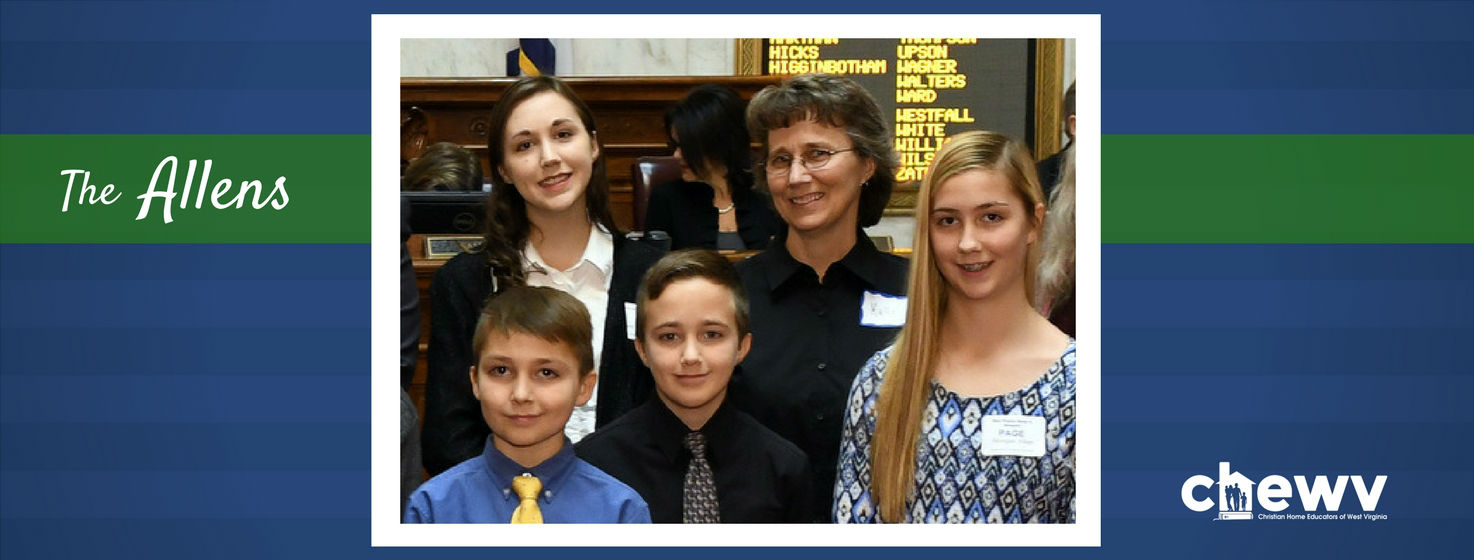
    Our family participated in Home School Day at the Capitol (HSDC) for the first time this year. As rookies, we weren’t quite sure what to expect so we were grateful that CHEWV organized it so that our trip would run smoother. Legislation pertaining to homeschooling was what motivated us to make our four-hour trek to Charleston.

    It was a privilege to meet with two out of our three legislators to discuss homeschooling issues that concerned us.  They were friendly and welcoming, though one in particular was evasive when it came to discussing these issues. We also visited with another representative who has been a supporter of homeschooling, and we were able to express our gratitude.  

    What we learned from our trip is that the winds of change in Charleston are constant and quite unpredictable. Last year’s Tim Tebow bill, for example, which passed the House and Senate but was vetoed by our governor, didn’t even make it out of the House Education Committee this year. The Senate’s version remains stalled in the Senate Finance Committee as I write this, and the session is coming to a close. Disappointed? Absolutely, and probably just as much as our kids. Word was that this bill was expected to become law this year. I hear that the Senate’s version won’t likely get out of the Finance Committee since the House killed their proposal. Phone calls to the Finance Committee seem to go unnoticed. 

    Through my disappointment though, I’m reminded of a truth: “We make our own plans, but the Lord decides where we will go.” (Contemporary English Version, Proverbs 16:9).  I believe that we must do what we can to debunk myths about homeschooling, contact our legislators, vote, even run for office if that is where the Lord is leading, while at the same time realizing our plans may not be what the Lord would have for us, at least not for now.  His timing is perfect and although I don’t understand the whys and why nots, I know I can trust Him to work out His plan – which is better than mine. Does this mean that we should always quit when things don’t go as we expect? No, even though we may feel like it. I believe that we can be His instruments for change as we diligently seek to secure opportunities for homeschooling families, rid discrimination, and loosen the restrictions so we may “train up our children in the way they should go” with less red tape.

    I would be amiss, however, if I didn’t mention the other opportunities that this day afforded: our kids paged during the House session, participated in the showcase at the Rotunda, toured the Governor’s Mansion, and met the wonderful folks from CHEWV who organized the day for us. Getting involved in the political process has been an eye-opening experience, but overall I can say it has been a good one. We are learning, first-hand, by engagement. I’m reminded of all the proactive homeschoolers who have been in that Capitol fighting for our freedoms for many years before I came along, and I’m sure their path wasn’t an easy one. We are the beneficiaries of their diligent efforts. It is easy for me to take that for granted. It’s given me a different perspective about how we have the liberties that we do today—through their endless efforts, battle after battle, until the sweet victory was won. 

    As a homeschooling parent, it’s easy to just be caught up in the daily demands of our schedules.  But I would highly encourage everyone to attend next year’s Home School Day at the Capitol.  I had never been to our capitol before this visit; it was a unique opportunity that I was happy to share with our kids. We all came away with a better understanding, albeit to a small degree, of how things operate in Charleston. Your presence at HSDC would speak volumes. 

    But if you can’t make the trip, there is always the phone or e-mail. It only takes minutes to contact our legislators to let them know our concerns.  Helen Keller is quoted as saying, “Alone we can do so little; together we can do so much.” With the Lord’s help, I believe this to be true.

    Kelli grew up in Romney, WV and graduated from the local high school where she was quite involved in sports and various clubs. She had never even heard of homeschooling until marrying her husband Walt – who had always wanted to homeschool his kids. So now they are in their 10th year of homeschooling four kiddos, and what a learning adventure it has been for all! Kelli says that the Lord is using homeschooling to teach her humility, patience, discipline, flexibility, and great literature – among many other things! She thanks the Lord for this opportunity to spend time with her kids and prays they will grow to love, honor, and serve Him with their lives.

  • Yes, I’d Like to Make a Difference…

    Yes, I’d Like to Make a Difference…

    …With My Legislator!  How Do I Do It?

    Several approaches serve to connect effectively with your senator, delegates, and governor.  Depending on your personality type, the issue at hand, your comfort level, and the time available, you may prefer personal visits, phone calls, or letters – all useful means of communication for important legislative issues.

    Ultimately, the goal of contacting your legislators is to establish and develop a relationship through which you are able to help them understand issues that pertain to home education.  While they are elected officials, they are not experts in every issue that crosses their desks, and you can help bridge that knowledge gap.

    The Personal Visit

    Face-to-face interaction is generally the most compelling method to convey your message and create a good impression.  The effort to meet in person, even if very briefly, not only allows you and your representative to associate names with “real people,” but is a high-impact way to show your interest as a concerned constituent.  Tips to heighten that impact: 

    Whether Home School Day at the Capitol or some other day, you should call or email to schedule your meeting ahead of time. 

    Be punctual! 

    Go the extra mile to be flexible as well, realizing that representatives and their staffs face increasing demands as the 60-day session moves along. 

    Committee and caucus meetings can arise quickly.  Offer to wait until legislators are available after a meeting.

    Phone Calls

    Calling can also be effective and is often the most practical way to speak to an issue.  The following tips will make your message more persuasive:

    Besides getting your facts in order (bill name and number, legislation language, or county statistics, for example), it’s a good idea to make notes on what you want to say and begin your call by reading your message. 

    If you reach an answering machine, keep your message brief and include your contact information. 

    Make sure to remind your legislator of any previous contact that you have had: e.g., “I appreciate what you said when we last talked in April…”

    Letters

    One well-written letter typically carries more weight than a formal petition with many signatures.  To write a better letter:

    Take the time to express your thoughts in good English.

    Avoid rambling, and do not rail or rant!

    Even in cases where there may be differences of opinion, honor your elected official with courtesy, respect, and proper title.  (See etiquette tips below.) 

    Always include your address and sign your name legibly.

    **You exert maximum influence by addressing your comments directly to your legislator, which is what representative government is about!

    Basic Dos and Don’ts for Any Contact

    Regardless of the communication method, keeping it personal is the best approach:  what do you care about, what is your homeschooling experience, how are your children doing?  It’s best to avoid trying to be an expert on legislation; instead, point out that your family is represented by CHEWV, working with HSLDA.

    Always assume that the legislator worked to get elected in order to do what’s best for the state and his/her constituents.  Express thanks for the many legislative actions that have enhanced homeschooling liberty in West Virginia.

    Avoid a negative message such as being against public education or teachers.  “Sweetness of speech increases persuasiveness” – it’s better, generally, to emphasize what you’re for rather than what you’re against.  If you are willing, invite the legislator to contact you with questions about legislative proposals that may come up during the session.

    Time taken to prepare a bit beforehand will boost your confidence.  Learn about your legislator and about homeschool issues.  CHEWV works to provide resources and links on our website to help you.  However, this need not be exhaustive by any means; don’t let it deter you from participating!

    First, find out a little about your legislator.  What is his or her political party, tenure in office, and on what committees does he or she serve?  You may also be able to dig deeper and discover how your representatives tend to vote on homeschooling and other educational issues.  Besides a brief biography on each senator and delegate, a list of the committees on which all serve is available on the West Virginia Legislature website: http://www.wvlegislature.gov/

    Second, familiarize yourself with basic questions about homeschooling.  Your legislator will likely have many of the same questions that other people ask when they learn you homeschool your children, including questions about socialization, academics, or testing.  Don’t assume your legislator is antagonistic when he asks questions.  He or she may simply be trying to learn more about the issue!

    Also, don’t be surprised if it appears you are more knowledgeable than your representative.  Should a question arise to which you do not know the answer, don’t hesitate to admit your lack of knowledge.  Be willing to pursue the answer and report back.  No one can be expected to address every question or matter of concern regarding a specific topic or problem. 

    Again, emphasize the positives of your own experience and be ready to share personal examples of how particular laws/regulations/legislation affect you or your community on a local level.  Finally, be respectful and as appreciative possible while stating your concerns or position. 

    Basic Etiquette When Addressing Your Legislator

    * Address your Senator or Representative properly.  When addressing them on the phone or in person, use their office title and last name. When writing letters, use the salutation: Dear Senator Smith/Delegate Smith… and close with Sincerely yours or Respectfully yours … 

    * Identify yourself immediately upon each contact.  Public officials meet too many people to remember everyone!

    * Don’t debate with a legislator or give ultimatums such as, “I won’t vote for you if you do not support my position.”  Respect the legislator’s right to disagree with you.

    *If you are communicating regarding a specific legislative issue, find out  the current status of the legislation. Has it been referred to a committee?  Is it in committee?  Is it on the floor for a vote?  What reading (first, second or third) is it on?  Whenever possible, refer to a bill by number.  You can easily find all of this information at https://www.heritagecwv.org/active-legislation/ using the “track bill” link option.  Or go directly to this page:  http://www.wvlegislature.gov/Bill_Status/bill_status.cfm  Simple!

    * Use your own words.  Express your position clearly, yet avoid being an ever-critical, opposing voice if you possibly can.

    * Be brief and explicit, courteous and reasonable.  Make the most of each opportunity to be a witness by presenting a positive, God-honoring attitude.  Maintain this attitude with both legislators and their staff!

    *Don’t apologize for taking his or her time.  If you are brief and to the point, they will be glad to hear from you.

    *Don’t begin any communication with the phrase, “As a citizen and taxpayer.”  Your elected representative knows we all pay taxes.

    * Be a good listener and hear out what your legislator has to say on the issue, but don’t make notes of a conversation while talking to a legislator.

    * Don’t send copies or form letters unless you have taken the time to include a personal note.

    *Always thank the legislator for taking the time to hear your position.

    *Always follow up with a written thank-you note and amplify your main points.  It can be appropriate to have an addressed, stamped note card ready to write immediately after the visit/call.

    * When your legislator goes the extra mile to be supportive, you may consider acknowledging his or her efforts by writing a letter to the editor in your local paper.

  • Preparing for the 2018 Legislative Session

    Preparing for the 2018 Legislative Session

    John Carey, Roger Sherman, and Lesley Oxley met at the Capitol in mid-October to make plans for the upcoming 2018 Legislative Session scheduled to commence on January 10th.  CHEWV’s Legislative Team discussed the following:

    • removal of the requirement that homeschooled students take the GED/TASC test to qualify to apply for the Promise Scholarship;
    • Driver’s License parental confirmation of enrollment and progress;
    • Tim Tebow bill; and
    • homeschoolers’ right to attend vocational school.

    The latter bills were passed in both houses in 2017 but then vetoed by Governor Justice.

    As CHEWV prepares for the upcoming session, we would like to hear from homeschoolers who are directly affected by any of these issues.  Please email comments to John Carey (jcarey.heritage@gmail.com) or private message CHEWV’s Facebook page.

    Also, mark your 2018 calendars for Home School Day at the Capitol on January 16th.  Plan to take part, meet your senators and delegates, and observe politics in action.  Freedom is fragile.  Don’t take it for granted.