Author: Melody Sheppard

  • AP Updates for Schools Impacted by Coronavirus

    AP Updates for Schools Impacted by Coronavirus

    The administrators over the Advanced Placement Program have decided to offer an unprecedented provision.  For students studying for AP Exams this year, the College Board has created a way to continue that journey to college credit. Follow the link below to a PDF which will explain all the provisions and give complete contact information for any questions.

    An Update on AP Exams PDF


  • Victory! Bills Signed!

    This week Governor Justice signed two important homeschool bills: Senate Bill 319 and Senate Bill 364.

    Promise Scholarship

    The passage of SB 319 means homeschooled students will no longer have to take the TASC in order to qualify for the Promise Scholarship!

    The effective date of this legislation is July 1, which means that students seeking Promise Scholarship funding for the fall of 2018 will have to take the TASC in order to qualify.

    The West Virginia Department of Education has told HSLDA that they are issuing waivers on a case-by-case basis for students who are under 17 to be able to take the TASC for Promise eligibility.  Next year, according to staff at the Higher Education Policy Commission, for those applying for spring eligibility only, the TASC will no longer be required.

    Driver’s License

    Thanks to the provisions of SB 364, effective May 31 parents may issue the statement for driver eligibility certificates for their homeschooled students. HSLDA will have driver eligibility forms available for our members at that time.

    You have diligently advocated for the Promise Scholarship change for several legislative sessions. Thank you for all your persistence! Together we will continue to make West Virginia a better place for homeschooling—join HSLDA today if you haven’t already!

    Montani Semper Liberi,

  • Girls Earn Top Awards

    Girls Earn Top Awards

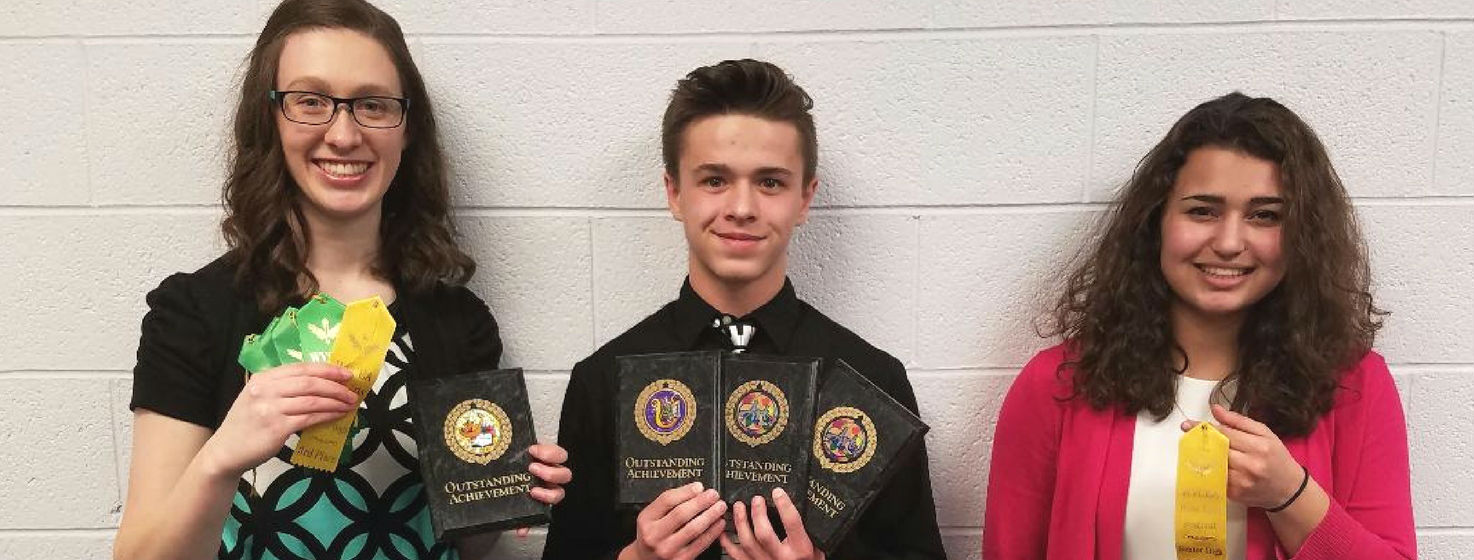
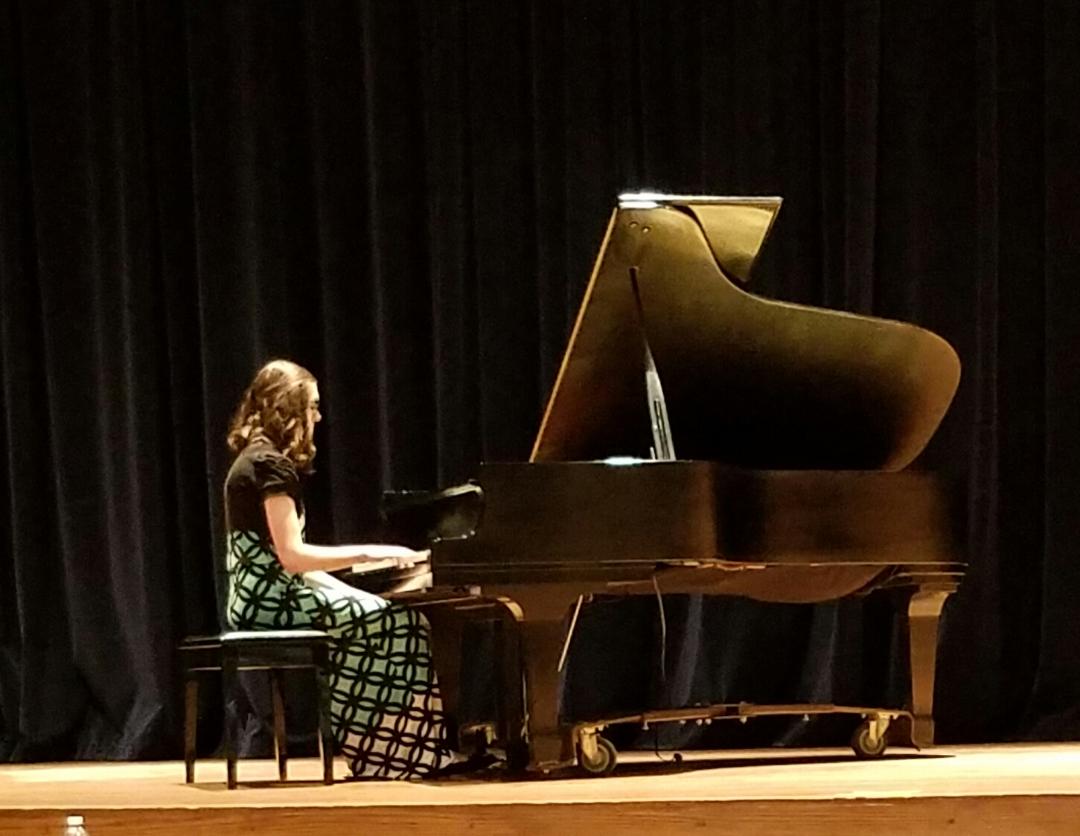
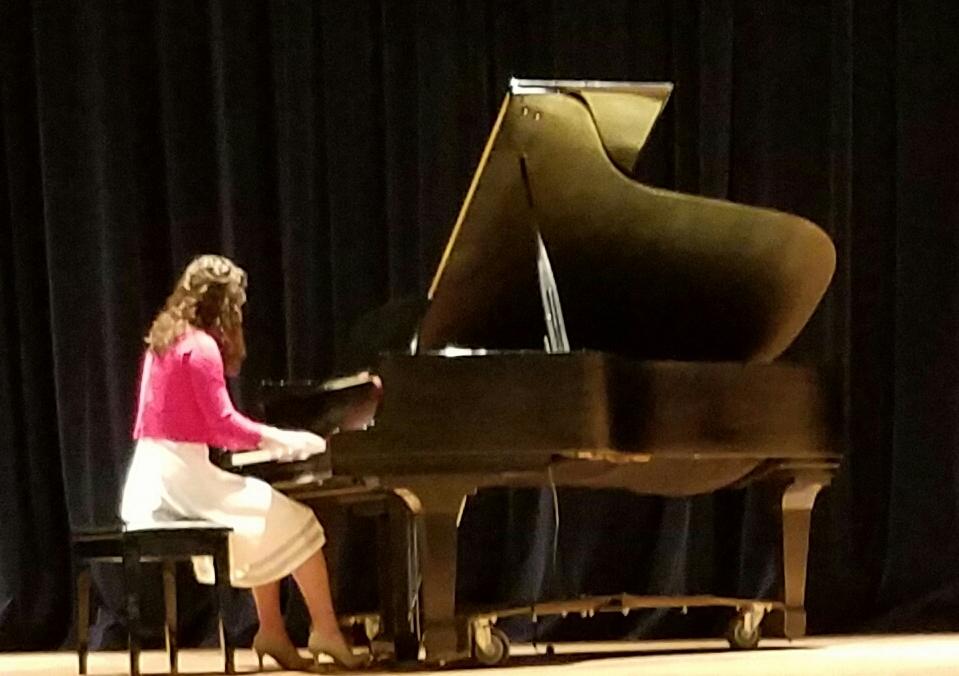
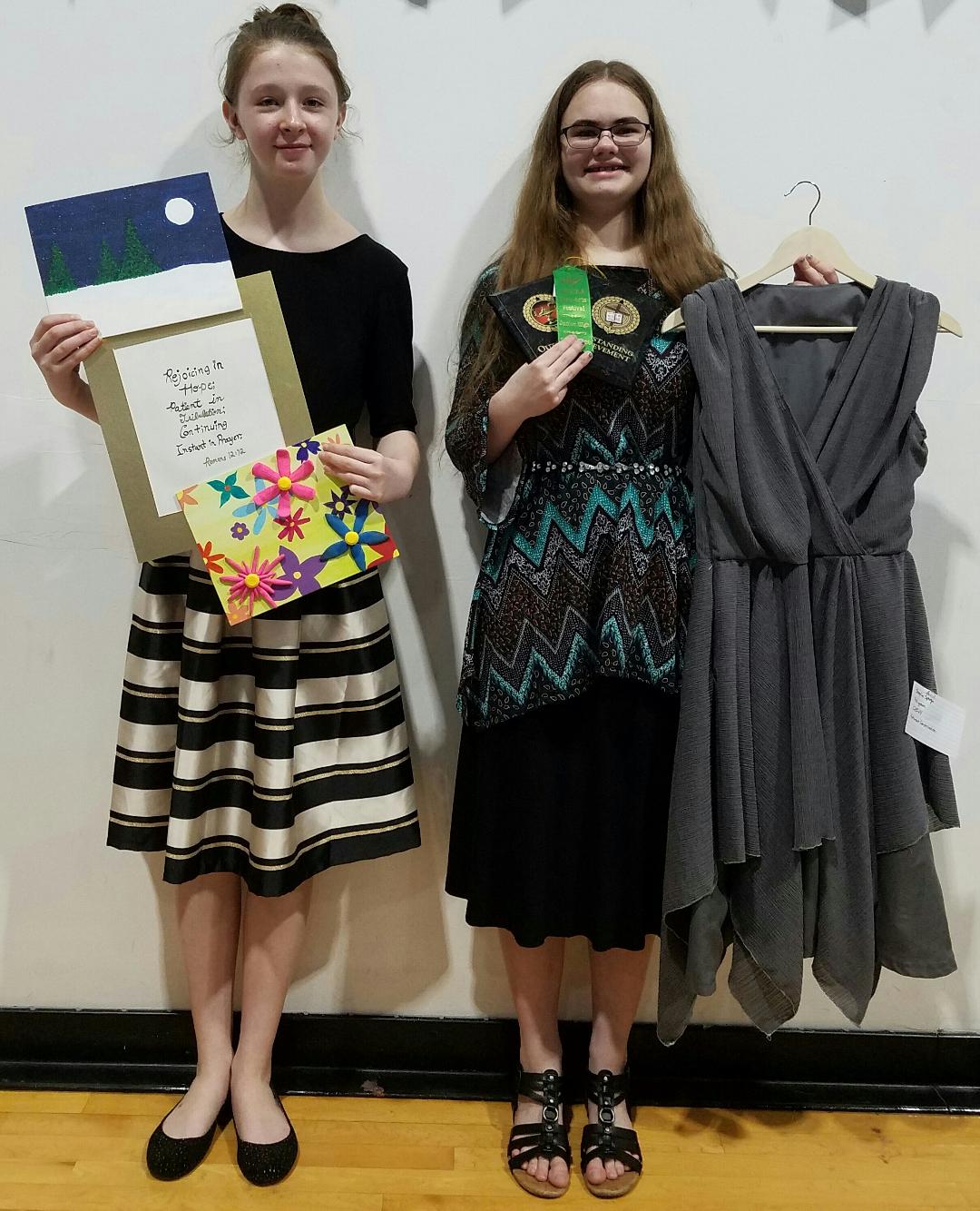
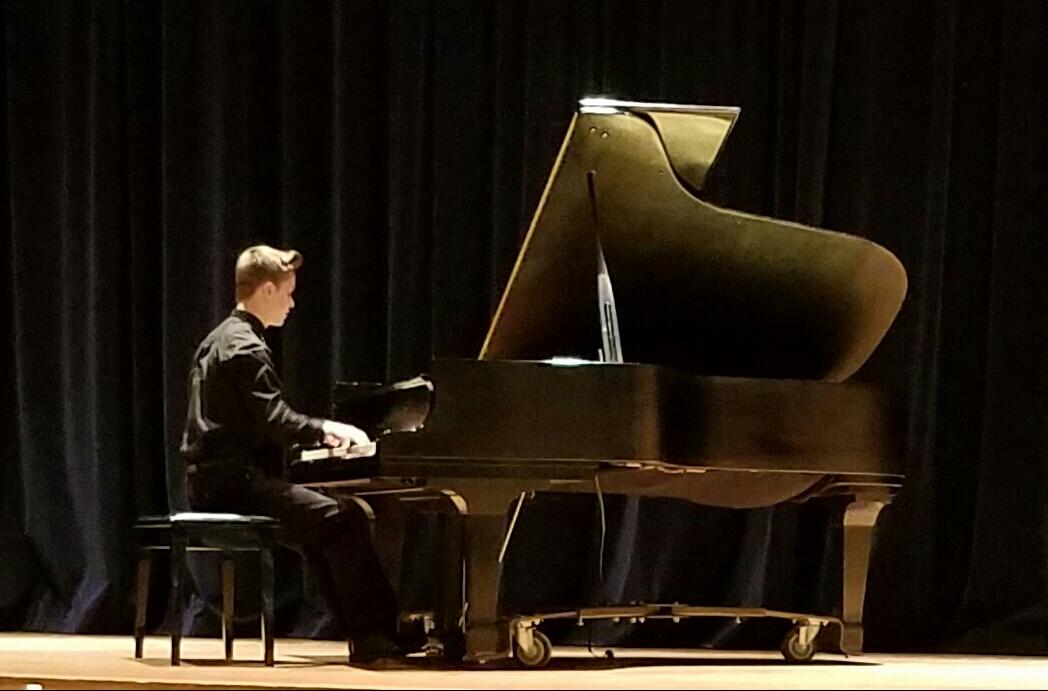
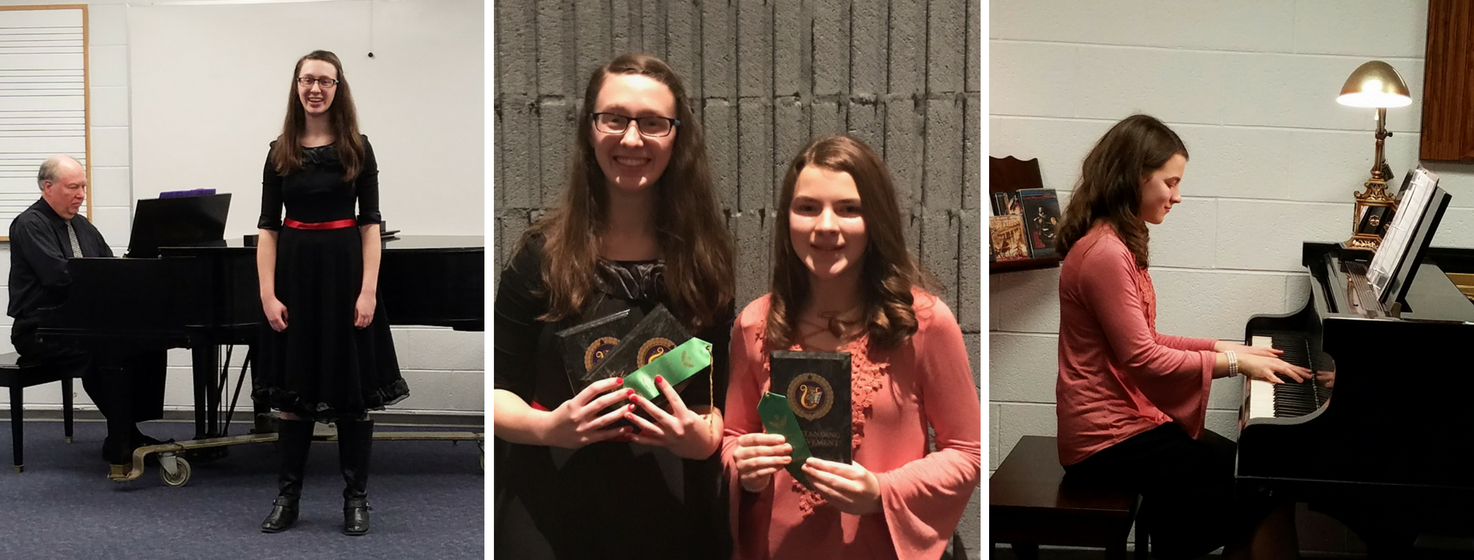
    The 2017 WVCEA Fine Arts Festival was on March 17th in Beckley, WV.  CHEWV was well-represented by three high school girls who entered in various categories.  While CHEWV had small participation numbers this year, the number of awards is a testimony to the time and effort the girls put into each entry.  As an added honor, Sarah Grace Johnson was asked to perform her Classical Piano selection during the awards ceremony.

    Participation in the festival has proven to be a sound validation for college, technical, and job applications.  Including fine arts on a resume shows that the student has a wide scope of interests and gives a hint to the creativity and initiative it takes to develop a fine arts entry.

    Congratulations to Sarah Grace, Emily, and Katie!

    Sarah Grace Johnson –

    1. Classical Piano Solo          First Place
    2. Female Vocal Solo             First Place
    3. Sacred Piano Solo             Second Place

    Emily Shannon –

    1. Sacred Piano Solo             First Place
    2. Hymnplaying                     Second Place
    3. Classical Piano Solo         Excellent Ribbon

    Katie Mills

    1.  Written Spelling Test     First Place


  • Common Core’s Effect On Homeschoolers

    Common Core’s Effect On Homeschoolers

    While the federal regulation leading to Common Core started way back in 2001, the actual Common Core State Standards were birthed by the Gates Foundation in 2008.  Since then, Common Core has changed education, elicited backlash, and sparked controversy.  Still, the Common Core State Standards have continued to progress.

    Education was largely reserved for local municipalities and states from the inception of our nation – explaining why homeschool laws differ from state to state. But the federal government became more involved with education in 1953 when President Eisenhower organized a new Cabinet department: Health, Education and Welfare.  Federal involvement again leapt forward when Jimmy Carter established the US Department of Education in 1979.

    Federal education bills date back to the 60’s.  The Elementary and Secondary Education Act (ESEA) of 1965 has been re-authorized by Congress about every five years since its inception.  When the act was reauthorized in 2001 under George W. Bush, it was dubbed No Child Left Behind (NCLB). Striving to ensure that all children in America would be educated equitably (none “left behind”), NCLB required each state to establish clear educational standards, ensure that those standards were taught, and then annually test students to demonstrate certain levels of student mastery.  Tests like the WESTEST were produced to demonstrate mastery of individual states’ standards.

    The percent of students mastering the material was expected to rise each year or federal funding would decrease. Suddenly, individual children’s needs took a back seat to meeting federal requirements; within a few years, several states were poised to lose their funding because not enough students were testing at mastery levels. These tended to be the poorest states, West Virginia included. They frantically scrambled to improve test scores, only to realize there was too much to accomplish in too little time.  As a result, West Virginia and other states hoped to either get new federal legislation with fewer requirements, or else standardize requirements in such a way that mastery requirements were attainable.  This need, common to several states, set the stage for a massive change – and a massive marketing strategy.

    In 2008, the Gates Foundation began development of the Common Core State Standards Initiative (CCSSI).  With universal state standards, a common test and corresponding curriculum could be marketed across many, if not all, states.  Every state would need and want the same things.  West Virginia adopted the Common Core State Standards (CCSS) in 2010 with full implementation to occur by the 2014-15 school year.  The WESTEST was subsequently replaced with a Common Core test (General Summative Assessment) developed by one of two national consortia.

    The CCSS Initiative proved to be incredibly profitable when in 2009 President Obama embedded a new program, Race to the Top, into the Stimulus Bill.  Race to the Top provided several billion dollars that poorer states could compete for if they would commit to adopting the Common Core State Standards.  This notable, frightening change in education essentially allowed the federal government to pay states to participate in a private enterprise. West Virginia, as a participant in RTT, is one of thirty-one states receiving federal grant money to replace paper tests with computer adaptive technology.

    This shift is a game changer on several levels. Whether the increasing amount of federal initiative in education is an improvement over the education previously driven by local concern and local teachers is hotly debated.  By all accounts it is changing the face of education nationwide by creating a national “one size fits all” scenario. Indeed, curriculum providers have since rushed to align their books with standards mandated by Common Core.  Since mastery of Common Core State Standards is the goal, the marketable curriculum must teach those same standards.  College entrance exams are following suit.  For example, Pearson, arguably the largest book publisher in the world, nearly retired its long-standing Stanford standardized test last year in order to focus funds on tests aligned with Common Core.

    Back in 2012, CHEWV voiced concern over whether the Common Core State Standards would affect curriculum, standardized tests, and college expectations. Common Core has in fact affected at least two of those three in the interim. Homeschooling parents now ponder how CCSS may impact how homeschoolers are accepted into and flourish in college.  Some worry that if they teach traditional and Christian curriculum that does not align with CCSS, their children may be disadvantaged when CCSS drive college admission. Still, there is no evidence thus far that homeschoolers are scoring lower on college entrance exams since these changes began.  To the contrary, homeschooled students scored higher on the SAT college entrance exam in 2014 compared with the national average.

    Although CCSS have not negatively affected college-bound homeschool students to date, will Common Core adversely affect homeschoolers in the future?  We suspect that the superior education that homeschoolers receive (on statistical average) compared with public education will prove to insulate them.  Some homeschool leaders indeed project that homeschool students will do even better by comparison in this environment. Although that’s yet to be determined, it seems safe to assume that as we educate our children for God’s glory, the Lord will provide!

    For more information about Common Core, visit http://www.hslda.org/commoncore/. For how WV homeschoolers are faring compared with their public school counterparts, see CHEWV’s report at https://new.chewv.org/Study_Brochure5.pdf.
  • Celebrating Veterans Day

    On November 11th, we will have opportunity to teach our children about patriotism, service, and sacrifice. As a veteran Marine, the daughter of a Marine, and the wife of a retired Marine, I have learned that the most important thing a family can do for Veterans Day is to learn about and honor our veterans.

    Veterans Day originated as Armistice Day on November 11, 1919, one year after the end of World War I.  Dubbed the Great War because of the unprecedented damage done and lives lost, the first anniversary of its end must certainly have been a celebration, but also bittersweet as millions of homes worldwide had empty chairs around the dinner table.

    In 1926, Congress passed a resolution for an annual observance of Armistice Day, and twelve years later November 11 became a national holiday to honor the veterans of WWI.  Then, in 1954, the name was changed from Armistice Day to Veterans Day, becoming a day to celebrate all who have served our great nation.

    The best way we can honor our veterans is to ask them their story of service. Many serve because they feel called to something greater than themselves, and this is a great way to hear why and when they served.  For many Christian veterans, their story of service is an important part of their testimony. Serving in the Armed Forces tests one’s fortitude, resiliency and ability to overcome many hardships.

    Acts of kindness, parades, and visiting Veteran Memorials are great ways to celebrate this holiday, but sometimes just meeting the veteran neighbor next door, in church or even in your family is enough. This day can incite traumatic memories for many veterans, but with the encouragement of their community, they can feel recognized and appreciated. Sharing a meal, a card, a flag, or a conversation can make a difference in their day. It can also open the door for us to share our faith with them.

    Veterans have a pride for their country that comes from the tradition and regiment they developed daily while preparing for war. One aspect of this tradition is the flying of the American flag; our flag flying at home and abroad is a sign of victory for them. Display an American flag on this day and others to show respect for those that have served, and teach your kids to respect and honor our flag.  “For in the name of our God, we will raise up our banners.” (Psalm 33:12)

    Furthermore, teach the history of America and its flag from the battle of Fort McHenry to today. Take them to places like Washington D.C. and to memorials such as the National Marine Corps Museum, Fort McHenry, Gettysburg, and other national battlefields. You can also learn about the veterans of America by visiting your local Veterans of Foreign Wars and American Legions.

    Remember, God has put us in our communities to honor Him and grow in His love, and on this national veterans’ holiday, we can share that love with those who have served.

    Editor’s note:  If anyone would like to send cards or care package items to those currently deployed, Les and Gina Payton have offered to help get you connected or to collect items to send.  You can reach them at popsusmc@gmail.com.

  • Academy Nominations

    Academy Nominations

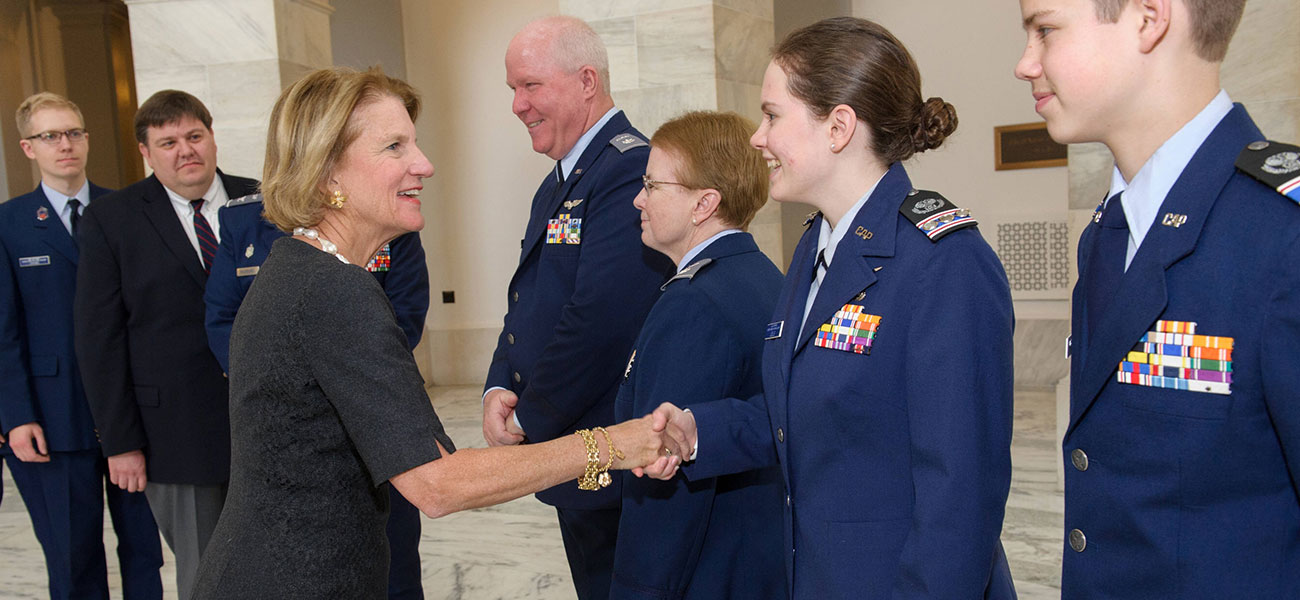
    Each year, one of my most important responsibilities as your Senator is nominating young men and women for admission to our country’s service academies.

    To be eligible, you must be:

    • A US citizen
    • A legal resident of the state of West Virginia (or a dependent of military members who are West Virginia residents)
    • Single; not pregnant, and without legal obligation to support children or other dependents
    • At least 17 years of age and not yet 23 years old on July 1 of the year you would enter an academy (25 years old for USMMA).

    Service academy applicants are eligible for nomination by both United States Senators in the state of their legal residence and the United States Representative for the District in which they reside as well as the Vice President. Applicants should apply for nomination to all applicable nominating sources.

    Admission to a service academy is a two-tiered process. First, the candidate must apply through the Academy directly. There are five (5) service academies that offer appointments to highly qualified individuals who meet eligibility requirements and are the most competitive in academic performance, physical fitness, medical standards, extracurricular involvement, leadership traits, motivation and aptitude for military service. You are encouraged to apply early to any and all service academies for which you have a sincere interest. You may apply online at the respective service academy web site. If you meet the minimum eligibility and entrance requirements, the academy will forward a formal application package. You should return all requested materials as directed by the academy as quickly as possible. If you are considered an “official” candidate by the academy, you will be scheduled for a medical examination by the Department of Defense Medical Review Board (DODMERB). You will also complete a Candidate Fitness Assessment (CFA).

    The second tier in pursuing admission is the Congressional Nominations process. An individual must meet the admissions requirements of the Academy as well as receive a nomination in order to be offered an appointment to the Academy. You do not need a Congressional Nomination for the United States Coast Guard Academy.

    The application for applying for a nomination from my office can be found HERE or the Application button below. The deadline for submitting completed applications is Tuesday, October 25, 2016 at 5 p.m. Postmarks are not sufficient.

    Senator Capito will host four Academy Days this fall for West Virginia students interested in learning more about admission to U.S. service academies and available ROTC scholarships. Members of Senator Capito’s staff will be available at each event to provide information on academy nominations.

    Senator Capito’s Academy Days are scheduled for the following dates:

    Charleston Area
    Date: Saturday, September 17, 2016
    Time: 2:00 – 4:00 p.m.
    Location: South Charleston High School
    Address: 1 Eagle Way, South Charleston, WV 25309

    Eastern Panhandle
    Date: Saturday, September 24, 2016
    Time: 2:00 – 4:00 p.m.
    Location: Spring Mills High School
    Address: 499 Campus Drive, Martinsburg, WV 25404

    Southern West Virginia
    Date: Sunday, October 2, 2016
    Time: 2:00 – 4:00 p.m.
    Location: Woodrow Wilson High School
    Address: 400 Stanaford Road, Beckley, WV 25801

    Northern West Virginia
    Date: Saturday, October 8, 2016
    Time: 2:00 – 4:00 p.m.
    Location: University High School
    Address: 131 Bakers Ridge Road, Morgantown, WV 26508
    Note: Larry Mullen, Deputy Chief of the Department of Defense Medical Examination Review Board (DoDMERB), is scheduled to attend this event.

  • Do Not Pass Go – Until You Enroll

    School officials in Hardy County, West Virginia, informed a Home School Legal Defense Association member family moving into the district that before they could begin homeschooling they had to first enroll their kids in public school.

     Although West Virginia homeschool law has historically been behind the times—it was not modernized by the legislature until this year—homeschooling families have never had to enroll their kids in public schools to be in compliance with the law.

    HSLDA has informed public school staff in Hardy County that they should update their communications with homeschooling families to accurately reflect West Virginia law.

    The idea that the public schools are the “default” institution for education remains deeply embedded in state institutions, however. The fight to modernize West Virginia’s homeschool law encountered fierce opposition from public education associations as well as from both Democratic and Republican lawmakers who held outdated, stereotyped and patronizing conceptions of homeschooling families.

    Ultimately the Republican-controlled legislature passed the legislation, and Democratic Governor Earl Ray Tomblin signed it.

    Much More Reasonable

    Before last year’s legislation, West Virginia’s homeschool law was among the more burdensome in the country. It required annual notification and annual standardized testing; each student was expected to score above the 50th percentile. The new law lowers this unreasonable requirement to the 23rd percentile.

    The new law also institutes a commonsense notification procedure: Families must notify the local public school district when they begin homeschooling, when they stop homeschooling, and when they move to a different county. And although annual assessments are still required, they must now only be submitted in grades 3, 5, 8, and 11 instead of every year. In pushing for this new law, HSLDA had argued that parents constantly assess their children and should not be required to submit results to the local authorities just because they are homeschooling.

    A majority of states require no submission of assessment results at all

    When laws change, there is always a certain amount of confusion among those who must enforce the law. However, school officials have a duty to be informed about their regulatory oversight and should not misinform those they serve.

    HSLDA is here to protect your freedom, defend you from unfair treatment, and help you homeschool with success. If you have questions or concerns about a local school official’s interpretation of the law, please give us a call at (540) 338-5600. Our staff of expert homeschool law attorneys and legal assistants are ready to help you understand what exactly is required to homeschool legally in your state.

  • 2018 Awards Recipients

    2018 Awards Recipients

    The WV Christian Education Association’s 2018 Junior High Fine Arts Festival was held on Thursday, April 19th.  Four students represented CHEWV in fourteen events, earning seven 1st place ribbons and one 2nd place ribbon! Additionally, they earned three superior ribbons and two excellent ribbons.  Congratulations to Kitoria Johnson, Hunter Mathess, Sharah Spargo, and Shaylin Spargo!

    Award

    Category

    Participant

    Excellent

    Female Vocal Solo

    Kitoria Johnson

    Excellent

    Calligraphy

    Kitoria Johnson

    Superior

    Creative Writing: Poetry

    Sharah Spargo

    Superior

    Chess

    Hunter Mathess

    Superior

    Acrylic Painting

    Kitoria Johnson

    2nd place

    Classical Piano

    Shaylin Spargo

    1st place

    OT Bible Knowledge

    Shaylin Spargo

    1st place

    Mathematics Test

    Hunter Mathess

    1st place

    Science Test

    Shaylin Spargo

    1st place

    Creative Writing: Poetry

    Shaylin Spargo

    1st place

    Expository Writing:  Essay

    Shaylin Spargo

    1st place

    Mixed Media

    Kitoria Johnson

    1st place

    Garment Construction

    Shaylin Spargo

    The 2018 Elementary Fine Arts Festival was held on Friday, April 20th.  While only one student from CHEWV participated this year, she was an incredible representative of the homeschooling community.  She placed 2nd in the chess competition and earned superior ratings in both string instrumental solo and classical piano solo.  Congratulations to Sofia Heath!

    Award

    Category

    Participant

    2nd place

    Chess

    Sofia Heath

    Superior

    String Instrumental Solo

    Sofia Heath

    Superior

    Classical Piano Solo

    Sofia Heath

    The 2018 Senior High Fine Arts Festival was held at Appalachian Bible College on March 15 & 16.  Sarah Grace Johnson, Ryland Luikart, Chloe Painter, and Natalie Parra represented CHEWV with fourteen entries yielding twelve awards of 3rd place or higher during the 2-day festival.

    Award

    Category

    Participant

    3rd place

    Music Theory Test

    Sarah Grace Johnson

    3rd place

    Classical Piano Solo

    Natalie Parra

    2nd place

    Biology Test

    Sarah Grace Johnson

    2nd place

    Home Economics Test

    Sarah Grace Johnson

    2nd place

    Female Vocal Solo

    Sarah Grace Johnson

    2nd place

    Sacred Piano Solo

    Ryland Luikart

    2nd place

    Classical Piano Solo

    Sarah Grace Johnson

    2nd place

    Still Life & Macro Photography

    Chloe Painter

    1st place

    New Testament Bible Knowledge

    Sarah Grace Johnson

    1st place

    Sacred Piano Solo

    Sarah Grace Johnson

    1st place

    Monochromatic Drawing

    Ryland Luikart

    1st place

    Polychromatic Drawing

    Ryland Luikart

    Congratulations to each student!  They represented CHEWV, and more importantly the Lord, with excellent performances and use of their knowledge and talents!

    CHEWV would also like to extend our gratitude to Kimberly Johnson, CHEWV’s Fine Arts Director, for her loving service. 

  • Confused Counties Confusing Homeschoolers

    Confused Counties Confusing Homeschoolers

    Recently, CHEWV has been reporting on several counties’ attempt to “interpret” the revised law due to take effect on May 23.  HSLDA has been working to contact these counties and help them understand what the new requirements entail.  Here, HSLDA attorney, Mike Donnelly addresses the issue.

    Parents cannot assess their own children. If you turn in a late assessment, you can’t homeschool anymore. You must send us an outline of your plan of instruction.
    Mike Donnelly   Mike Donnelly, Contact attorney for West Virginia

    These are just a few of the more egregious errors contained in a Berkeley County policy recently released to homeschooling families there.

    With one of the largest reported populations of homeschooled students in the state, Berkeley County has had a reputation of being generally friendly towards homeschooling families. However, this new policy may indicate problems ahead—and not just for Berkeley County families. HSLDA has received reports from families in several other counties of school officials stating that they will not follow West Virginia’s new homeschool law or that they will enact their own policies based on their own preferences.

    West Virginia homeschool families have been anticipating many important changes scheduled to take effect on May 23. These changes are the result of years of effort to modernize the state’s homeschool law. Passed by the legislature in February and then signed by the governor, the new law removes burdensome requirements placed on homeschool parents. Among other things, the law now permits parents to administer standardized tests to their children and eliminates the requirement to outline a plan of instruction.

    Berkeley County’s “updated” policy, however, directly contradicts these specific changes to the law. Berkeley County’s “recommended” notice of intent form also requests much more information from families than the law requires.

    Discrepancies

    After obtaining a copy of the widely circulated documents from member families, HSLDA’s West Virginia legal team—staff attorney Michael Donnelly and legal assistant Jill Burcham—wrote to Berkeley County’s new assistant superintendent in charge of home education compliance. Among the policy discrepancies we listed was a “recommendation” that families continue to submit an annual assessment, despite the new law’s requirement that assessments only be sent to the superintendent’s office for grades 3, 5, 8, and 11. The district requested that homeschool notices be sent by July—a stipulation that does not appear in the law. The “recommended” notification also requested dates of birth and grades for each child, information explicitly not required by the new law. HSLDA requested that the assistant superintendent revise the policy and send out a corrected copy. We invited her to contact us if we could be of assistance.

    HSLDA expects more problems like this as school officials grapple with the new law. We have been informed that the State Board of Education has been working to educate local boards of education and attendance officers about the new law. Based on documents we have seen, we believe that the state board has been objectively and fairly characterizing the new law. However, because there are 50 individual counties, many of which are coping with staff change, we expect more counties either to send out incorrect or outdated information to homeschool families or to enforce the new law incorrectly.

    How can you help smooth this process? If you have any concerns about new policies that appear to be inconsistent with the new law, let us know immediately. We are prepared to take swift corrective action to assist in resolving confusion or concern relating to any issues between the county education authorities and our member families!

    HSLDA has been defending homeschooling freedoms for individual families and the entire movement since 1983. Our lawyers and legal assistants are all homeschooling parents or graduates, and our entire staff is devoted to serving and supporting homeschooling families. We are passionate about your freedom and are standing by to serve you. We have created a publicly available resource outlining all of the changes to the homeschool law and we encourage you to become familiar with this reference and to let others know about it. As always, we welcome members to contact us with any questions related to homeschooling.

  • Are WV Colleges Accepting Homeschool Diplomas?

    Despite the incredibly successful results of homeschooling, some employers, government agencies, and colleges have continued to discriminate against homeschool graduates by refusing to accept a parent-issued diploma and instead require a GED/TASC.

    Because of this homeschool diploma discrimination, CHEWV worked closely with several legislators in 2015 to pass the Diploma Fairness Bill. The law now states:

    “A person who administers a program of secondary education at a public, private or home school that meets the requirements of this chapter may issue a diploma or other appropriate credential to a person who has completed the program of secondary education. Such diploma or credential is legally sufficient to demonstrate that the person meets the definition of having a high school diploma or its equivalent.”

    This law ensures that a person who homeschools his child and is in compliance with the homeschool exemption may issue a diploma upon completion of graduation requirements. And students who have thus earned a homeschool diploma should be considered equally for acceptance by a college or for employment. In fact, the Diploma Fairness law further states:

    “No state agency or institution of higher learning in this state may reject or otherwise treat a person differently solely on the grounds of the source of such a diploma or credential.”

    Recently we have heard concern that WVU, Glenville, and Marshall are still requiring homeschoolers to provide GED/TASC results for admission. So CHEWV did a little sleuthing.

    The WVU website states that a GED is only required if students are applying for a WV PROMISE scholarship or a WV Higher Education Grant. The Glenville and Marshall websites seem less clear, but it is not evident that either of them require a GED/TASC just for admission. (Neither college has answered a recent CHEWV inquiry regarding this issue.)

    It’s important for homeschool parents to differentiate admission requirements from PROMISE or financial aid requirements. The PROMISE scholarship still requires a GED/TASC for application. Although CHEWV and others are working with both legislators and the Higher Education Committee to address that, the requirement still remains at this point.

    In addition to a diploma, all students, public or homeschooled, should be ready to provide documentation of their high school education’s content.  The Diploma Fairness law states,

    “Nothing in this section prevents any agency or institution of higher learning from inquiring into the substance or content of the program to assess the content thereof for the purposes of determining whether a person meets other specific requirements.”

    The usual documentation of the high school education is a transcript.

    Since the law now recognizes homeschool diplomas and permits colleges to inquire into curriculum content, it seems prudent to provide both a diploma and transcript to graduated homeschool students.  The diploma indicates that homeschool students have met graduation requirements, and the official transcript describes credits and GPA earned. If a parent cannot produce a diploma and transcript, the school or other entity may require a GED or equivalent–either because a diploma was not supported by a transcript or not awarded at all.

    Diploma and transcript help is available on CHEWV’s website under Helps/High School. We have also sponsored comprehensive high school symposiums to specifically help parents with these topics. A third symposium is scheduled for May 21st. Registration can be found here.

    For further information on diploma discrimination, read this 2015 article from HSLDA. For further reading about the GED/TASC related to homeschoolers, read  this article.