Category: News

  • Parents Initiate Sports Opportunity

    In North Carolina, Florida, and Texas, competitive homeschool sports leagues have garnered attention and respect comparable to that of public school teams.  However, in most states – especially those as rural as West Virginia – developing homeschool leagues has proven more difficult.  Nevertheless, a few WV homeschool parents feel up to the challenge!

    Ignite, a 501c3 non-profit organization run by a governing board of six parents, offers competitive sports in a Christian atmosphere to homeschooled students in the Charleston area.  Based out of Scott Depot, they currently offer girls middle school and high school volleyball, and boys middle school basketball.  A high school boys basketball team will be added this year. This is their sixth volleyball season, and they raised an impressive $10,000 this past year for volleyball sponsorships.

    When Ignite began six years ago, the goal was for other areas in WV to form homeschool teams against which Ignite could compete.  While they did find interested parents, no additional teams have yet formed.  Ignite still hopes to see this happen.

    Carrie Black, one of the founders of Ignite, shares their biggest roadblock:  “Our biggest issue right now is gym space for hosting home games and practices for basketball.”  Since area church gyms are often used for other basketball programs, gyms available for Ignite are limited.

    “Another obstacle we face is being recognized by the Christian Athletic Assocation (WVCAA), and the WVSSAC,” explains Carrie.  “We aren’t permitted to play in any of their tournaments.” Ignite teams do play area Christian schools in West Virginia, Ohio and Kentucky, excepting some schools that will not play them because they aren’t permitted in the conferences.  However, Ignite teams can play in the East Coast Tournaments that are advertised by the Home School Sports Network.

    Ignite is not a statewide organization; they acknowledge a possible need for a statewide homeschool sports association that could host tournaments for regional homeschool teams under their umbrella, including teams like Ignite.  Carrie admits that this would take a lot of effort, and right now she focuses on  encouraging other regions to develop homeschool teams similar to Ignite’s.  This would widen the pool of competitors and create the first threads of change in the homeschool sports community.

    Even if multiple homeschool teams formed and played one another, she’d still love to see homeschool teams welcomed into competition by the Christian Athletic Association of WV (WVCAA) and even the WVSSAC.

    If you would be interested in forming teams in your region to compete, you can reach Carrie at ignitehomeschoolsports@gmail.com to learn from Ignite’s experience.  Find Ignite soon at their new website, IgniteHomeschoolSports.org.
  • In Honor of Roger Sherman

    In Honor of Roger Sherman

    “Precious in the sight of the Lord is the death of His saints.” Psalm 116:15

    Indeed, one of His saints entered into His presence June 21st. 

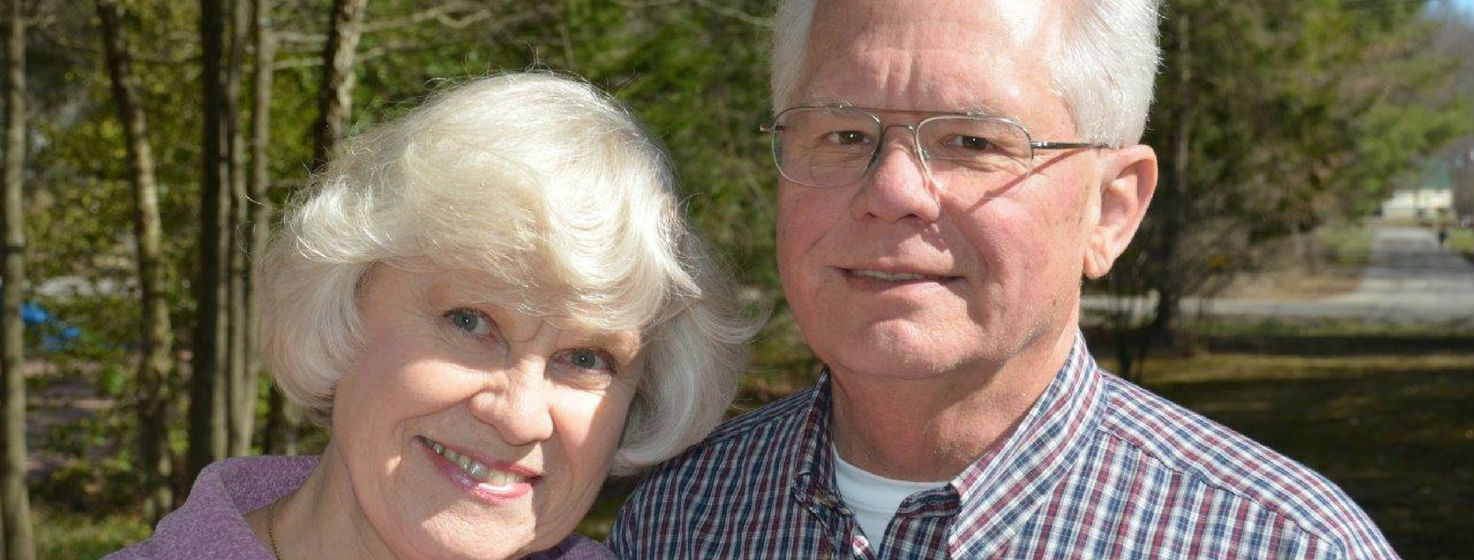
    Roger Sherman was one of CHEWV’s founding board members and a pioneer in the modern homeschool movement.  Since 1990, Roger, along with his wife Marlo, had been faithfully serving WV families.  His life was devoted to improving the lives of those around him.  Whether it was through programs, legislation, or his many words of wisdom, he steered CHEWV with integrity and circumspection to further the rights of home education in WV.

    Although we grieve our loss, we are comforted that he is in the presence of his Lord and Savior.  We share with you his obituary, lovingly written by his family, as a tribute to a man who was our leader, friend, and spiritual brother throughout the years.  We will greatly miss him.

    Roger L. Sherman, a resident of Rupert, WV, went home to glory with His Lord and Savior Jesus Christ on June 21st, 2018. The son of Francis and Edith Sherman, he is survived by his beloved wife and son, Marlo and Zachary Sherman, his mother, and a sister, Elaine Curl.

    After serving overseas in the U.S. Army from 1966-1969, Mr. Sherman graduated from North Carolina State University with a BS degree in Science (Forestry) in 1972. He earned a Master’s degree in Forestry from Yale University in 1974. Following three years with a regional forest landowners association in Atlanta, he joined Westvaco (later MeadWestvaco) as Public Affairs Forester in 1977, dedicating more than 40 years of his professional career to advancing the interests of private landowners in West Virginia. He served as volunteer chair of the Legislative Committee of the West Virginia Forestry Association (WVFA) for 38 years. Mr. Sherman made significant contributions to water quality management in forestry and agriculture by helping to ensure that laws and regulations governing land use were practical, reasonable and equitable. He was the driving force behind the State’s Logging Sediment Control Act and organized the informal Rural Caucus in the House of Delegates.

    His advocacy was critical during the statewide property tax reappraisal. Under the banner of WVFA he brought together a group that developed the “managed timberland” tax classification, putting an end to years of widely variable property values on forestland. Mr. Sherman was involved in early efforts by federal and state agencies to determine how to deal with forestry, farming and ranching under the Clean Water Act. Through the graduate-level course in economics which he conceived, proposed and obtained funding, he left a legacy of foundational business and economics principles among hundreds of primary/secondary school WV teachers; Mr. Sherman conducted the course for over 25 years alongside WVU professors. He was a career-long member and Fellow of the Society of American Foresters (SAF). He was presented the Outstanding Service to Forestry Award by WVFA in 1986 and 1992, the WVFA President’s Service Award in 1992 and 2000, the Outstanding Service to Forestry Award in 1992 from the Allegheny Society of American Foresters, the Society of American Foresters John A. Beale Memorial Award in 1994, the WVFA Environmental Education Award in 2008, and in 2011 he was enshrined in the West Virginia Agriculture and Forestry Hall of Fame.

    A longtime board member of the WV Chamber of Commerce, Mr. Sherman was a faithful member of the Executive Committee and longtime chair of the Forestry and Wood Products Committee. He was recognized as a lifelong champion of economic development for rural West Virginia and highly regarded for his insights and integrity throughout his service as a registered lobbyist during 41 legislative sessions. Mr. Sherman was a well-known spokesperson for his company and his industry in both West Virginia and Virginia. Following company retirement, he continued as a consultant in governmental affairs, public policy and communications in behalf of several WV business clients via his own LLC.

    As a born-again, Spirit-filled Christian, Mr. Sherman’s faith anchored his life for almost sixty years. He and his wife Marlo, pioneers in the modern homeschooling movement, were founding Board members of Christian Home Educators of West Virginia, where they served for 28 years, helping inspire hundreds of families to train their children up in the nurture and admonition of the Lord, grounded and settled in the Word of God.


    [envira-gallery id=”7132″]

  • Perfect Opportunity for High School Students

    Perfect Opportunity for High School Students

    CHEWV’s College Fair and CFWV Financial Aid Workshop on May 19th is a great opportunity for your high school student!  Besides the CFWV focal point workshop, multiple college admissions counselors will be available in one room at one time.  It’s like making multiple college visits without the travel!

    With multiple college admissions counselors on hand, your students can practice making eye contact, shaking hands, and introducing themselves with both their first and last names – as well as ask a lot of questions:

    • When should I start my college prep?
    • How do I find a college or university that is best for me?
    • Should I take the ACT or SAT?
    • Do I need SAT Subject Tests and AP Exams? Which ones should I take?
    • Does your school accept CLEP credits?
    • How do admissions officers view extracurricular activities on an application?
    • What do admissions officers look for in an application essay?
    • Who should I ask to write my letters of recommendation?
    • What should I expect in a college interview?
    • Will applying Early Decision or Early Action give me a leg up?
    • What should I do when I visit campuses?
    • How does the financial aid application process differ from the admission process?
    • Do you offer summer opportunities/camps for high school students?

    What if you’re not interested in any of the attending colleges/universities?  It’s still a great chance to practice – before it “counts.”  Besides, college admission counselors are some of the most important people to meet when choosing a college. Your application goes through their office first and they have a say in whether you get into their school. They can also help you understand the demands of your chosen major, outline high school course requirements for a particular area of study, help you find financial aid, and generally take some of the anxiety out of the admission process.  Don’t hesitate to tap into their knowledge and experience.

    And remember, simply speaking with an admission counselor does not mean you are obligated to apply to that school. Students often compare several schools before making a decision, so do your research to make sure your chosen school will be a good fit for you. It’s even okay to discuss the school you’re more interested in while talking with a counselor from a different school.  This helps them understand what you’re looking for and gives them a chance to argue that they can (or admit they can’t) offer something similar or even better. 

    Don’t close off opportunities. You never know whom God may put in your path, or what doors He might open!

    To sign your family up for the day’s events, click here.

  • Victory! Bills Signed!

    This week Governor Justice signed two important homeschool bills: Senate Bill 319 and Senate Bill 364.

    Promise Scholarship

    The passage of SB 319 means homeschooled students will no longer have to take the TASC in order to qualify for the Promise Scholarship!

    The effective date of this legislation is July 1, which means that students seeking Promise Scholarship funding for the fall of 2018 will have to take the TASC in order to qualify.

    The West Virginia Department of Education has told HSLDA that they are issuing waivers on a case-by-case basis for students who are under 17 to be able to take the TASC for Promise eligibility.  Next year, according to staff at the Higher Education Policy Commission, for those applying for spring eligibility only, the TASC will no longer be required.

    Driver’s License

    Thanks to the provisions of SB 364, effective May 31 parents may issue the statement for driver eligibility certificates for their homeschooled students. HSLDA will have driver eligibility forms available for our members at that time.

    You have diligently advocated for the Promise Scholarship change for several legislative sessions. Thank you for all your persistence! Together we will continue to make West Virginia a better place for homeschooling—join HSLDA today if you haven’t already!

    Montani Semper Liberi,

  • Wait!  Does That Test Meet WV Code?

    Wait! Does That Test Meet WV Code?

    While the myriad of testing choices available to parents may offer more flexibility, they come with an equal dose of responsibility.  Recent ads to WV families have promoted online and traditional versions of the Stanford test – some of which do not meet state code.  The Comprehensive Testing Program (CTP) is also advertised, but appears not to offer the five required subjects.

    The testing assessment option in the state code requires a nationally-normed standardized test published or normed within the previous 10 years.  It must provide scores for five subjects:  reading, language, mathematics, science and social studies.  Further, it must be administered under the standardized instructions given by the publisher.

    Though it is the parent’s responsibility to ensure that any assessment they use meets WV code, CHEWV is here to help!  Not only do we provide a testing service and do all the work to ensure the tests meet WV requirements, but we’re also here to answer questions about other assessment options. 

    Our testing program is  a non-profit service, so we have no reason to discourage you from using other options. However, we do have an interest in educating families to ensure they choose tests that meet state code – both to protect individual families and to protect the homeschool freedom of all.

    Even if a county does not notice the first year a test doesn’t meet code, it’s still a hazard to all homeschoolers if families mistakenly test using outdated materials.  When a test’s obsolescence becomes known, it immediately casts negative attention on homeschooling and is fodder to call for greater regulation.  Please help us pass the word so that everyone is compliant!

    Remember that your state organizations exist to serve homeschoolers and help them meet the legal requirements to homeschool in WV.  Contact testing@chewv.org with any questions.  Click to read about assessment options or to read over the WV code.  To support CHEWV by joining, click here.

    Defending freedom, serving families…together.

  • SB 319:  A Little More Background…

    SB 319: A Little More Background…

    …A Little More To Do

    by Edie Carey, wife of CHEWV’s Legislative Liaison, John Carey, and active homeschool mom

    SB 319, the Senate bill that removes the GED requirement for homeschool applicants, was in the Senate Finance Committee this past Monday and Tuesday.

    Clearly, homeschooling was under attack during the committee’s deliberations, and for a while Senator Palumbo led the charge. Senator Palumbo’s concern — that removing the GED requirement is dumbing down education — has no basis in fact.  If you can pass the ACT and show you are ready for college, certainly you can get a passing score on the GED.  We appreciate Senator Palumbo’s willingness to hear the truth and change his position.  

    Yet there have been additional challenges of which you need to be aware.  Last week when the Senate Education Committee considered the removal of the GED testing requirement, Vice Chancellor of the West Virginia Higher Education Policy Commission Matt Turner implied that a homeschool diploma and transcript are subpar.  Turner stated if the GED testing requirement was removed, “What we’ll do is monitor the cohorts. If this changes and this becomes a problem, we can come back and report it (to the legislature) and say, ‘We need to make some adjustments again. . . You could start to see the erosion of the merit level of the Promise.”

    Senators and state education bureaucrats, regretfully, are not aware of an empirical fact:  both nationally and in the state of West Virginiathe data is in on the performance of homeeducated students as it relates to the ACT and the SAT.  Homeschool graduates in West Virginia score higher, on average, than public students on the ACT and SAT.  Statistically, this has proven true year after year.  In 2016, homeschool graduates enrolled as freshmen in WV four-year and two-year colleges scored, on average, 23.8 (70th percentile ranking) on the ACT.  The average score of WV public school graduates enrolled as freshmen in the same colleges was 21.5 (59th percentile ranking).  

    Enrolled as freshmen in 2 & 4-year WV colleges:

    Homeschool Graduates

    Public School Graduates

    2016 ACT Score

    23.8

    21.5

    2016 ACT Percentile Rank

    70

    59

    Click here to read the NHERI study on the ACT nationallyLikewise, homeschoolers excel on the SAT as demonstrated in this study.

    Homeschooling father and CHEWV member Senator Karnes confronted these arguments in Committee, providing support for the passage of SB 319 and its advancement to Senate Finance this week.  Others helped advance the bill once in the Finance Committee; read my husband’s report from earlier today here.

    Yet the job is not done.

    Again, we remind all of our members and friends that more calls are needed.  Even better, show up in person!  The bill is now on the floor of the Senate.  Its Second Reading, the amendment stage, is on Thursday.

    • Action needed:  Contact your senator early (they go into Session at 11:00 a.m.) and ask him/her to please support SB319 as it came out of Senate Finance.
    • Those of you with senators on the Finance Committee, take the time to thank them for their unanimous support of the amendment to drop the GED requirement!

    Then it’s up for final passage on Friday.  If approved, it goes to the House Education Committee.

    My husband, John, spends hours at the Capitol as part of his service to CHEWV homeschoolers – like our own family!  I can testify to the fact that he is genuinely encouraged when CHEWV families all across the state participate with their support.  Thank you for continued prayers and ready action on SB 319 as it moves through the legislative process!

    One Last Request:  A thankyou to the Finance Committee senators who finally passed SB 319 and sent it to the Senate floor would be a great idea.  Acknowledging their pro-homeschool choices is highly effective.  Remember, legislators typically receive more complaints than compliments.  Put yourself in their place and take a few moments to be a blessing!

  • A Report on SB 319

    A Report on SB 319

    God Works All Things Together For Our Good

    by John Carey, CHEWV’s Legislative Liaison

    SB 319, the Homeschool Promise Bill, has made it all the way to the Senate floor!  Your calls have been effective and more calls are now needed.  It is on First Reading today (Wednesday, February 14), Second Reading on Thursday – which is the amendment stage, and then up for final Senate passage on Friday.

    On Monday, the Senate Finance Committee took SB 319 up for consideration. The meeting was contentious as Democratic legislators called the removal of the GED requirement as “Dumbing Down” the requirements to obtain the Promise Scholarship.  This made absolutely no sense since the GED has nothing to do with qualifying for college entrance but rather is designed for those who drop out of high school!  Ultimately, the Promise bill was laid over for consideration on Tuesday at 3PM.

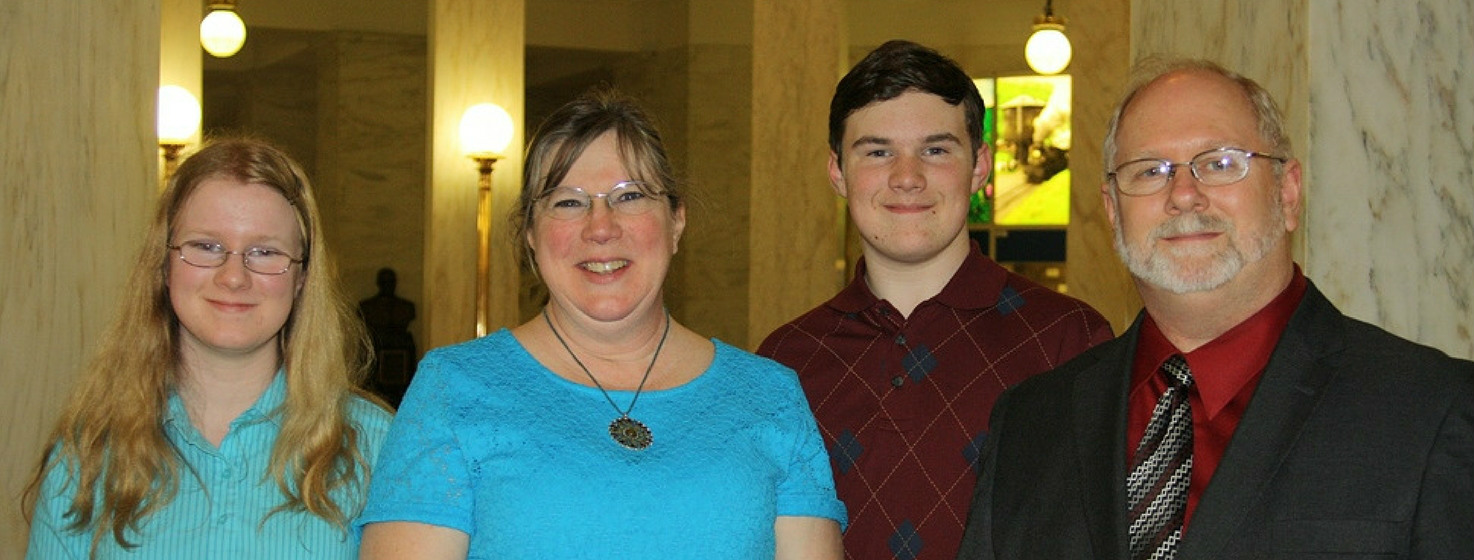
    On Tuesday, the first bill on the agenda was a gambling bill. The meeting, which was again very contentious, wore on for 90 minutes.  At 4:30 the committee members were worn out, and it looked like everyone was ready to go home for the day. SB 319 had not made it up for discussion. However, Senator Blair, the Finance Chair, asked who had come that day for the Promise Scholarship bill.  Fortunately, CHEWV members Paul and Donna Ludwinski and their 18-year-old son Aron had driven up from Welch. The Chair came to the back of the committee room to speak with them and asked if they could return the next day. Because they could not, he decided to run the bill. Without the Ludwinski family in attendance, the bill would not have been run that day.

    Senator Rucker, the lead sponsor of SB 319, then entered the committee room to speak. Senator Rucker, as a homeschool mom, was able to testify from personal experience. Her testimony in support of the bill created a visible change in the way legislators spoke of the bill; she was able to put a face on the issue.

    Senator Gaunch also spoke of his personal experience as a homeschool Grandfather. Not only did he share how homeschooling had helped his grandchildren, but he emphasized that to speak of homeschooling in a disparaging way, as was done in the Monday meeting, was not justified. Following the senator’s compelling and heartfelt testimony, Senator Boley spoke of her grandchildren and how one of them had to take the GED before he could go to college.

    It was at this point that Senator Sypolt spoke, in detail, of how this bill was an affirmation of what was already in state law. He referred to the 2015 law that precludes discrimination by the state of West Virginia against the homeschool diploma. Sypolt argued that requiring homeschoolers to take the GED was a violation of state law; SB 319 is simply an affirmation of current state law.

    Senator Palumbo went on to propose an amendment to remove the GPA requirement for all students equally – public, private and homeschooled – because it is the ACT/SAT score, not GPA, that is the final measure for the Promise. He was absolutely right!  Whereas about 45% of public school students receive a 3.0 GPA, only about half of those earn a sufficiently high score on the ACT to qualify for the Promise.

    Yes, God worked it out!  And He used all of us to do it.  It’s my pleasure to represent CHEWV at the Capitol and to head the lobbying effort.  But the Ludwinski family was present to help at the suggestion of Mike Donnelly, WV’s attorney with the HSLDA. HSLDA also provided the legal understanding so that supportive senators could articulate solid and compelling arguments. Both CHEWV and HSLDA asked all of you to help, and you did. Your phone calls and emails were felt yesterday. You may not have been in the room, but legislators knew that you cared about this issue and they responded accordingly.

    If the bill passes on the Senate floor, its next stop will be House Education. Please pray and act as we seek to make this change in the law together.  It is God who works all things for our good, but He clearly uses His people to accomplish His good pleasure. Please keep praying and be ready to act as SB 319 moves through the legislative process.

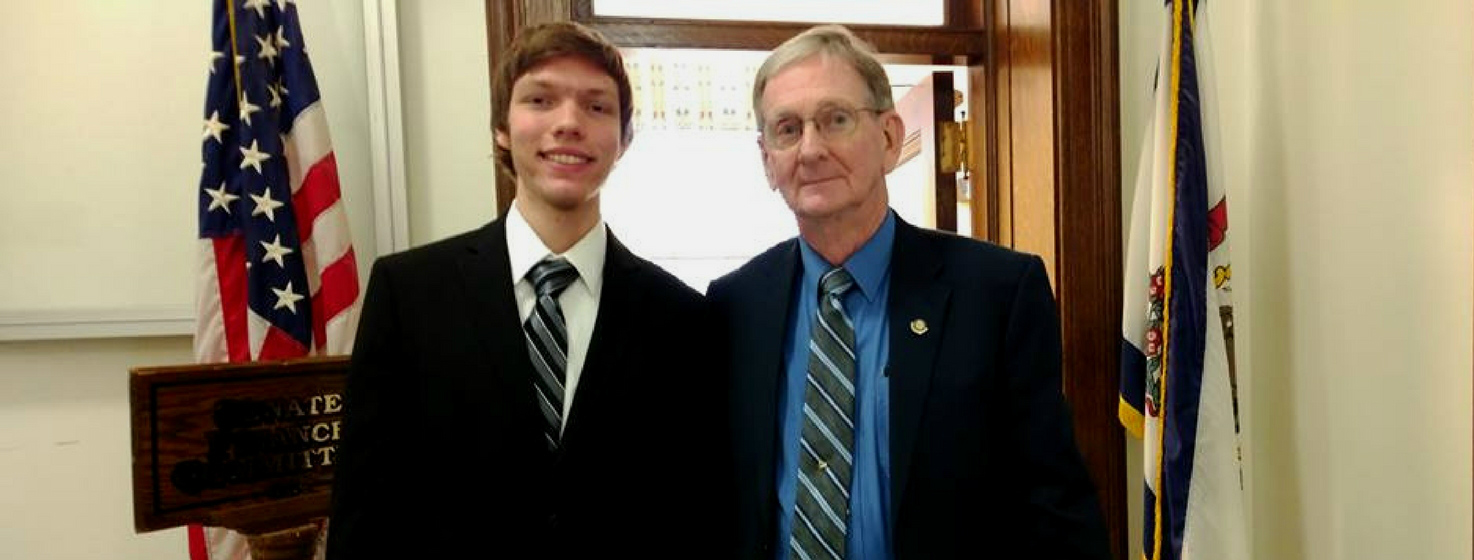
    Pictured in header:  Homeschool student Aron Ludwinski with Senator Chandler Swope of Mercer County.

  • Tebow Bill: Fumble & Punt

    Tebow Bill: Fumble & Punt

    On the second day of the 2018 Session, the Senate version of the Tebow Bill (SB130) passed unanimously in the WV Senate Education Committee.  Added amendments simply clarified the original purpose.  An amendment from Senator Beach, which would have converted the bill into a pilot study, was defeated. In response, Senator Trump spoke passionately in support of the bill saying it corrected an “injustice” against homeschooled students. After passing in the Senate Education Committee, the bill was sent to the Senate Finance Committee where it still resides.

    Mr. Carey, CHEWV’s Legislative Liaison, then learned Senate leadership did not plan to advance the Senate Tebow Bill (SB130) until the House version of the Tebow Bill (HB4007) advanced in the House Education Committee.  This was an informal agreement between the two Houses.

    On January 24th, HB4007 was considered in the House Education Committee where several amendments were offered. Two were added, one which required a homeschool student to score in the 5th stanine or above for the right to play sports.  A third proposed amendment, which failed, would have destroyed the bill by leaving it up to each county board to determine the eligibility rules and requirements governing sports participation. To everyone’s surprise, when the bill came to a final vote it was defeated with 16 Nays to 9 Yeas.  A bill, which was largely identical to the bill which had passed last year with flying colors through both Houses and made it to the Governor’s desk where it was vetoed, was defeated overwhelmingly this year by both Democrats and Republicans in the House Education Committee. 

    Now the Senate must decide whether to advance their version of the Tebow Bill (SB130).  Will they choose to do so with such a slap-down in the House Education Committee?  Today it is hard to know.  What about the Promise Bill (SB319) and the Driver’s License Bill (SB364)? How can we trust that these bills won’t suffer a similar fate at the hands of legislators in House Education?

    Looking to God for help, we must first and foremost pray for His wisdom, guidance and favor. He is our Shield and Defender, just as in past battles CHEWV has faced.  Overwhelming numbers of homeschooling parents must also communicate with legislators.

    This twofold approach is the sure path to the victories we seek. Nothing can be taken for granted this year at the State Capitol.  We will have to be ready to speak up for the legislation which matters to us most. To that end, CHEWV will soon provide talking points and contact information so that, together, we can take a stand in support of our freedoms.

  • Opened Doors – A WV Legislative Report

    Opened Doors – A WV Legislative Report

    …from Michael P. Donnelly, Esq.

    Staff Attorney
    Director of Global Outreach
    HSLDA

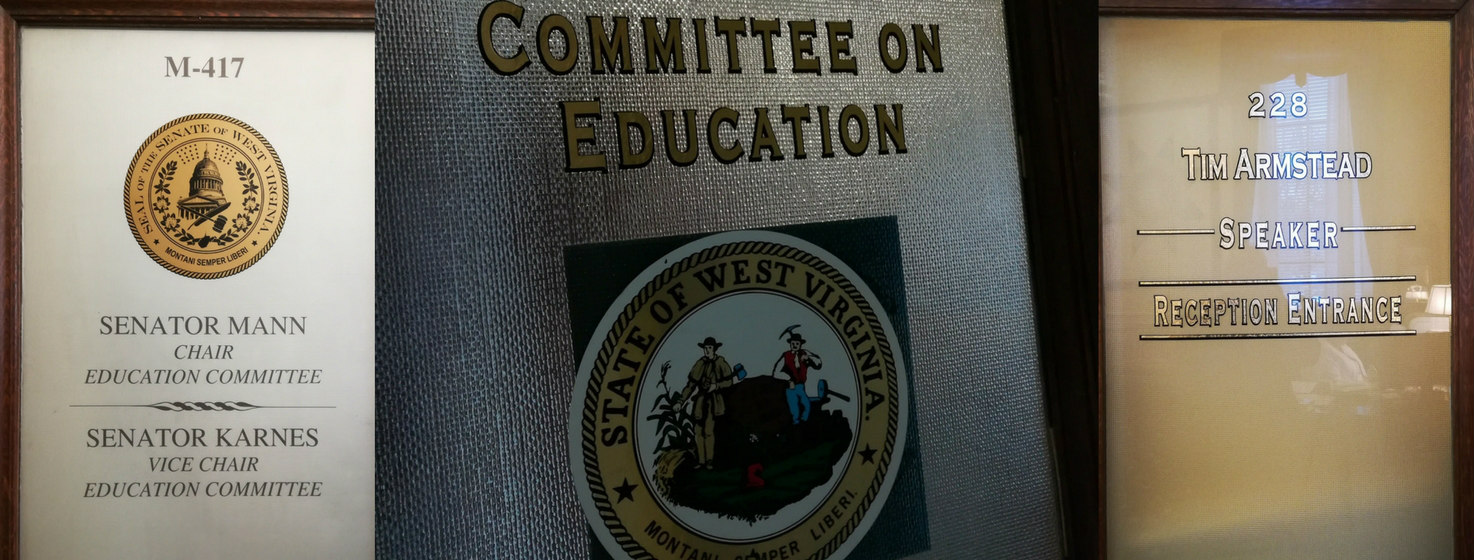
    Despite inclement weather and flight delays, I was delighted to meet this week with some of the highest-ranking legislators in West Virginia to discuss improved opportunities for homeschooling families.  On the heels of Homeschool Day at the Capital, I was joined by CHEWV Legislative Liason, John Carey, as we met with the Senate President, Speaker of the House, Chairmen of both the House and Senate Education Committees, and the Governor’s office. 

    John and I communicated our interest in two pieces of legislation that we expect to be introduced shortly: a bill that would make it easier for homeschooled students to get a driver’s license, and a bill to remove the anachronistic GED requirement for the Promise Scholarship.  We felt the overall response was positive and are optimistic that the legislation will get the needed attention to become law.  With the Governor’s new party affiliation, there is renewed hope that he, too, will be more favorable toward homeschool legislation and less likely to veto it.  Former Senator Mike Hall, a past supporter of homeschool legislation, is the Governor’s new Chief of Staff.

    We had opportunity to discuss SB 528, a bill that caused a big stir last year, with Senate Education Chair Kenny Mann. Senator Mann made it very clear that he had had no intention of creating problems for homeschooling families last session, but that the legislation had not properly addressed specific situations where abusive parents of public school-enrolled students were considering homeschooling to escape scrutiny.  The Senator agreed that this was a rare occurrence and assured us that he supported the right of parents to homeschool, personally knowing several homeschooling parents with thriving children. 

    Delegate Paul Espinosa, Chairman of the House Education Committee, noted continued support of the Tebow legislation that was passed by the legislature last year but vetoed by the Governor.  Chairman Espinosa said he was optimistic that the Tebow bill would pass the Education Committee as well as the House of Delegates as it did last year. 

    A different version of the Tebow bill, SB 130, has now passed out of the Senate Education committee and has been referred to the Senate Finance Committee.  Last year I was able to present a national perspective on equal access laws, such as Tebow laws, to help the Legislature understand the national adoption of these laws. Although HSLDA is neutral on equal access legislation, we follow these proposals closely to insure that there are no unintended negative consequences from their passage. 

    Senator Patricia Rucker and Senator Robert Karnes (Vice Chair of Education) were instrumental in arranging these meetings with key legislators.  Rucker and Karnes are both home educating parents and have been tremendous supporters of our community. Having individuals of their caliber in elected positions in the legislature is invaluable.  We are pleased that Senator Karnes is again bidding for re-election this year.

    In addition to our meetings, Home School Day at the Capitol was a great success for WV homeschoolers.  A representative of Governor Jim Justice commended the attendees for their educational commitment as demonstrated by a willingness to shoulder the additional burdens and demands of homeschooling.  He acknowledged the positive track record of homeschooling and shared the Governor’s warm welcome with the group.

    Advocating for homeschooling freedom is one of the most important things that we at the Home School Legal Defense Association do.  By working closely with state organizations like CHEWV, HSLDA attorneys review and track hundreds of bills that are related to homeschooling.  HSLDA’s new Legislation Action Center makes our advocacy work even more accessible and efficient, and we invite you to check it out.

    It is a privilege to serve homeschooling parents. When we all join together we can protect our freedom and also help each other.  HSLDA serves individual member families with information, advice and legal services.  Your support is essential to our ability to protect homeschooling. If you are not a member, please join us today!