Author: CHEWV

  • Tax Credits for Homeschoolers

    Tax Credits for Homeschoolers

    WV homeschooling is currently home-based, privately funded, and parent-directed. Because homeschoolers do not receive public funds, tax credit legislation is the best way to provide financial help to homeschoolers.

    Claiming school expenses as tax credits would provide relief to parents who are seeking alternative education but burdened by the personal expense. Yet it would not invite regulation – which inevitably follows public funding.

    Tax credit legislation has been introduced the past several sessions, but has yet to gain momentum in either house. With more support, that could change.

    As the 2022 WV Legislative Session approaches, please remain involved in the process by staying abreast of the discussion and praying specifically about homeschool-related bills.

  • Fine Arts Goes Virtual!

    Fine Arts Goes Virtual!

    Registration for 4th-9th Grade Still Open

    The annual WVCEA Fine Arts Festivals are being held virtually this year. Senior High registration is now closed; however, Elementary and Junior High students (grades 4-9) still have the opportunity to register. With the exception of a few categories, all events are still open for participation. Listed below are those that will NOT be available this year:

    BIBLE-quizzing, memory, sword drill
    MUSIC-band, youth choir
    SPEECH-extemporaneous, debate
    TESTING-spelling bee, science fairs

    Check out all the event opportunities here.

    Address questions to Kim Johnson at finearts@chewv.org.


  • Homeschool Funding

    Homeschool Funding

    Where the Definition of “Fair” Gets Blurry

    Last legislative season, legislators wisely made a distinction between state-funded ESA students and homeschoolers. If such legislation is introduced this session, we trust the same will happen. While that may seem like a small detail, it isn’t at all. It’s what is necessary to protect WV homeschooling freedom as we know it now.

    You see, funding for homeschoolers via vouchers or ESAs have been a controversial possibility in state legislatures across the country, including WV, for more than a decade. Lively discussion, both yea and nay, has permeated news shows, articles, blogs, and even CHEWV board meetings.

    Since we all pay taxes, what’s not to like about state funding? Isn’t it only fair to get back some of the money we paid in?

    What has been learned in most states where homeschool funding of any sort has been implemented is that eventually Christian homeschooling is squeezed out. In fact, one study showed that state funding ultimately decreased the number of private homeschoolers overall, leaving those that were left with less clout.

    State homeschool money is also tied (at least eventually) to the separation of church and state – meaning the absence of Christian curriculum. Based on the experience of several other states to date, many homeschool leaders have called state funding a “slippery slope” to regulation and loss of freedom. The Alliance (of state homeschool groups like CHEWV) has dubbed it a Trojan Horse.

    California homeschool leaders warn:

    We have watched for the last 15 or so years as [state funding] opened up for homeschoolers. In the beginning, they offered money and total freedom to use it as you wished. Little by little, year by year, the rules became more stringent and parents lost more and more control. This is the inevitable result of taking government money. “He who pays the piper, calls the tune.”

    CHEWV has defined homeschooling as home-based, privately funded, and parent-directed. When privately funded, parents have full choice. If we are educating in a private setting with private funds, perhaps it’s not “fair” to call for more regulation. Whether it’s fair to regulate students receiving state funds is another issue altogether.

    While CHEWV does not stand against ESAs, we are gratified that WV legislators have been willing to separate private homeschoolers from ESA students. This protects the great strides we have made to keep private homeschooling legal and free, while still providing choice to parents.

    It’s important that legislators (and indeed the public) not consider private homeschoolers in the same mix as publicly-funded students – who might also school at home. When and if they ever do studies on publicly-funded students, they need to realize that these are not private homeschoolers.

    As the 2021 WV Legislative Session begins, consider and pray about homeschool-related bills, stay abreast of the discussion, and remain involved in the WV legislative process.

    Defending freedom, serving families…together

  • Winter Doldrums: When It Gets Ugly

    Winter Doldrums: When It Gets Ugly

    Nothing is like it should be, yet I have been feeling like

    Every. Single. Day.

    has been exactly the same — for weeks! Between Covid restrictions and the recent political tumult, winter doldrums hit us early and hit us hard. To compensate, I narrowed my life to three basic things: cook, clean, school, cook, clean, school. Busy, but bored. I soon found discontentment settling its horrid little self into every nook and cranny of this beautiful and usually happy home.

    Then late one cold evening, a small trespass erupted into an ugly show of raw emotion from every unsettled heart in our precious house. (Please tell me that emotions sometimes tumble down your stairways and pour through your hallways too?) Snot and tears soaked a Kleenex – box or two – smack dab in the middle of the school week.

    How does a homeschooling mama pull it all back together after an eruption like this? Does she steam through the next two day’s work like a bulldozer operator? No. That will scratch the walls and leave some unsightly dents. Does she throw in the towel? No. We all have enough laundry! Amen? So what does she do?

    I hate to admit it, but I pouted. I did! For several hours the next day, I just felt hurt and taken advantage of, and I sulked. The Scripture about being poured out like a drink offering… yeah, that one from the chapter in Philippians labeled in my Bible, “Unity through Humility” — that’s the one the Good Father whispered to my sulking, broken heart. And eventually I got quiet. I got still, and I listened to His whispers.

    Philippians 2:17-18
    Yes, and if I am being poured out as a drink offering on the sacrifice and service of your faith, I am glad and rejoice with you all. For the same reason you also be glad and rejoice with me.

    We homeschooling mamas can relate to being poured out and emptied. But it’s easy to forget the reason for the emptiness. I forget to remember. Yes, every single day I cook and clean and school. Repeat. But it is the why behind it all that is so invaluable.

    Those seeds of Truth that we carefully plant, sometimes with tears and weary hands, in the heart-soil that God tills and mends, will take root. Fruit will come forth.

    Galatians 6:9
    Let us not become weary in doing good, for at the proper time we will reap a harvest if we do not give up.

    The fruit will bless you and our crazy world and build His Kingdom! We homeschool not just to give our kids a superior education, but as a sacrifice and service to build our children’s faith, to teach them the wisdom found in God’s Word. His Word will not return void! It cannot be shaken! Doesn’t that make you want to rejoice? Especially after a year like we just navigated?

    Winter doldrums, where are you now? I’m doing the happy dance!

    So then what? I prayed. I apologized. We hugged, and shared tears and forgiveness all around! We took the next day off school and instead prepared a meal for a family in the midst of grief: a good reminder to keep perspective. We played some games, laughed, and snuggled our way through the weekend. When Monday came around, we did a quick synopsis of the day we missed and then jumped right into our next school week, no worse for the wear, but with a bit more gratitude in our hearts.

    So, next time the winter doldrums start to creep in, remember your why. Rejoice! Rest. Regroup. There is so much still to be grateful for.

  • Jefferson’s Plan for Education

    by John Carey, CHEWV’s Legislative Liaison

    Consider this startling quote from Thomas Jefferson, author of West Virginia’s Religious Freedom Clause:

    It is better to tolerate the rare instance of a parent refusing to let his child be educated, than to shock the common feelings and ideas by the forcible transportation and education of the infant against the will of the father.

    Let that sink in.

    In Notes on the State of Virginia (1781), Jefferson summarized his educational plan as follows:

    This bill proposes to lay off every county into small districts of five or six miles square, called hundreds, and in each of them to establish a school for teaching reading, writing, and arithmetic . . .

    While Jefferson’s bill to create common schools (now called public schools) was not popular in the Virginia Assembly, many historians claim it as evidence of his support for the common school movement that took off during the late 1830s under the leadership of Horace Mann. However, Jefferson’s vision for public school was quite different than Mann’s.

    Jefferson’s plan called for a highly decentralized system in which these “districts of five or six miles square” would establish and control their own schools. He did not want a state government to “take this business [of elementary education] into its own hands.”

    To suppose that schools would be better managed by “any authority of the government, than by the parents within each ward,” he added, “is a belief against all experience.” Clearly, Jefferson believed that parents, not governments, should control the education of their own children.

    Jefferson also warned of the consequences of usurping parental control of education:

    What has destroyed liberty and the rights of man in every government which has ever existed under the sun? The generalizing and concentrating all cares and powers into one body . . .

    Jefferson also questioned society’s responsibility toward children. He wrote,

    A question of some doubt might be raised…as to the rights and duties of society towards its members, infant and adult. Is it a right or a duty in society to take care of their infant Members in opposition to the will of the parent? How far does this right and duty extend? — to guard the life of the infant, his property, his instruction, his morals?

    In Jefferson’s view, “It is better to tolerate the rare instance of a parent refusing to let his child be educated, than to shock the common feelings and ideas by the forcible transportation and education of the infant against the will of the father.”

    Clearly Jefferson would be a strong supporter of homeschooling. He understood the preeminence of parents in the life of a child. This is reflected both in his support for Religious Liberty and Parental Rights.

    We live in a time when the individual is seen as “the problem” that requires regulation. Consequently, legislators are encouraged to pass laws that takes away individual liberty. Instead, let us retain the founders’ vision for this country – one that respects the parents’ right to choose what is best for the children they treasure and love.

    On Wednesday, February 10th, the West Virginia Regular Session will convene and then continue its 60 days — until Saturday, April 10th at midnight. CHEWV will be working with HSLDA to ensure that homeschooling freedoms are protected. From all indications, this session will move very quickly from the first strike of the gavel.

    Click here to view the West Virginia Senate and House Districts. Then click on the map to connect with your legislator via email or phone.

  • A Mom’s View of Standardized Testing

    A Mom’s View of Standardized Testing

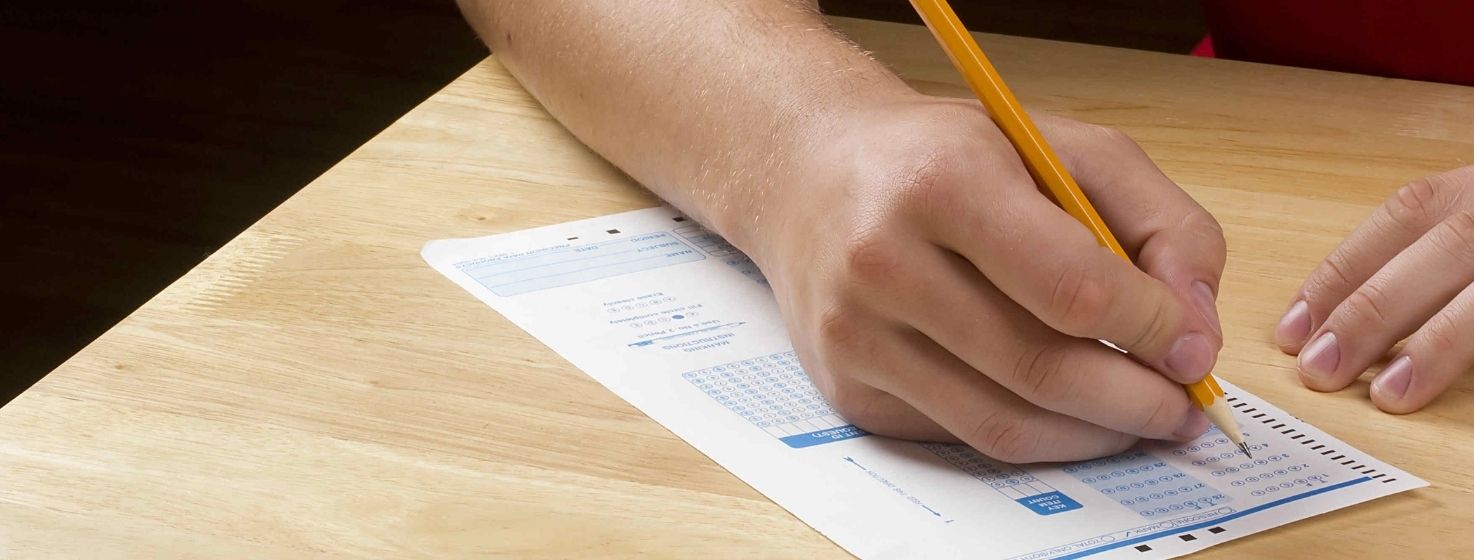
    Standardized testing often gets a bad rap in the homeschool world. After all, testing is a public school thing. Public schools have come to rely on test scores for funding, teacher promotions, grade promotions, and school excellency awards; and many base their entire curriculum on test prep. When the progress of hundreds of children requires evaluation, a simple, straightforward method is appealing. Only…it isn’t a simple, straightforward method, and this is why testing gets a bad rap. Public schools mostly concentrate on two scores – reading and math – to make a determination of a child’s intelligence. How fair or accurate is that?

    As a homeschool mom who has been utilizing standardized testing for my students’ annual assessment for 30 years, I have a totally different perspective of testing. In fact, I look forward to the testing process and results because of the benefits!

    Comparison. The test compares my student’s education with other students of the same grade level. This may seem contradictory and surprising, but hear me out! I am not comparing my students’ intelligence! I am comparing their education. Unlike the standard public school education, homeschoolers utilize various curricula and teaching methods. When I see my student score average or above average in math, it assures me that my student’s math curriculum is working and he is understanding basic math principles. If my student’s rank in math is below average, it could mean the math curriculum I chose is not challenging him, he isn’t grasping as well as I thought, it was a bad day for a test, or he froze! There are many reasons for a below average score, but the ability to compare gives me pause and helps me to thoughtfully determine why the score was on the low end. Comparing can be useful!

    Consistency. Throughout the years, we have only utilized two different standardized tests – Stanford 10 and IOWA. Using the Stanford for many years and then switching to the IOWA for the remaining years meant I could get a solid comparison of my students’ scores from year to year. It gave me a solid, steady base where I could monitor my student’s growth. In the early grades, scores are sometimes low due to the test being picture heavy and a young child’s perception of the pictures. I remember giggling when the kindergartners were quite perturbed about a picture question on a test…Milk comes from_____. The three choices were 1. goat 2. chicken 3. cow My farmer kids were not happy with this obvious city question!

    Experience. At some point in time, all of us are usually placed in a situation where we need to take a test for a scholarship, job, for college entrance exams (PSAT, SAT, or ACT), or to complete an important questionnaire. Being exposed to a pressure situation can produce, as my grandma would say, quick thinking on your feet! Experience making snap decisions is a useful tool in all areas of life. I didn’t want my students’ first time taking a test to be an important test like the SAT. I wanted my students to have a few years’ experience to establish a comfort level.

    Simplicity. I am not the type of person who would remember to place the report in a file or snap a picture of the project and add to a portfolio throughout the year. The end of the year would mean a mad search through piles of paper, documents, and pics. Not to mention, there were years we did not have much actual work (in the traditional sense) to even create a portfolio. For me, this spelled S-T-R-E-S-S. Going to our local testing center was a car ride away with the promise of a two day break from school, hanging with friends during breaks, and a pizza party at the end.

    Grade Equivalency (GE). GE is another piece of my assessment puzzle. Before explaining why this is helpful, let me explain what it is NOT. It is NOT to show the grade level of your student in a particular subject. Your first grader with a 6.2 GE is not on 6th grade level reading and ready for 6th grade reading assignments. The GE DOES mean that the 1st grader’s performance on the 1st grade subject is what would be expected of the average 6th grader on the same 1st grade test. Such a GE means the 1st grader has a thorough mastery of the material covered on the 1st grade test. A higher GE, therefore, is a huge confirmation that my curriculum, teaching methods, and student are all on the right track. On the other hand, if the GE is lower, it could be another indication I may need to make some adjustments and tweak what we are doing for that subject. I may also need to look at any factors which could have resulted in a lower GE, such as age/maturity, interest in the subject, an illness, or a distraction.

    Community-mindedness. Lastly, standardized testing meant something bigger than just our own family’s assessment. I knew CHEWV used the results of the standardized test to create meaningful statistics to show legislators the results of home education. Some scores are high. Some are low. But the stats show homeschooling does not adversely affect education quality. The public schools have their stats and we can unashamedly show the homeschooling stats. Compiling these statistics made important impacts when homeschoolers lobbied to remove the notorious 4 year requirement, get the portfolio option, gain diploma fairness, Promise Scholarship equity, and improvements in reporting to the county.

    Standardized tests have their place. The test is not a definitive measure of your student’s knowledge or intelligence. The test is a tool which, if understood properly, can give insights into your educational methods. Tools are used to create products, but tools are not used to define products. Similarly, a parent should not apply a pass/fail mentality, but more of a search-and-find mentality where the standardized test provides clues. The student may have a really low math score this year, but looking at the clues within the test results of how or why there is a low score is of greater importance than the fact the score was low.

    The CHEWV website is a huge help in understanding the benefits reaped from standardized testing. Under the testing section you’ll find great articles of explanation and encouragement for standardized testing. My favorites are “Temptation, Truth & Test Scores” and “Why Are Our Test Scores Low?” These help explain valid reasons for student scores and, more importantly, remind us that the annual assessment is merely a tool to help parents learn, contemplate, and adjust. Of course, by law homeschoolers are required to obtain an annual assessment – so we test to comply with the law. But really, the assessment is for us!


     

  • Online Programs and the Annual Assessment

    Online Programs and the Annual Assessment

    This year, many new homeschool families have opted to enroll in accredited online programs for their students. Unfortunately, many of these program directors have limited (or no) knowledge of the WV homeschool law because they are not WV-specific. Many offer assessments and imply that their assessment is all your student needs. But is it? Chances are…No.

    The WV Code is very specific about the type of assessment required for WV homeschoolers. The two most common assessments are a portfolio review (in which a certified teacher reviews samples of your student’s school year assignments and determines if the student has made progress in accordance with his/her abilities) and a nationally-normed standardized test.

    If you have enrolled in an online program which offers a testing option, it is YOUR responsibility to assure the test offered:

    *has been normed or published in the past ten years

    *is a nationally-normed standardized test

    *tests the 5 subject areas of reading, language arts, math, science, and social studies

    If the online program’s offered test does not meet ALL three criteria, then you are responsible to obtain a test which does or to choose another assessment option. If you are unsure, we strongly suggest you contact our experienced testing coordinator, Becky Price, at testing@chewv.org. She is happy to answer questions about any assessment situation.

    CHEWV has over 30 years experience with the WV homeschool law. Remember, we are here to help!

  • State DOE Issues Assessment Guidance

    State DOE Issues Assessment Guidance

    Dr. Derek Lambert of the WV Department of Education has provided the latest state guidance, released in December, related to this year’s homeschool assessments. We urge you to remember that the state DOE functions simply as guidance, not authority, to the counties.  

    Home School Testing Guidance December 2020

    As always, if you have assessment questions, please feel free to contact testing@chewv.org.

  • Homeschoolers and the Military

    We’re in the army now!  And the marines, and the navy, and the air force, and the national guard, and the coast guard…yes, homeschoolers are accepted into any branch of the military!  In 2012 and 2014, Congress amended the National Defense Authorization Act, which makes it clear homeschoolers may enlist in the military just like any graduate from a public or private school.

    Entering the Military Out of High School

    You will need:

    • A homeschool high school diploma*
    • A high school transcript
    • Verification compliance with any state law during high school
    • Take the ASVAB test and the Assessment of Individual Motivation test, which is 20-minute pencil and paper test. The AIM test score is used to obtain data and does not affect qualification for enlistment.
    • At a minimum, the last academic year (9 months) must be completed in a home-school environment

    The Armed Services Vocational Aptitude Battery (ASVAB) is a multiple-aptitude battery that measures developed abilities and helps predict future academic and occupational success in the military. 

    BONUSES FOR HOME-SCHOOL GRADUATES

    The Army now offers enlistment cash bonuses to homeschool graduates. Those who qualify receive the same incentives as traditional high-school graduates, including up to $40,000 for enlistments.

    *Each branch of the military has tiers for recruits and classifies all their recruits in one of 3 tiers.

    Tier 1 recruits have earned a high school diploma or have completed 15 credits of college. A score of at least 31% must be scored on the ASVAB.  Tier 1 recruits get first choice at open positions.

    Tier 2 recruits have earned a GED/TASC.  Tier 2 make up less than 5% of accepted recruits. A score of 50% must be scored on the ASVAB.

    Tier 3 recruits have neither a high school diploma or GED/TASC.  It is rare to be accepted into the military as Tier 3.

    A homeschool graduate HAS earned a high school diploma which is legally accepted in WV on the same basis as a public school diploma, and would thereby enter as a Tier 1 recruit.

    It is not recommended for the student to submit a GED/TASC or an accredited online high school diploma, which would place the student as a Tier 2 recruit.  A GED/TASC is generally earned by students who were unable to obtain a high school diploma for some reason.  An online accredited diploma is considered a correspondence diploma by the military and placed on the same level as a GED/TASC.

    Attending a Military Academy

    Does free college tuition sound appealing?  Then entering a military academy will get you there!  After academy graduation, you will need to agree to serve for a specified number of years.

    You will need:

    • A rigorous college prep plan
    • Good SAT/ACT scores
    • Physical exam
    • Fitness test with a high score
    • Detailed course descriptions
    • Congressional or Presidential appointment
    • A plus is showing leadership skills by being involved in school clubs, Civil Air Patrol, JROTC, Naval Seal Cadet Corps, Scouts, sports teams, or community service

    The military has proven to be an excellent choice for many high school graduates.  It provides the training and skills needed to help young adults succeed and advance in a military or civilian career.
    More information can be found at the following websites:

    *https://hslda.org/post/preparing-to-enter-the-military-your-mission

    *https://ged.com/blog/can-you-get-into-the-military-with-a-ged/#:~:text=Yes!,after%20you%20earn%20a%20GED.&text=Tier%201%20recruits%20have%20earned,(one%20semester)%20of%20college.

    *https://www.thebalancecareers.com/us-military-enlistment-standards-3354009

    *https://militarybenefits.info/how-to-apply-to-a-military-service-academy/#:~:text=To%20be%20eligible%20to%20apply,you%20would%20enter%20the%20academy.

    *https://www.goarmy.com/benefits/additional-incentives/home-school-graduate.html

  • Your Guide to U.S. Civics: A Review by John Carey

    Your Guide to U.S. Civics: A Review by John Carey

    by John Carey, CHEWV’s Legislative Liaison

    CHEWV now offers an exciting FREE member resource, Your Guide to U.S. Civics, to help families study American civics and government.

    This resourhttps://new.chewv.orgce is composed of 10 units which cover historic figures, founding documents, the three branches of government, a breakdown of how laws are made, and much more.  An additional unit is dedicated specifically to West Virginia civics.

    Your Guide to U.S. Civics also contains links to founding documents, supplementary articles and YouTube videos, a list of recommended books to purchase, and a list of suggested historical films (such as Mr. Smith goes to Washington).

    As explained in the materials, families can complete the guide in a year by working through one unit each week, or they can finish in a single semester by doing two units a week.

    The goal is to learn about these important topics in a fun and inspiring way. We believe it is incredibly important for citizens to understand the form of government that we have inherited. That understanding enables us to defend and advance our freedoms, and to insist that our elected representatives do the same.

    As Thomas Jefferson said in his Inaugural Address:

    “[These principles] should be the creed of our political faith, the text of civic instruction, the touchstone by which to try to services of those we trust; and should we wander from them in moments of error or of alarm, let us hasten to retrace our steps and regain the road which alone leads to peace, liberty, and safety.”