Author: CHEWV

  • Perfection & Perseverance

    Perfection & Perseverance

    by Martha McClanahan

    I am an avid lover of the author Jane Austen. She was a master at creating compelling characters. Novels such as Pride and Prejudice and Sense and Sensibility reveal the complexity and beauty of human nature through characters who remind us of ourselves: poignant, industrious, resolute, defiant, insipid, patient and loving, and sometimes just down right ridiculous!  But Austen’s greatest gift is in showing the ironies, tensions, and contrasts in the human character.  She is masterful in creating such conflict within her characters, that her novels strike her readers with awareness of their own inner conflicts. This awareness is priceless because it rarely happens to us; we do not often get to view our own contradictions. When we do, however, it can be life-changing. 

    Homeschooling has a way of revealing those ironies as well.  As this school year began, several of our children faced new challenges. The level of difficulty in their curriculum had grown, and each of them faced discouragement at the outset. I met that parenting challenge with enthusiasm, encouraging them to lean on the Lord for the understanding and strength they would need. I told them that the new skills must be practiced, and that this would require diligence and patience.  I assured them that it was okay to be “in between”  their beginning and their success, and that there is a place for the process. 

    Simultaneously, I was experiencing my own uphill battles, managing the many changes in our established schedule, facing new obstacles that I hadn’t met before, and generally having my world turned upside down.  Yet, I was not so gracious to myself.  My thoughts centered on the clear lack of ease and peace I felt in response to the various changes in my own life. I was not achieving perfection, even though my reaction to my own difficulties was to expect perfection. 

    What God was asking for, however, was perseverance. Somewhere in my experience, I realized I had quit allowing for the time it takes to succeed at new challenges, or learn a new skill. Somewhere in my adulthood, I decided that the time for learning curves was over. I was a contradiction.

    The life of a homeschooling parent can be challenging and chaotic.  We have to be flexible because no two days, or even years, are alike. We may feel that some aspect of our lives is under control; we may even be doing quite well.  But change is always lingering in the distance. It may be an unexpected surgery for a son, a gluten-free diet for a daughter, a new job, or a  move across the country.  It may be the care of an elderly parent, a new baby, or any one of a million life-altering circumstances. From year to year, little remains constant in the ebb and flow of life.  Like our children, sometimes we find that the difficulty of our “lessons” is ramped up!  We have never done anything quite so hard!  Yet God’s grace reaches out to us and upholds us. When we can’t quite find our footing, He lifts us. When we are vulnerable and scared that maybe this is all just a bit too much, He is a friend of all friends. He encourages us to “press toward the mark of the high calling of God in Christ Jesus” (Philippians 3:14) that we may “finish the race set before us” (Hebrews 12:1).  Whatever changes God is bringing in my life and in yours, there is room for the process. “Perseverance must finish its work so that you may be mature and complete, not lacking anything…” (James 1:4).  Perseverance is not perfection. It is caring enough to try.  It is the grace of God…the hope we have in Christ. 

    Our perfection will someday be a robe of righteousness, but for today, we can rest in that place between beginning and success, trusting that we serve a God who is able to supply every need.

    Martha is learning perseverance alongside her husband, Jason, and their five precious children:  Phoebe, Charlotte, Rebekah, Matthias, and Toby.  The McClanahans are CHEWV members who homeschool and reside in beautiful Putnam County. 

  • Tebow Bill: Fumble & Punt

    Tebow Bill: Fumble & Punt

    On the second day of the 2018 Session, the Senate version of the Tebow Bill (SB130) passed unanimously in the WV Senate Education Committee.  Added amendments simply clarified the original purpose.  An amendment from Senator Beach, which would have converted the bill into a pilot study, was defeated. In response, Senator Trump spoke passionately in support of the bill saying it corrected an “injustice” against homeschooled students. After passing in the Senate Education Committee, the bill was sent to the Senate Finance Committee where it still resides.

    Mr. Carey, CHEWV’s Legislative Liaison, then learned Senate leadership did not plan to advance the Senate Tebow Bill (SB130) until the House version of the Tebow Bill (HB4007) advanced in the House Education Committee.  This was an informal agreement between the two Houses.

    On January 24th, HB4007 was considered in the House Education Committee where several amendments were offered. Two were added, one which required a homeschool student to score in the 5th stanine or above for the right to play sports.  A third proposed amendment, which failed, would have destroyed the bill by leaving it up to each county board to determine the eligibility rules and requirements governing sports participation. To everyone’s surprise, when the bill came to a final vote it was defeated with 16 Nays to 9 Yeas.  A bill, which was largely identical to the bill which had passed last year with flying colors through both Houses and made it to the Governor’s desk where it was vetoed, was defeated overwhelmingly this year by both Democrats and Republicans in the House Education Committee. 

    Now the Senate must decide whether to advance their version of the Tebow Bill (SB130).  Will they choose to do so with such a slap-down in the House Education Committee?  Today it is hard to know.  What about the Promise Bill (SB319) and the Driver’s License Bill (SB364)? How can we trust that these bills won’t suffer a similar fate at the hands of legislators in House Education?

    Looking to God for help, we must first and foremost pray for His wisdom, guidance and favor. He is our Shield and Defender, just as in past battles CHEWV has faced.  Overwhelming numbers of homeschooling parents must also communicate with legislators.

    This twofold approach is the sure path to the victories we seek. Nothing can be taken for granted this year at the State Capitol.  We will have to be ready to speak up for the legislation which matters to us most. To that end, CHEWV will soon provide talking points and contact information so that, together, we can take a stand in support of our freedoms.

  • Opened Doors – A WV Legislative Report

    Opened Doors – A WV Legislative Report

    …from Michael P. Donnelly, Esq.

    Staff Attorney
    Director of Global Outreach
    HSLDA

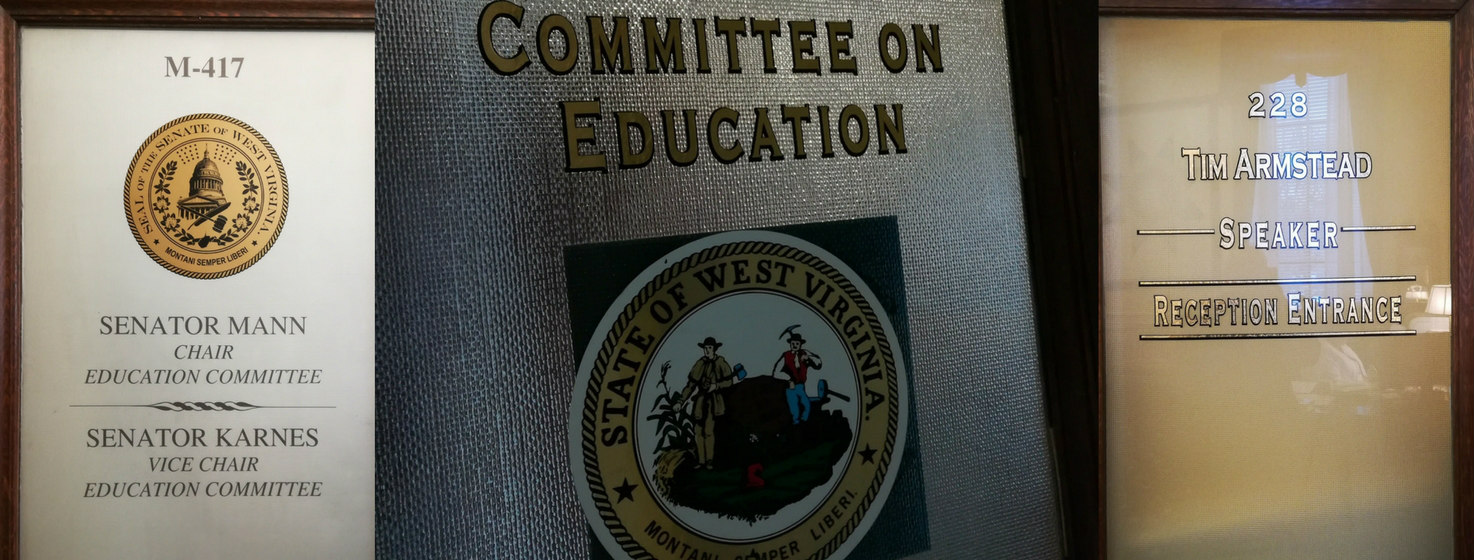
    Despite inclement weather and flight delays, I was delighted to meet this week with some of the highest-ranking legislators in West Virginia to discuss improved opportunities for homeschooling families.  On the heels of Homeschool Day at the Capital, I was joined by CHEWV Legislative Liason, John Carey, as we met with the Senate President, Speaker of the House, Chairmen of both the House and Senate Education Committees, and the Governor’s office. 

    John and I communicated our interest in two pieces of legislation that we expect to be introduced shortly: a bill that would make it easier for homeschooled students to get a driver’s license, and a bill to remove the anachronistic GED requirement for the Promise Scholarship.  We felt the overall response was positive and are optimistic that the legislation will get the needed attention to become law.  With the Governor’s new party affiliation, there is renewed hope that he, too, will be more favorable toward homeschool legislation and less likely to veto it.  Former Senator Mike Hall, a past supporter of homeschool legislation, is the Governor’s new Chief of Staff.

    We had opportunity to discuss SB 528, a bill that caused a big stir last year, with Senate Education Chair Kenny Mann. Senator Mann made it very clear that he had had no intention of creating problems for homeschooling families last session, but that the legislation had not properly addressed specific situations where abusive parents of public school-enrolled students were considering homeschooling to escape scrutiny.  The Senator agreed that this was a rare occurrence and assured us that he supported the right of parents to homeschool, personally knowing several homeschooling parents with thriving children. 

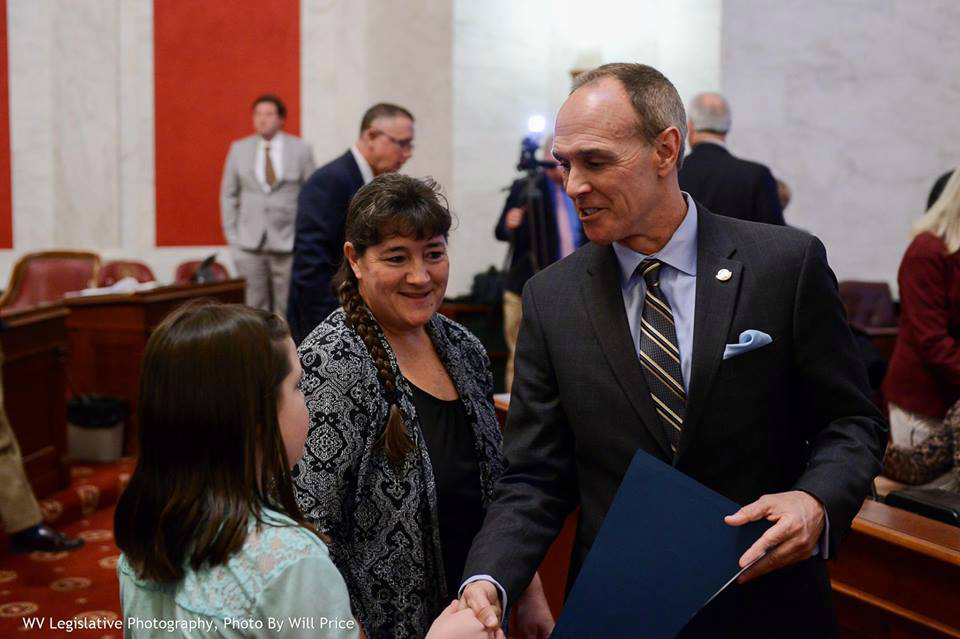
    Delegate Paul Espinosa, Chairman of the House Education Committee, noted continued support of the Tebow legislation that was passed by the legislature last year but vetoed by the Governor.  Chairman Espinosa said he was optimistic that the Tebow bill would pass the Education Committee as well as the House of Delegates as it did last year. 

    A different version of the Tebow bill, SB 130, has now passed out of the Senate Education committee and has been referred to the Senate Finance Committee.  Last year I was able to present a national perspective on equal access laws, such as Tebow laws, to help the Legislature understand the national adoption of these laws. Although HSLDA is neutral on equal access legislation, we follow these proposals closely to insure that there are no unintended negative consequences from their passage. 

    Senator Patricia Rucker and Senator Robert Karnes (Vice Chair of Education) were instrumental in arranging these meetings with key legislators.  Rucker and Karnes are both home educating parents and have been tremendous supporters of our community. Having individuals of their caliber in elected positions in the legislature is invaluable.  We are pleased that Senator Karnes is again bidding for re-election this year.

    In addition to our meetings, Home School Day at the Capitol was a great success for WV homeschoolers.  A representative of Governor Jim Justice commended the attendees for their educational commitment as demonstrated by a willingness to shoulder the additional burdens and demands of homeschooling.  He acknowledged the positive track record of homeschooling and shared the Governor’s warm welcome with the group.

    Advocating for homeschooling freedom is one of the most important things that we at the Home School Legal Defense Association do.  By working closely with state organizations like CHEWV, HSLDA attorneys review and track hundreds of bills that are related to homeschooling.  HSLDA’s new Legislation Action Center makes our advocacy work even more accessible and efficient, and we invite you to check it out.

    It is a privilege to serve homeschooling parents. When we all join together we can protect our freedom and also help each other.  HSLDA serves individual member families with information, advice and legal services.  Your support is essential to our ability to protect homeschooling. If you are not a member, please join us today! 

  • Yes, I’d Like to Make a Difference…

    Yes, I’d Like to Make a Difference…

    …With My Legislator!  How Do I Do It?

    Several approaches serve to connect effectively with your senator, delegates, and governor.  Depending on your personality type, the issue at hand, your comfort level, and the time available, you may prefer personal visits, phone calls, or letters – all useful means of communication for important legislative issues.

    Ultimately, the goal of contacting your legislators is to establish and develop a relationship through which you are able to help them understand issues that pertain to home education.  While they are elected officials, they are not experts in every issue that crosses their desks, and you can help bridge that knowledge gap.

    The Personal Visit

    Face-to-face interaction is generally the most compelling method to convey your message and create a good impression.  The effort to meet in person, even if very briefly, not only allows you and your representative to associate names with “real people,” but is a high-impact way to show your interest as a concerned constituent.  Tips to heighten that impact: 

    Whether Home School Day at the Capitol or some other day, you should call or email to schedule your meeting ahead of time. 

    Be punctual! 

    Go the extra mile to be flexible as well, realizing that representatives and their staffs face increasing demands as the 60-day session moves along. 

    Committee and caucus meetings can arise quickly.  Offer to wait until legislators are available after a meeting.

    Phone Calls

    Calling can also be effective and is often the most practical way to speak to an issue.  The following tips will make your message more persuasive:

    Besides getting your facts in order (bill name and number, legislation language, or county statistics, for example), it’s a good idea to make notes on what you want to say and begin your call by reading your message. 

    If you reach an answering machine, keep your message brief and include your contact information. 

    Make sure to remind your legislator of any previous contact that you have had: e.g., “I appreciate what you said when we last talked in April…”

    Letters

    One well-written letter typically carries more weight than a formal petition with many signatures.  To write a better letter:

    Take the time to express your thoughts in good English.

    Avoid rambling, and do not rail or rant!

    Even in cases where there may be differences of opinion, honor your elected official with courtesy, respect, and proper title.  (See etiquette tips below.) 

    Always include your address and sign your name legibly.

    **You exert maximum influence by addressing your comments directly to your legislator, which is what representative government is about!

    Basic Dos and Don’ts for Any Contact

    Regardless of the communication method, keeping it personal is the best approach:  what do you care about, what is your homeschooling experience, how are your children doing?  It’s best to avoid trying to be an expert on legislation; instead, point out that your family is represented by CHEWV, working with HSLDA.

    Always assume that the legislator worked to get elected in order to do what’s best for the state and his/her constituents.  Express thanks for the many legislative actions that have enhanced homeschooling liberty in West Virginia.

    Avoid a negative message such as being against public education or teachers.  “Sweetness of speech increases persuasiveness” – it’s better, generally, to emphasize what you’re for rather than what you’re against.  If you are willing, invite the legislator to contact you with questions about legislative proposals that may come up during the session.

    Time taken to prepare a bit beforehand will boost your confidence.  Learn about your legislator and about homeschool issues.  CHEWV works to provide resources and links on our website to help you.  However, this need not be exhaustive by any means; don’t let it deter you from participating!

    First, find out a little about your legislator.  What is his or her political party, tenure in office, and on what committees does he or she serve?  You may also be able to dig deeper and discover how your representatives tend to vote on homeschooling and other educational issues.  Besides a brief biography on each senator and delegate, a list of the committees on which all serve is available on the West Virginia Legislature website: http://www.wvlegislature.gov/

    Second, familiarize yourself with basic questions about homeschooling.  Your legislator will likely have many of the same questions that other people ask when they learn you homeschool your children, including questions about socialization, academics, or testing.  Don’t assume your legislator is antagonistic when he asks questions.  He or she may simply be trying to learn more about the issue!

    Also, don’t be surprised if it appears you are more knowledgeable than your representative.  Should a question arise to which you do not know the answer, don’t hesitate to admit your lack of knowledge.  Be willing to pursue the answer and report back.  No one can be expected to address every question or matter of concern regarding a specific topic or problem. 

    Again, emphasize the positives of your own experience and be ready to share personal examples of how particular laws/regulations/legislation affect you or your community on a local level.  Finally, be respectful and as appreciative possible while stating your concerns or position. 

    Basic Etiquette When Addressing Your Legislator

    * Address your Senator or Representative properly.  When addressing them on the phone or in person, use their office title and last name. When writing letters, use the salutation: Dear Senator Smith/Delegate Smith… and close with Sincerely yours or Respectfully yours … 

    * Identify yourself immediately upon each contact.  Public officials meet too many people to remember everyone!

    * Don’t debate with a legislator or give ultimatums such as, “I won’t vote for you if you do not support my position.”  Respect the legislator’s right to disagree with you.

    *If you are communicating regarding a specific legislative issue, find out  the current status of the legislation. Has it been referred to a committee?  Is it in committee?  Is it on the floor for a vote?  What reading (first, second or third) is it on?  Whenever possible, refer to a bill by number.  You can easily find all of this information at https://www.heritagecwv.org/active-legislation/ using the “track bill” link option.  Or go directly to this page:  http://www.wvlegislature.gov/Bill_Status/bill_status.cfm  Simple!

    * Use your own words.  Express your position clearly, yet avoid being an ever-critical, opposing voice if you possibly can.

    * Be brief and explicit, courteous and reasonable.  Make the most of each opportunity to be a witness by presenting a positive, God-honoring attitude.  Maintain this attitude with both legislators and their staff!

    *Don’t apologize for taking his or her time.  If you are brief and to the point, they will be glad to hear from you.

    *Don’t begin any communication with the phrase, “As a citizen and taxpayer.”  Your elected representative knows we all pay taxes.

    * Be a good listener and hear out what your legislator has to say on the issue, but don’t make notes of a conversation while talking to a legislator.

    * Don’t send copies or form letters unless you have taken the time to include a personal note.

    *Always thank the legislator for taking the time to hear your position.

    *Always follow up with a written thank-you note and amplify your main points.  It can be appropriate to have an addressed, stamped note card ready to write immediately after the visit/call.

    * When your legislator goes the extra mile to be supportive, you may consider acknowledging his or her efforts by writing a letter to the editor in your local paper.

  • Research on Homeschooling Tells Us Plenty

    Research on Homeschooling Tells Us Plenty

     The Context

    In the past few years, detractors of homeschooling and its advocacy have been claiming that research on homeschooling proves almost nothing.  Consider the following quote by Christopher Lubeinski in the Peabody Journal of Education:

    Those claims [“that homeschooling ‘works’ and ‘leads to’ desirable outcomes”] might be true but cannot be supported by analyses of extant empirical evidence. 

     Regardless of whether or not this claim was accurate in 2013, is there any recent information that can quantify homeschooling and its effects? Yes, and it reveals more than many critics seem to want to admit.

     One Recent Review of Research

    Just two months ago, the peer-reviewed Journal of School Choice, published my manuscript entitled “A Systematic Review of the Empirical Research on Selected Aspects of Homeschooling as a School Choice.”  The article details the demographic characteristics of the U.S. homeschooling population and the reasons that parents choose to homeschool; summarizes the findings of studies on the homeschool learner outcomes of academic achievement, social development, and success in adulthood; and proposes future research on parent-led home-based education.

    To continue, click here, and visit www.NHERI.org.

  • CHEWV Students Participate at ABC

    CHEWV Students Participate at ABC

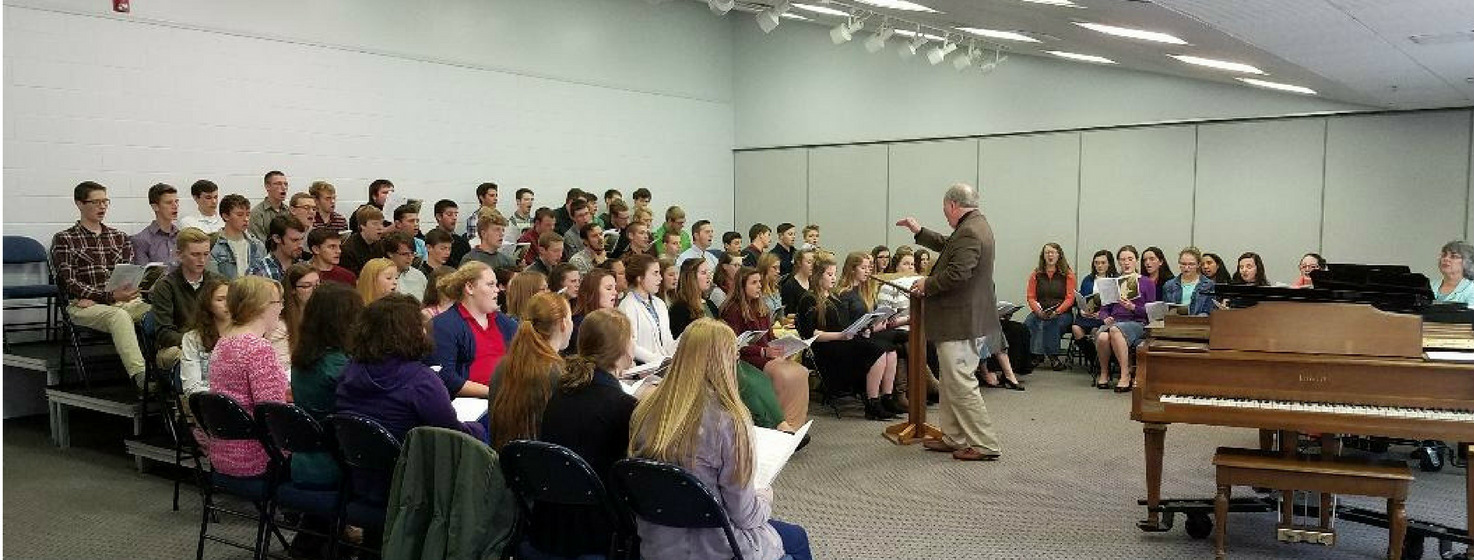
    CHEWV participants CiAnna Murray, Lexi Starcher, Kasey Starcher and Sarah Grace Johnson.

    On Thursday, November 9, 2017, four CHEWV students participated in the WVCEA Chorale Festival held at Appalachian Bible College under the direction of Roger VanMaasdam, ABC Music Chair. Students had the privilege of singing with the college’s Chorale as well as with several WVCEA high school students from around the state. Dr. Daniel Anderson, President of ABC, and Dr. Jerry Fisher, Executive Director of WVCEA, encouraged the students to use their gifts, talents and lives to honor the Lord above all else.


  • If a Student Takes His Classes at Home…

    If a Student Takes His Classes at Home…

    …Isn’t He a Homeschooler?

    The 2017 legislative session marked the beginning of a push for online public school options in West Virginia, making it possible to be a public school student from the comfort of one’s own home.  While CHEWV supports the right of ALL parents to choose the best educational option for their children,

    we believe it is important for both parents and government officials to understand the difference between homeschooling and public school at home. 

    “Educational options” are essentially three-fold.  Children can be sent to public government-controlled schools paid for by public funds; parents can pay to send their children to private schools; or parents can take complete and personal control of the education of their children by homeschooling them.

    CHEWV helps protect the latter choice.

    But what about public school at home? Most assume that any child schooled at home is a homeschooler.  But this is not necessarily the case. In his veto statement about the sports access bill in 2017, the governor implied that public school at home was homeschooling.  However, the location of the schooling is not so important as the content and control of the education.  Let’s explore that idea further. 

    When taxes are paid to the government, those taxes become “public funds”  which our representatives then decide how to spend.  When public funds finance a child’s education, the representatives – as well as public policy makers within the government’s educational bureaucracy – also place demands on what will be taught to the student. Control of a child’s education is shifted from the parents to the county; from the county to the state; and, finally, from the state to the federal government.

    These county, state and federal officials have come to believe that they have a responsibility, not just if physical or educational abuse is suspected, but some sort of responsibility for every child all of the time.  Policing parental choice then becomes part of their concern.  Most of them, blind to the failures in their own system, truly feel that they are policing parents for the good of the children. Unfortunately, this holds true even when the parent fully funds the education.

    In other states, homeschoolers have discovered that difficulties multiply when they start accepting tax funds or tax-funded resources for their children. Eventually the parents’ choices are quite limited and God is absent from the curriculum – “separated” from the “state” education. Choice disappears. Government education is all that remains – regardless of where it is done.

    Since 1986, WV parents have been free to educate in the way that they believe is best for their child, as long as they privately fund that education. Recently, WV government schools have offered them “public school at home” – the same schooling, paid for with government funds, that they offer in their brick-and-mortar buildings. But is this homeschooling?

    No. Because WV has a compulsory attendance law that requires that every child attend school, parents must utilize a hard-won exemption in order to homeschool. But traditional public schoolers could switch to public school at home without an exemption because these aren’t homeschool courses – even if homeschoolers may enroll in them.

    The legal recognition of the right to homeschool was a hard-won battle fought so that parents could direct the upbringing of their children. “Home-based” education is part of that, but not the most important part. The worldview of the education and the individualized approach are even more essential to most Christian homeschool parents

    Public school students are educated according to the curriculum and rules of the public school. While an individual school or county board might allow flexibility, they can also take that flexibility away. In other states they have done so – because they have the authority to do so.

    Of the three tenets of homeschooling, “parent-directed” is the most important. Fundamental to homeschooling is that the parent is in charge.

    Bottom line? Control is the key factor. As a parent, how much of your child’s education do you want to control? Do you want to exercise your right to decide when and what your child is taught about sexuality, or about God’s role in the origins of life and the unfolding of history? Homeschooling allows you, not government, to control the worldview. Homeschooling allows you to fully guide your child’s education.

    However, homeschooling does not allow you not to educate. West Virginia homeschoolers are required by law to teach at least the five subjects of reading, language, mathematics, science, and social studies, and to assess student achievement each year. A parent who is not teaching his or her children those five subjects is not a legal homeschooler in the state of WV.

    Granted, for a kindergarten student, appropriate social studies might be visiting the local fire station and learning about community helpers. Depending on the grade level, this may or may not mean studying a textbook daily in all five subjects. West Virginia’s homeschooling law allows for a variety of appropriate educational approaches, but it does not allow “not schooling” as so many officials assert. A child who is neither sent to school nor educated appropriately at home is not a homeschooler, but a truant.

    While CHEWV believes that all parents should be able to choose any legal educational option for their children, we specifically exist to defend and support the right to homeschool. That right is not the same as doing public school at home. We hope that parents who consider public school at home will also consider that there may be unforeseen consequences. While we will do our best to inform parents about how homeschooling and virtual public school options mesh (e.g. homeschoolers can take up to x virtual classes while remaining legal homeschoolers), we exist to protect your right to take no public school classes at all if you choose. It is imperative that we all understand the difference between a public school student, a homeschooled student, and a truant. We must first understand our options before making an informed choice.

    NOTE:  2022 ushered in yet another choice for parents, the Hope Scholarship. Hope students using an “Individualized Instruction Program” may also school at home.  But they are schooling under the new Exemption m.  WV homeschooling continues to fall under Exemption c.  For more information, check out this article.

  • Dad to Dad: The Joys of the “Bleak Midwinter”

    Dad to Dad: The Joys of the “Bleak Midwinter”

    by James Summers

    I love this time of year.

    Things start to slow down and fall into focus during Thanksgiving week, which of course coincides with the traditional buck season in this part of the world.  Hours spent in the woods, alone with nothing but my own thoughts, goes a long way to remove the clutter of the everyday chaos which fills our daily lives.  We begin to slow down and enjoy the fellowship of our family and friends.

    The cool, damp quiet of the late fall evenings settles in early.  The Creator seems to be calling us to slow down, to rest a bit and savor the time.

    This week our family will make our annual visit to an old friend’s tree farm and pick out a tree that barely fits in the living room. We will stand in the cold and talk with our friend until well after dark, then invite him to supper some evening after Christmas.  He will remind us to be sure and cut about an inch off the bottom of the tree stem so that it can drink better, and I’ll say we’ll need to cut about 5 inches off for it to fit under our ceiling.  I like the top to almost touch the ceiling, so that when we place the angel on the top it will bow down in reverence to One whose birth we celebrate.

    I will place a couple of my favorite ornaments on the tree – ones we made from wedding cards on our first Christmas together.  Then I will sit and watch for a while as my wife and sons decorate the tree with ornaments gathered over the years.  Each ornament has a story to tell and a memory to awaken.  Tears will fill my eyes as I savor the moment, and I’ll be reminded that Jesus came to the world to bring us peace.

    And joy.

    And love and fellowship and forgiveness.

    And hope. And life.

    At last, when the decorating is almost finished, I’ll get back up and sort through the box to find my other favorite decoration – the chrome colored plastic icicles. The boys and I will start placing these on the tree; my wife will roll her eyes and take her turn to watch.  Then she will dig out her grandmother’s nativity set and place it on the mantle. That will remind my oldest son to pull out the nativity set that he made in church when he was six.  He will set it up on a table in the upstairs hallway, while his brother and I hang socks by the fireplace.

    After Thanksgiving, Christmas music starts to fill the house – especially at supper time. Songs of our Savior’s birth will mix with occasional songs of nostalgia about “Christmas time” and home.

    I know there are those who disdain Christmas trees and celebrating pagan holidays and all the commercialization.  Maybe they’re right.  I know that Jesus wasn’t likely born in winter but in early spring, probably about the time that Passover lambs were being born.  I know that Jesus probably wasn’t born in the “barn” style of manger that is so often depicted.  I know the wise men probably didn’t find Jesus on the night of his birth.  And, I agree, there was no little drummer boy.

    But I have to say, the “bleak midwinter” is a good time to celebrate Jesus’ birth:

    In the bleak midwinter a stable place sufficed 
    the Lord God Almighty, Jesus Christ. 

    What can I give him, poor as I am? 
    If I were a shepherd, I would bring a lamb; 
    If I were a Wise Man, I would do my part; 
    Yet what I can I give him: give my heart. 

    Christmas is a gift of common grace to our world.  The goodness of Jesus, of celebrating His birth, overflows to more than just “believers,” and gives us a taste of God’s good will toward all men.  Yes, it is a shame that the gift of grace has been corrupted by selfishness and skepticism, but we can still celebrate. We can experience the glory of Christmas and of God’s good grace.  And we can share with others these good gifts of peace and joy and love and forgiveness and hope and life by humbly stepping into their world as Jesus did ours.

    Do nothing from selfish ambition or conceit, but in humility count others more significant than yourselves. Let each of you look not only to his own interests, but also to the interests of others. Have this mind among yourselves, which is yours in Christ Jesus, who, though he was in the form of God, did not count equality with God a thing to be grasped, but emptied himself, by taking the form of a servant, being born in the likeness of men. And being found in human form, he humbled himself by becoming obedient to the point of death, even death on a cross. Therefore God has highly exalted him and bestowed on him the name that is above every name, so that at the name of Jesus every knee should bow, in heaven and on earth and under the earth, and every tongue confess that Jesus Christ is Lord, to the glory of God the Father.

                                                                                                                  Philippians 2:3-11

    ~~~~~
    James and his wife Wendy serve on the CHEWV board and oversee Home School Day at the Capitol.  With a heart for discipleship, James writes from his view on the mountain.

  • Is HSDC Still Important?

    Is HSDC Still Important?

    You’ve already braved the weather, taken the tours, attended the session, and spoken with your delegates and senator in previous years. Why spend another day doing it again?

    If you are interested in protecting the freedom of parents to home-educate their children, then participating in Home School Day at the Capitol is extremely important.  The 2018 session of the legislature starts January 10th. Home School Day at the Capitol follows on January 16th, intentionally early in the session so that the presence of your family may thwart any homeschool-negative legislation.   

    Many well-meaning legislators think that more and stronger laws for homeschoolers would fix what they view as problems.  Too often, however, the problems they perceive are based on false, anecdotal “evidence.” Visiting with home-educating families gives legislators real-life, positive examples of homeschooling while offering them the opportunity to discuss their concerns. Answering their questions with kindness and prudence in an informed manner can be what dissuades them from supporting harmful legislation.

    Your presence can also positively affect any beneficial legislation that CHEWV hopes to introduce this session. Many legislators have never met a homeschooling family. They may not understand how current West Virginia law negatively impacts homeschooling students.  Issues like the TASC requirement for Promise Scholarship eligibility and unnecessary driver’s license hurdles need to be addressed in the legislature. A visit from your family may be the deciding factor in their support of an important bill.  Further, the development of a good relationship with your delegate and senator prior to the introduction of legislation may help keep the doors of communication open in the event of other issues arising.

    Finally, many delegates and senators may simply not understand why the ability to homeschool is so vital to West Virginia families. Whether you homeschool due to religious reasons, bullying, problems in the school system, feeling your children were falling through the cracks of the public school, special needs, or a myriad of other concerns that caused you to make the necessary sacrifices to educate your children at home, our representatives need to hear from you. They need to get to know us. They need to have their concerns addressed, and they need to see that we care about educating our children.  Then they may better understand how the laws they pass, and the rules made by other state agencies, affect homeschooling. You can make a huge difference.  Mark January 16th on your calendar now, and add your voice and presence to those of other CHEWV families!

  • Mom to Mom:  The Ghost…

    Mom to Mom: The Ghost…

    …of Christmas Past

    by Kim Kincell

    Once upon a time, long, long ago, we had little girls who squealed with delight when we drove through neighborhoods and found houses lit up with hundreds of Christmas lights.  Back then our girls “helped” make the Christmas cookies – so it took much longer! When the snow fell, we hunted thick gloves and old coats so they could build snowmen and ride on the sleds.  They came in with cherry noses and snowy boots that would hardly pull off!  In those days it was hard to get everything done…especially through the busy days of December.  Sometimes it seemed that we had just put the tree up and the little crèche figures out when it was time to pack them all away again!  And some years I felt like an ogre demanding that we keep up with school work, while other years we finished the season with some dreaded catch-up hanging over us.

    But that was long, long ago…Our kids are grown now, and instead of Don and me diligently working to keep their eyes on the true Purpose of the season and averted from the commercialism, they now are busy with their own lives.  Our home has “grown up.”  It’s wonderful – just like it was then – but the seasons have truly changed. 

    Out with the old year, in with the new!

    January’s nearly here, December’s nearly through.

    ‘Though I don’t know where the time has gone, it obviously flew.

    So, out with the old year, out with the old year, out with the old year, in with the new!

    I like this fun little song from the girls’ childhood (sung by our favorite Adventures in Odyssey character, Eugene Meltsner) and the “time has gone, it obviously flew” seems truer every year.  As exhausting as many of the years of parenthood are, they are precious and fleeting.  When you invest in your children or teens and carefully persevere to disciple them, you reap the blessing of grown children who still keep you on your knees but also delight your heart!  The early days and years are certainly demanding; nevertheless, you are building memories and values for your children that are lasting.  These years are not short for them.  They comprise their childhood and lay the foundation for all that comes after. 

    We didn’t come anywhere close to doing things perfectly and we have regrets like everyone does.  Nevertheless, God’s faithfulness to His people has been evident in our lives!  I encourage you to forego some of the busyness of this season to point your children to Christ.  The lasting Christmas light is the Light of the World.  May your family light up with His presence this season!

    Besides teaching piano lessons and doing part-time bookkeeping, Kim serves on the CHEWV board along with her husband, Don.  After eighteen years of full-time homeschooling and graduating all three of their daughters, she has no regrets about their decision to home educate :-).  Kim loves to encourage other moms who are just now in the trenches with littles!